
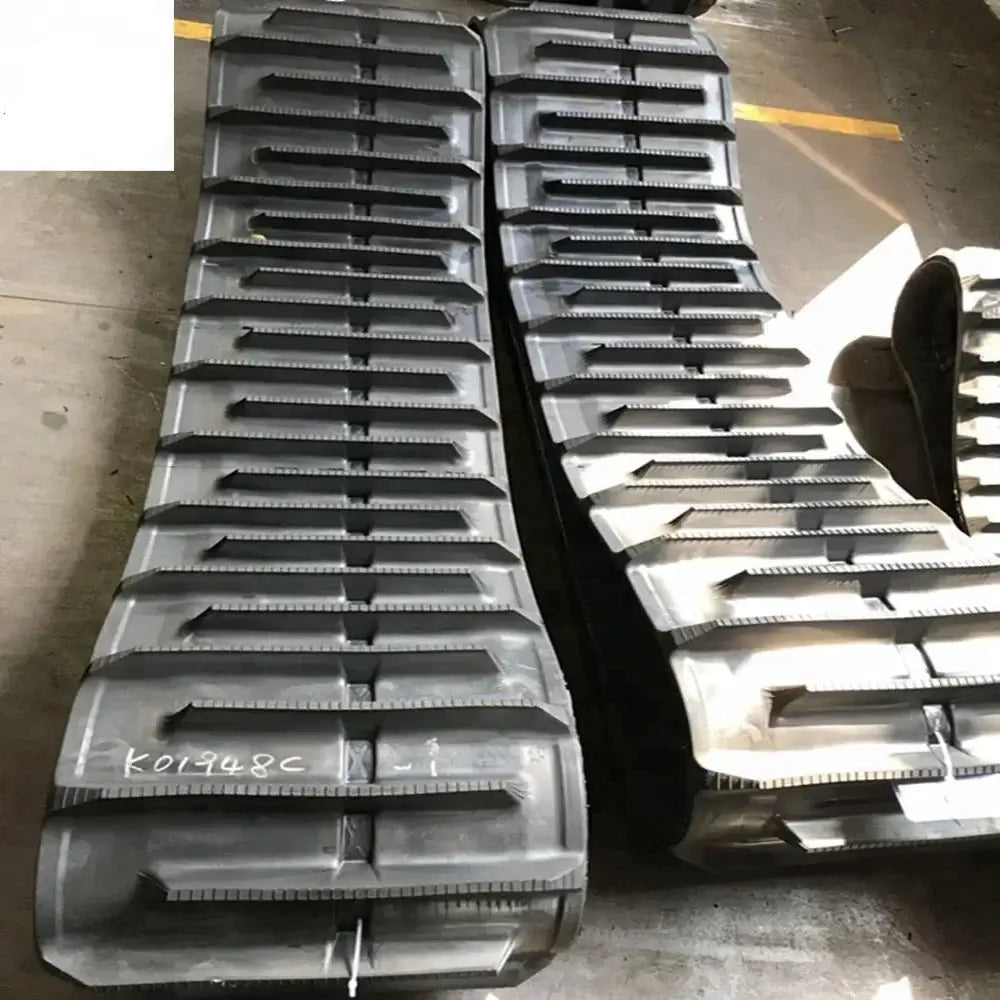
Rubber Tracks in the Undercarriage System, Why Specification Accuracy Is Non-Negotiable
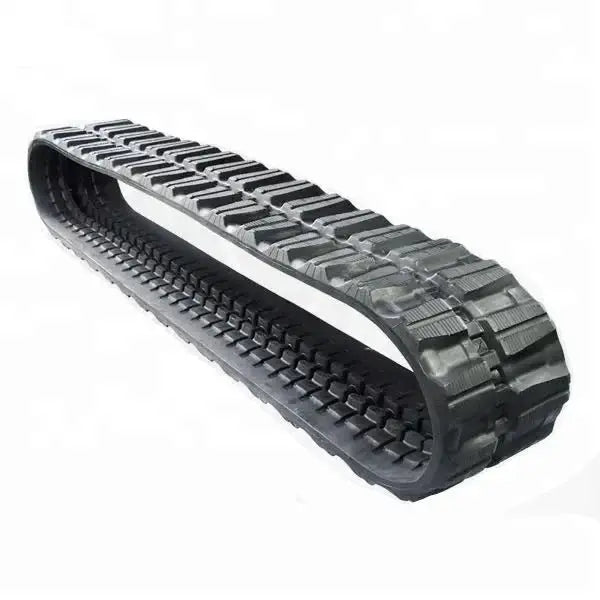
A rubber track is not just a ground contact surface. It is the continuous loop that the entire undercarriage system is built around the component that every track roller, carrier roller, idler wheel, and sprocket contacts, loads, and depends on for correct system geometry.
The three-number sizing system Width × Pitch × Link Count defines the rubber track completely. Width determines ground contact area and the ground pressure the machine exerts. Pitch is the centre-to-centre distance between consecutive steel link connections and must match the sprocket tooth spacing exactly; a pitch mismatch generates abnormal sprocket contact stress with every revolution. Link count determines the total loop length and must match the track frame geometry of your specific machine.
A rubber track ordered from machine model name alone, without confirming all three numbers, carries a meaningful risk of pitch mismatch particularly on Caterpillar 303, Komatsu PC35, and Kubota KX040 machines that were produced across multiple undercarriage configurations across their production histories. At Imara Engineering, every rubber track order is confirmed against the three-number specification using your machine serial number before dispatch.
Beyond sizing, the rubber track compound grade and lug profile must match the operating environment. A high-carbon compound for abrasive construction conditions. A turf-grade lug profile for surface-sensitive landscaping applications. A self-cleaning block lug for soft agricultural ground. The wrong specification for the terrain shortens track service life and places unnecessary stress on the idler wheels and sprocket teeth it runs across.
Warning Signs When Your Rubber Tracks Need Replacing
Rubber track wear in the undercarriage system communicates itself through the machine's behaviour and through visual inspection. These signals demand replacement not deferral:
-
Tracks derailing on turns or slopes — steel core stretch beyond the track adjuster's compensation range. A tensioning problem has become a replacement situation.
-
Steel cord visible at the outer or inner track surface — full compound wear-through. Every operating hour from this point risks sudden track separation without warning.
-
Cracking across or between lugs — compound hardening from UV exposure, over-tensioning, or age. Cracks that look surface-level propagate under operating load and lug separation follows.
-
Uneven lug wear across track width — the track is running off-centre. Idler alignment or track adjuster condition must be investigated alongside the track replacement fitting a new track without resolving the root cause produces the same wear pattern within a shortened replacement cycle.
-
Drive lug damage on the inner track surface — abnormal contact between worn sprocket teeth and the rubber track drive lugs. Inspect and replace sprockets alongside the rubber track if drive lug shearing is present.
-
Track adjuster at maximum extension — the track has stretched beyond the adjuster's travel range. Replacement cannot be deferred.
Rubber Tracks by Machine Type
Excavator Rubber Tracks
Mini and compact excavators from 1-tonne through 8-tonne class are the primary rubber track application and the undercarriage system of these machines depends on correct track specification more directly than any other machine type. Excavator rubber tracks are specified by Width × Pitch × Link Count, confirmed against OEM part numbers for each machine model and serial number range. Our excavator rubber track range covers mini excavators across Cat, Komatsu, Kubota, Hitachi, Yanmar, and Bobcat with C-lug, block lug, and turf-grade lug profiles available across the range.
Compact Loader Rubber Tracks
Compact track loaders and skid steers place a fundamentally different load on their rubber tracks than excavators counter-rotation generates lateral shear stress that standard excavator track specification cannot withstand. Compact loader rubber tracks are built to a stiffer steel cord specification rated for this operating profile. Fitting an excavator-specification track to a compact loader will produce premature delamination regardless of compound quality. Our compact loader rubber track range covers Cat, Bobcat, Takeuchi, and other widely operated CTL brands.
Rubber Tracks by Brand
Caterpillar Rubber Tracks
Covering Cat 301, 302, 303, 305, and 308 mini excavator series and Cat compact track loaders. Cat rubber tracks are cross-referenced against OEM part numbers for pitch, width, and lug geometry. The Cat 303 and 305 specifications carry multiple undercarriage configurations across their production history serial number verification is essential on every Cat rubber track order.
Komatsu Rubber Tracks
Compatible with PC15, PC20, PC35, PC50, PC55, and PC78 series excavators. Komatsu rubber tracks are manufactured with a continuous spiral-wound steel cord core rated to Komatsu tensile specification. The PC35 and PC50 ranges carry multiple track width configurations across production years and always confirm Width × Pitch × Link Count alongside the machine serial number.
Kubota Rubber Tracks
Covering the KX series including KX016, KX018, KX040, KX057, KX080, and KX121-3, and the U series including U17, U27, U35, and U48. The Kubota KX121-3 rubber track and Kubota U17 rubber track are priority stock specifications both models are widely operated across agricultural drainage and landscaping applications globally. Standard and turf-grade lug profiles available across the KX and U series range.
Bobcat Rubber Tracks
Covering the E series including E10, E14, E17, E20, E26, E32, E42, E50, and E55 zero tail-swing excavators and the 300 series legacy range including the Bobcat 331. The E32 and E42 are priority stock specifications. The Bobcat 331 has been produced across multiple undercarriage configurations, serial number and year of manufacture verification is non-negotiable on any 331 rubber track order.
Lug Pattern Options, Matching the Profile to the Ground
Selecting the wrong lug pattern places unnecessary stress on the idler wheels and sprockets the track runs across shortening track service life regardless of compound quality.
-
C-Lug Pattern — the standard configuration for construction and civil engineering. Deep angular lugs deliver strong traction on compacted earth, gravel, and mixed site surfaces. The most widely stocked profile in our excavator rubber track range.
-
Block Lug Pattern — multi-directional traction for soft ground, clay, and wet conditions. Better self-cleaning performance than C-lug in muddy agricultural and drainage environments.
-
Turf / Low-Profile Lug Pattern — for machines working on finished lawns, paved surfaces, and sensitive ground where surface protection is the priority alongside traction. Available across Kubota and Yanmar mini excavator specifications.
OEM Quality, What Every Rubber Track Is Built To
Every rubber track in our undercarriage parts range is held to three engineering standards each addressing a specific failure mode that under-specification tracks consistently exhibit:
-
Continuous spiral-wound steel cord core — not crimped or segmented. Engineered to resist delamination under the torsional and lateral loads of excavator slewing and compact loader counter-rotation. The steel cord specification is confirmed for each machine type — excavator and compact loader cores carry different tensile ratings for their respective operating profiles.
-
High-carbon rubber compound — formulated for cut resistance against sharp aggregate and concrete, abrasion tolerance on rocky terrain, and UV stability for machines operating and stored outdoors year-round.
-
OEM-matched lug geometry and pitch accuracy — dimensionally accurate to the original equipment specification so the track engages your sprocket tooth profile and idler wheel correctly from the first operating hour, without abnormal stress on any surrounding undercarriage component.
Our aftermarket replacement rubber tracks consistently deliver equivalent working life to OEM parts, typically 1,200 to 1,800 operating hours under normal mixed-terrain conditions below OEM dealer pricing.
Undercarriage System, What to Inspect Before Fitting New Rubber Tracks
A rubber track replacement is the right moment to inspect every component in the surrounding undercarriage system. Fitting new rubber tracks to a machine with worn sprockets, misaligned idler wheels, or a failing track adjuster guarantees a shortened replacement cycle:
-
Sprockets — inspect tooth profile for hook wear and pointed tips. A worn sprocket fitted alongside a new rubber track shears the drive lugs from the inner track surface within a fraction of the new track's expected service life.
-
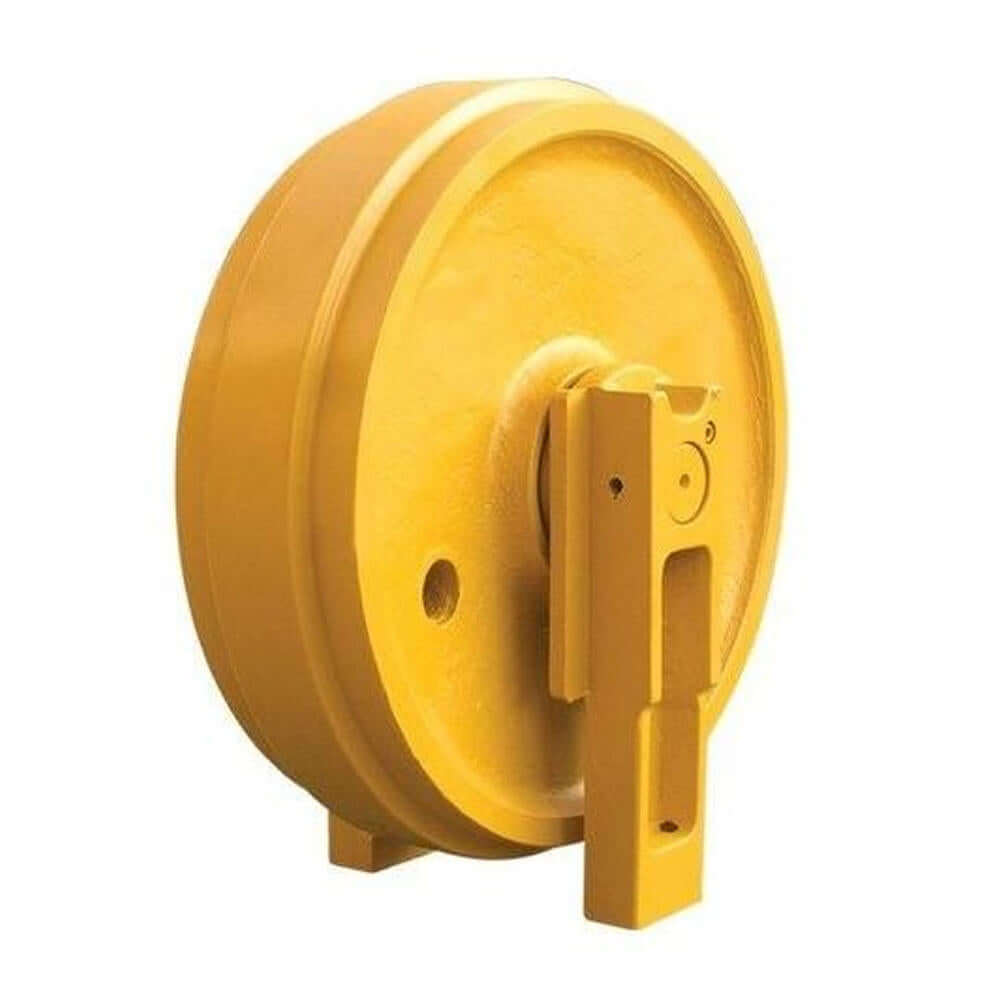
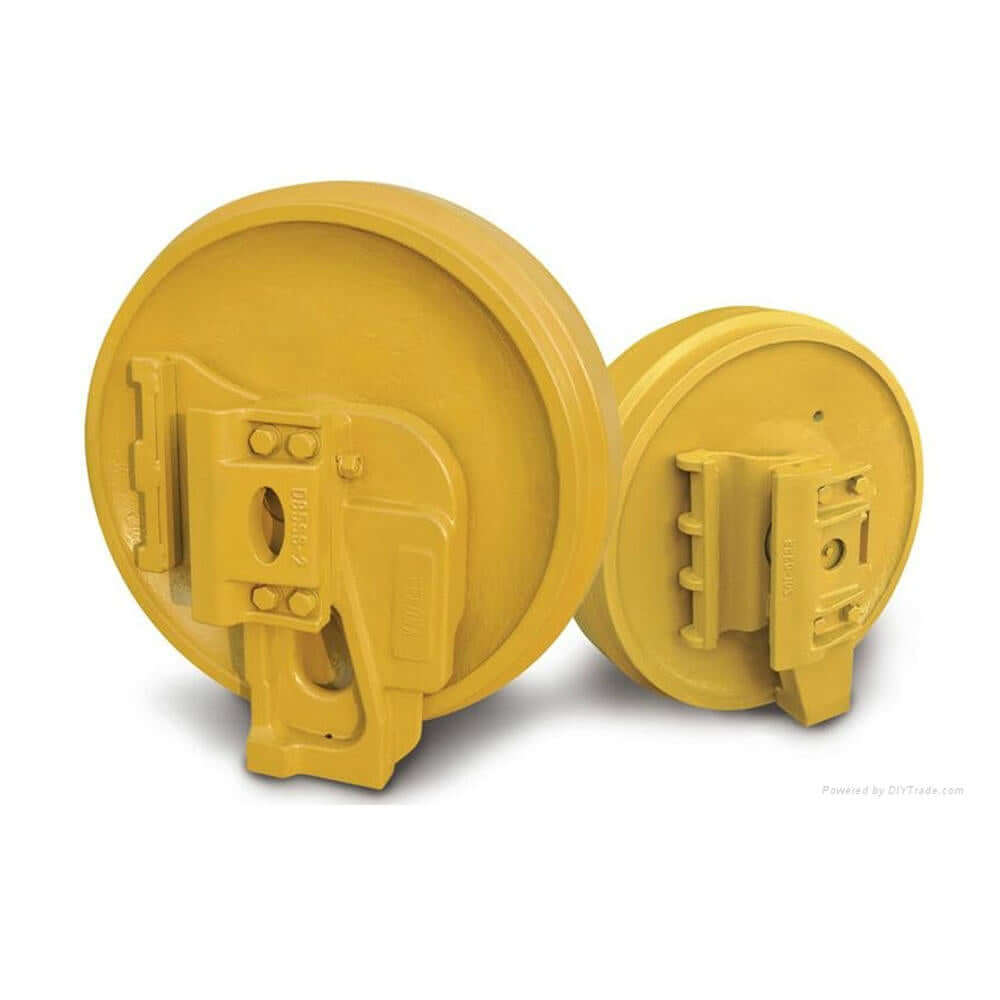
Idler Wheels — inspect flange wear and shaft condition. A worn idler flange causes the new rubber track to run off-centre from the first operating hour, reproducing the uneven lug wear that indicated the problem in the first place.
-
Track Adjusters — confirm the adjuster can hold and maintain the correct tension for the new track. A worn or leaking adjuster fitted alongside a new rubber track cannot protect the track investment from day one.
-
Carrier Rollers — inspect for flat spots and seizure. A seized carrier roller creates a point load on the upper rubber track surface that causes localised delamination regardless of compound quality.