

Hydraulic Oil Filters for Excavators & Heavy Machinery: CAT, Komatsu and More
Hydraulic oil powers every working function on your excavator, and the hydraulic oil filter determines how long it stays clean enough to do that. Contamination is the leading cause of pump failure, valve damage, and cylinder degradation on heavy equipment. Imara Engineering stocks hydraulic engine oil filters
verified to OEM spec, matched to your machine.
Part of the Filters & Service Parts collection, this range covers three protection points: hydraulic return filters, hydraulic suction filters, and hydraulic breather filters. CAT hydraulic filters, Komatsu hydraulic filters, Hydac, Donaldson, and Parker variants are all stocked in OEM and certified aftermarket grades. Orders ship fast across Nigeria. Imara Engineering also carries Transmissions & Gearboxes.


1 product
Filter

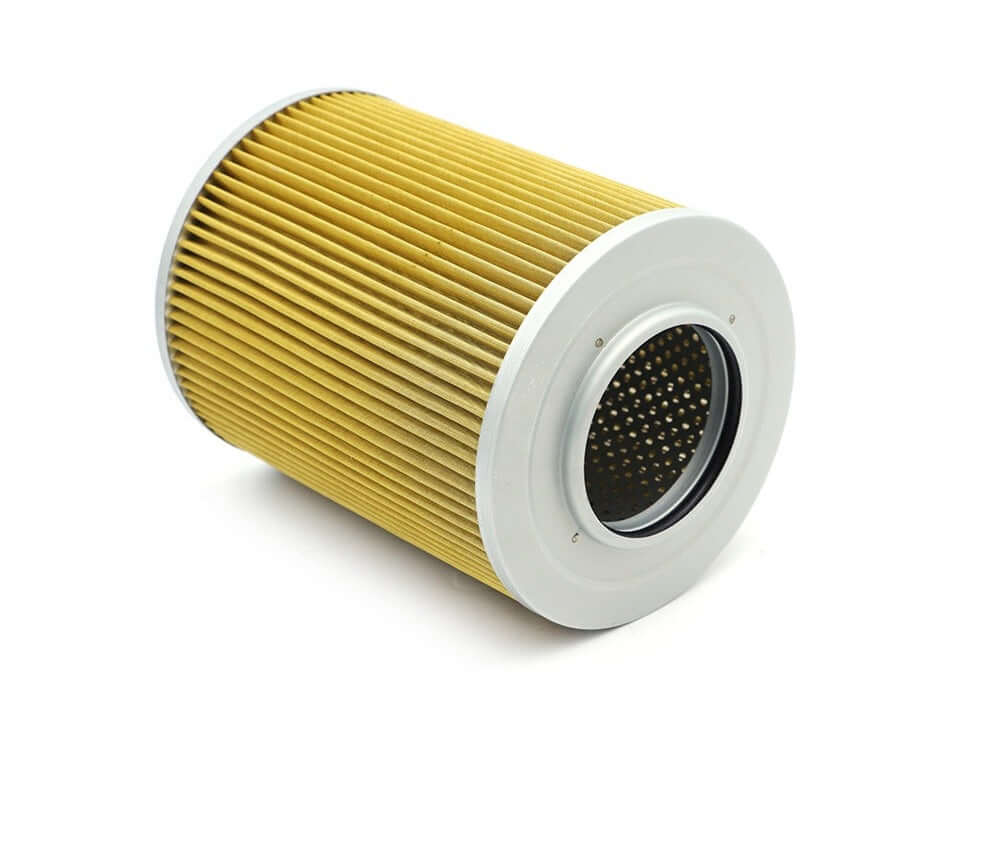
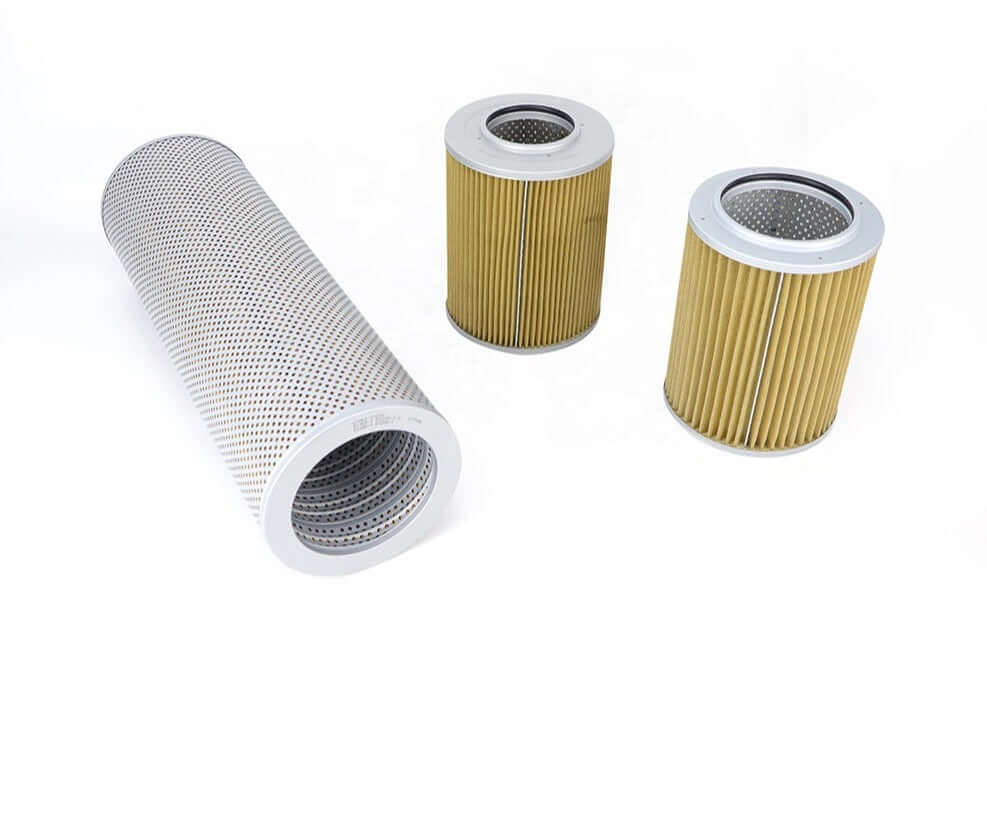
Hydraulic Oil Filter Element 205-60-51450 205-60-51270 for Komatsu Excavator
Collection:
Hydraulic Oil Filters
Three Points in the Hydraulic Circuit: Three Reasons Your Machine Stays Running
Most equipment operators think about hydraulic filtration as a single service item. In practice, your hydraulic system has three distinct contamination entry points and each requires its own filter, its own specification, and its own service attention. Missing any one of them compromises the protection offered by the other two.
Imara Engineering structures the hydraulic oil filter range around all three of those protection points, each with its own dedicated category and full cross-reference capability.
Hydraulic Return Filters
After hydraulic fluid has completed its working cycle, driving cylinders, powering motors, and actuating control valves, it returns to the reservoir carrying contaminants accumulated across every stage of that cycle. The hydraulic return filter intercepts that fluid on the way back in, before it re-enters the tank and recirculates into the system.
What to confirm before ordering a hydraulic return filter:
- Flow rate capacity matched to your system's return line volume at full operating temperature
- Micron rating appropriate for your operating environment and contamination level
- Bypass valve setting rated above your system's normal return line pressure
- Element dimensions compatible with your reservoir housing and return line fittings
A clogged or underspecified return filter allows contaminated oil to build progressively in the reservoir. Every subsequent cycle redistributes that contamination more widely, reaching the pump, valves, and cylinders that were previously protected. Hydraulic return filters sit within a dedicated sub-category at Imara Engineering, covering CAT, Komatsu, and Hitachi platforms in OEM and certified aftermarket grades.
Hydraulic Suction Filters
The hydraulic suction filter is positioned between the reservoir and the pump inlet. It is the last line of defence before your hydraulic pump, and because the hydraulic pump is among the highest-value components in your machine's drivetrain, what sits upstream of it carries significant consequence.
Critical specification factors for hydraulic suction filters:
- Pressure drop across the element at operating temperature and rated flow, a filter creating excessive restriction will cause pump cavitation
- Micron rating fine enough to protect internal pump clearances without starving the pump of flow
- Physical dimensions confirmed for your specific inlet port and strainer housing configuration
The suction filter specification is one of the most technically demanding in the hydraulic circuit. Imara Engineering cross-references every hydraulic suction filter to your machine model and pump specification before dispatch, not approximated, but confirmed.
Hydraulic Breather Filters
As hydraulic oil volume fluctuates during operation, your reservoir breathes, drawing air in and expelling it through the breather port. On active construction sites, quarry operations, and mining environments, the incoming air carries silica dust, fine particulate matter, and moisture. Without a correctly specified hydraulic breather filter on the reservoir vent, every breath the tank takes is a contamination event entering directly into your hydraulic fluid.
Breather filter performance factors to consider:
- Micron rating suited to your site environment and the particle size distribution you operate in
- Moisture absorption capacity for humid or tropical operating conditions
- Flow capacity matched to your reservoir's volume displacement rate during full machine operation
- Service interval rating compatible with your maintenance schedule and site dust loading
The hydraulic breather filter is one of the most consistently overlooked items in heavy equipment hydraulic servicing, and in high-dust operating environments, one of the most consequential. It is stocked at Imara Engineering for CAT, Komatsu, and major compact equipment platforms.
CAT Hydraulic Filters: Machine Cross-Reference and Part Numbers
CAT hydraulic filter specifications vary considerably across the range, from compact excavators operating on urban sites through to full-scale construction and mining machines. Getting the reference right requires model-specific cross-referencing, not a generic catalogue match.
CAT Compact Excavator Hydraulic Filter Reference
Two CAT compact platforms generate consistent hydraulic filter demand across the region:
CAT 303.5 hydraulic filter — the 303.5 is deployed extensively across landscaping, civil, and utility work. Hydraulic filter cross-references for the CAT 303.5 are confirmed at Imara Engineering for both standard and E2 configuration variants.
CAT 304CR hydraulic filter — the compact radius configuration makes the 304CR a preferred choice for confined-site and urban construction. Imara Engineering carries hydraulic filter cross-references for the CAT 304CR hydraulic filter across all compatible filter positions.
1G-8878 CAT hydraulic filter — the 1G-8878 is among the most referenced CAT hydraulic part numbers across multiple machine platforms. It is stocked at Imara Engineering in both genuine OEM and certified aftermarket grades, verified for compatibility before dispatch.
For larger CAT excavator platforms, CAT 320, 323, 330, and above, contact Imara Engineering with your machine model and serial number for hydraulic filter cross-referencing across all circuit positions.
Komatsu Hydraulic Filters and Multi-Brand Platform Coverage
Komatsu hydraulic filters and Komatsu hydraulic oil filters for the full range of Komatsu excavator platforms are stocked and cross-referenced at Imara Engineering. Komatsu PC-series machines from the PC138 through to the PC300 and larger carry distinct hydraulic filter specifications by model, all confirmed against OEM part numbers before any order ships.
For Hitachi excavators, Doosan, and Volvo heavy equipment platforms, hydraulic filter cross-referencing is also available. Contact Imara Engineering with your machine model for availability confirmation on less common platforms.
Yanmar VIO35 and Compact Equipment Hydraulic Filters
The Yanmar VIO35 hydraulic filter is one of the most requested compact excavator hydraulic filters in the market. Imara Engineering stocks cross-referenced hydraulic filter options for the VIO35 and other Yanmar compact platforms.
Compact machine hydraulic systems operate under the same contamination pressures as full-scale equipment, often in tighter, more challenging environments that accelerate particulate ingestion. The hydraulic filtration specification for compact platforms is no less critical than for larger machines, and Imara Engineering treats it with the same cross-reference rigour.
Additional compact platform hydraulic filter coverage includes:
- Yanmar VIO range across multiple configurations
- Kubota compact excavator platforms
- Bobcat and Doosan compact equipment
Hydac, Donaldson, Parker, and Pall Specialist Hydraulic Filter Brands
Beyond OEM cross-referenced filters, certain applications require brand-specific hydraulic filtration, whether due to site contract requirements, system design, or fleet standardisation policy. Imara Engineering carries hydraulic filter variants from four of the leading specialist brands in the heavy equipment filtration market.
Hydac filter excavator applications — Hydac produces hydraulic filtration elements across high-pressure, return line, and breather categories for a wide range of construction and industrial equipment. Hydac filters are available at Imara Engineering for compatible excavator and heavy machinery applications.
Donaldson hydraulic filter — Donaldson is a recognised precision filtration brand across the construction and mining sectors, with documented performance data across their hydraulic filter product range. Donaldson hydraulic filters are cross-referenced and stocked for major machine platforms.
Parker hydraulic filter — Parker Hannifin hydraulic filters cover high-pressure and return line applications with independently published performance specifications. Parker hydraulic filter variants are available through Imara Engineering for applicable heavy equipment platforms.
Pall hydraulic filter — Pall is a precision filtration specialist with products designed for the most demanding hydraulic applications in heavy industry. Pall hydraulic filters are available where high-specification filtration is required by system design or contract.
For applications requiring a specific brand across any of the three hydraulic circuit protection points, Imara Engineering sources and cross-references across all four.
What Hydraulic Contamination Actually Does to a Machine Over Time
A common misconception is that hydraulic contamination damage is dramatic and sudden. In most cases, it is exactly the opposite: slow, cumulative, and invisible until the point where component replacement becomes unavoidable.
The progression typically unfolds like this:
- Fine particles, many below 10 microns and invisible to the naked eye, begin abrading internal pump surfaces, valve seats, and cylinder seal faces across every operating cycle. No warning signs. No visible symptoms.
- Those wear particles become additional contaminants in the circuit, compounding the damage they cause with every subsequent system cycle. The filter load increases. Bypass events become more frequent.
- ISO cleanliness levels in the hydraulic fluid deteriorate past the tolerance thresholds of your pump and valve components. Internal clearances open beyond the point where normal operation is sustainable.
- Macro failures follow — pump bearing seizure, spool valve jamming, or cylinder seal extrusion. At this stage, the cost is component replacement, extended downtime, and, in many cases, the discovery that upstream contamination has already damaged the components adjacent to the one that failed visibly.
Correct filtration at all three circuit points, hydraulic return filters, hydraulic suction filters, and hydraulic breather filters, is what interrupts this cycle before it reaches stage three. That is the entire principle behind this range at Imara Engineering.
Why Equipment Operators Choose Imara Engineering for Hydraulic Oil Filters
Hydraulic filter sourcing for heavy machinery is complicated by one fundamental fact: a filter that is correct for one machine is often incorrect for another machine of the same brand. CAT 303.5 and CAT 304CR hydraulic filter specifications are not interchangeable. A Komatsu PC200 hydraulic oil filter is not the same as a PC138 variant. Precision cross-referencing is not optional; it is the entire point.
Here is what that means at Imara Engineering:
- Every hydraulic oil filter is cross-referenced by machine make, model, and OEM part number — CAT hydraulic filters, Komatsu hydraulic oil filters, and all multi-brand variants are confirmed before dispatch
- Stock depth across all three hydraulic circuit positions — return, suction, and breather — so a complete hydraulic service ships consolidated in one order
- Brand-specific availability across Hydac, Donaldson, Parker, and Pall for applications where specified-brand filtration is required
- Both genuine OEM and certified aftermarket options are clearly identified, both meeting the published performance specification
- Fast delivery across Nigeria and the wider region, with technical support available for specialist or older machine platforms
- Complete filters and service parts supply — hydraulic oil filters alongside engine oil filters, fuel filters, air filters, transmission filters, and coolant filters, consolidated into a single scheduled service order
Frequently Asked Questions
Each one protects a different point in the circuit. Return filters clean oil before it re-enters the reservoir. Suction filters protect the pump at the inlet. Breather filters prevent contamination from entering through the tank vent.
Yes. CAT 303.5 hydraulic filters, CAT 304CR hydraulic filters, the 1G-8878 CAT hydraulic filter, and variants for larger CAT excavator platforms are all available and cross-referenced by machine model.
Yes. Imara Engineering carries hydraulic filter variants from all four brands, cross-referenced against your machine platform and hydraulic system specification before dispatch.
Yes, when sourced from a verified supplier. Certified aftermarket hydraulic filters at Imara Engineering are tested to meet or exceed OEM performance specifications in filtration efficiency, pressure rating, and material compatibility.
Yes. Hydraulic return filters, suction filters, and breather filters for your machine are consolidated into a single order aligned to your hydraulic service interval.