Not the Most Obvious Failure but One of the Costliest When Left Unaddressed
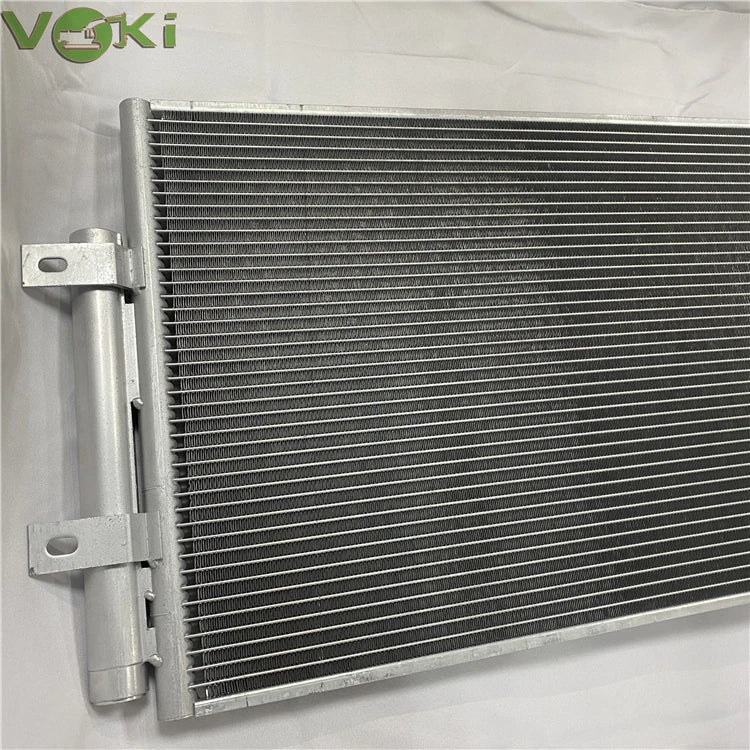
Of all the components in an excavator's AC circuit, the condenser is the one most frequently misdiagnosed or bypassed in the initial inspection. When cooling performance drops, attention typically moves to the refrigerant charge first, then the compressor. The condenser sitting within the cooler stack and visually intact from the outside is often the last component considered.
This oversight carries a real cost. A degraded condenser does not just reduce cooling output. It forces the compressor to operate against elevated high-side pressure, accelerating internal wear on a component that costs significantly more to source and replace. A condenser that should have been identified early frequently precedes a compressor failure that arrives weeks later and is attributed to an unrelated cause.
The conditions an excavator's condenser operates in are also far more demanding than most automotive applications. It sits inside a cooler stack shared with the radiator, hydraulic oil cooler, and charge air cooler, all generating radiant heat. It processes dust-laden site air at low forced-flow rates rather than clean ram-air at speed. These are conditions that compress service intervals and accelerate failure modes that rarely affect road vehicles.
Four Failure Patterns Specific to Excavator AC Condensers
Condenser failures do not always present the same way. Identifying the specific failure pattern determines whether replacement, cleaning, or a broader system inspection is the appropriate response.
-
Core fin blockage from site particulate — Fine dust and clay pack progressively into the fin channels, reducing thermal transfer efficiency before any visible damage is apparent. The system continues to run, but the cooling output weakens gradually over time. This is frequently misread as a refrigerant charge issue before the condenser is correctly identified.
-
Physical impact damage from debris — Stone strikes or ground contact collapse fin sections and adjacent tubes within the core. Refrigerant loss follows immediately, triggering pressure protection switches and disabling compressor clutch engagement. Unlike progressive failure modes, this one is sudden and unambiguous.
-
Electrochemical corrosion on the aluminium matrix — Heavy equipment condensers operating in coastal, agricultural, or chemical-exposure environments develop pitting corrosion along the fin and tube surface. The resulting refrigerant loss is gradual rather than sudden, and the source can be difficult to isolate without a full pressure decay test.
-
Brazed joint fatigue from pressure cycling — Repeated compressor engagement and disengagement create pressure that stresses the brazed connections between refrigerant tubes and end tanks. Micro-fractures develop across operating cycles and produce refrigerant seepage under load — a failure that typically worsens across a season before becoming a noticeable performance drop.
The Imara Engineering AC Condenser Range: Every Major Excavator Brand Covered
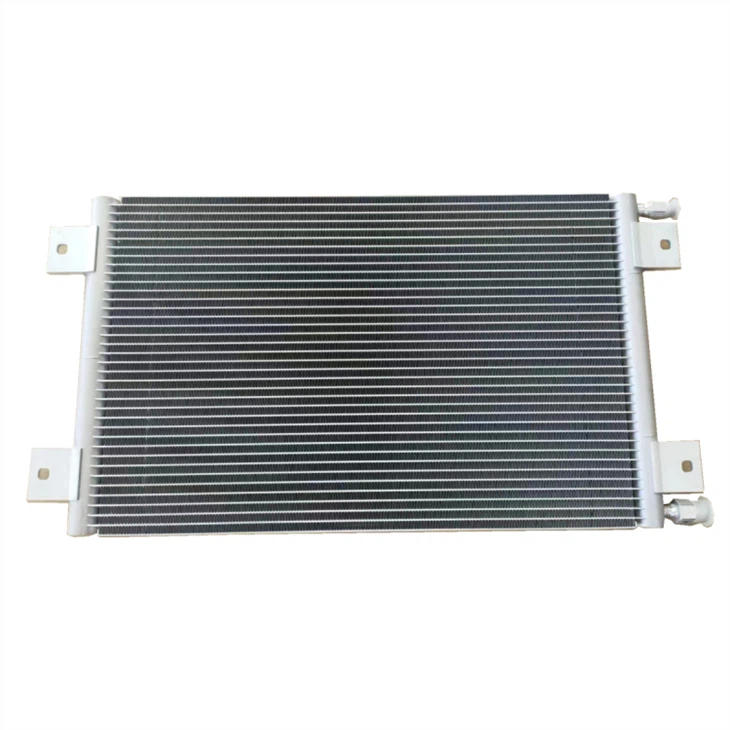
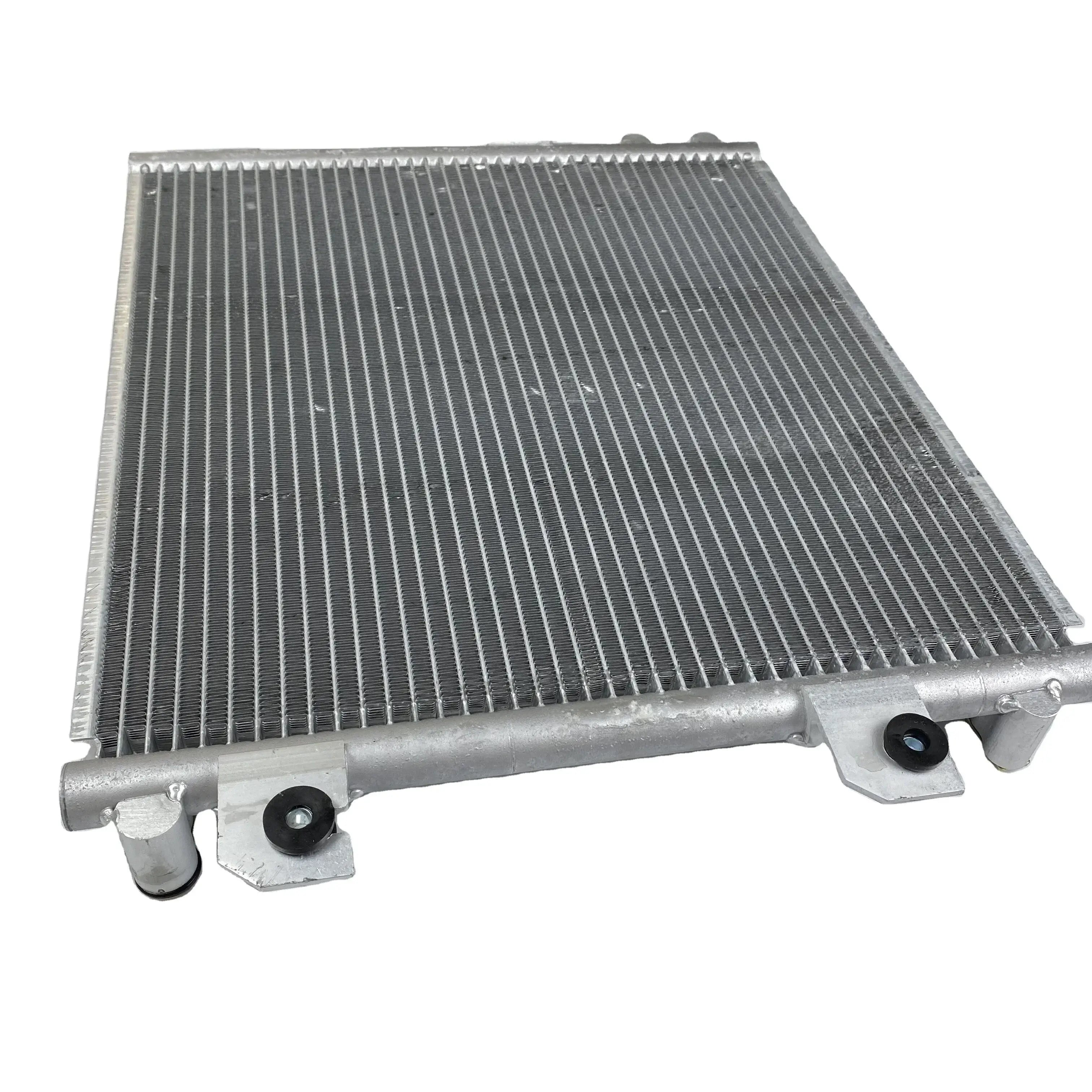
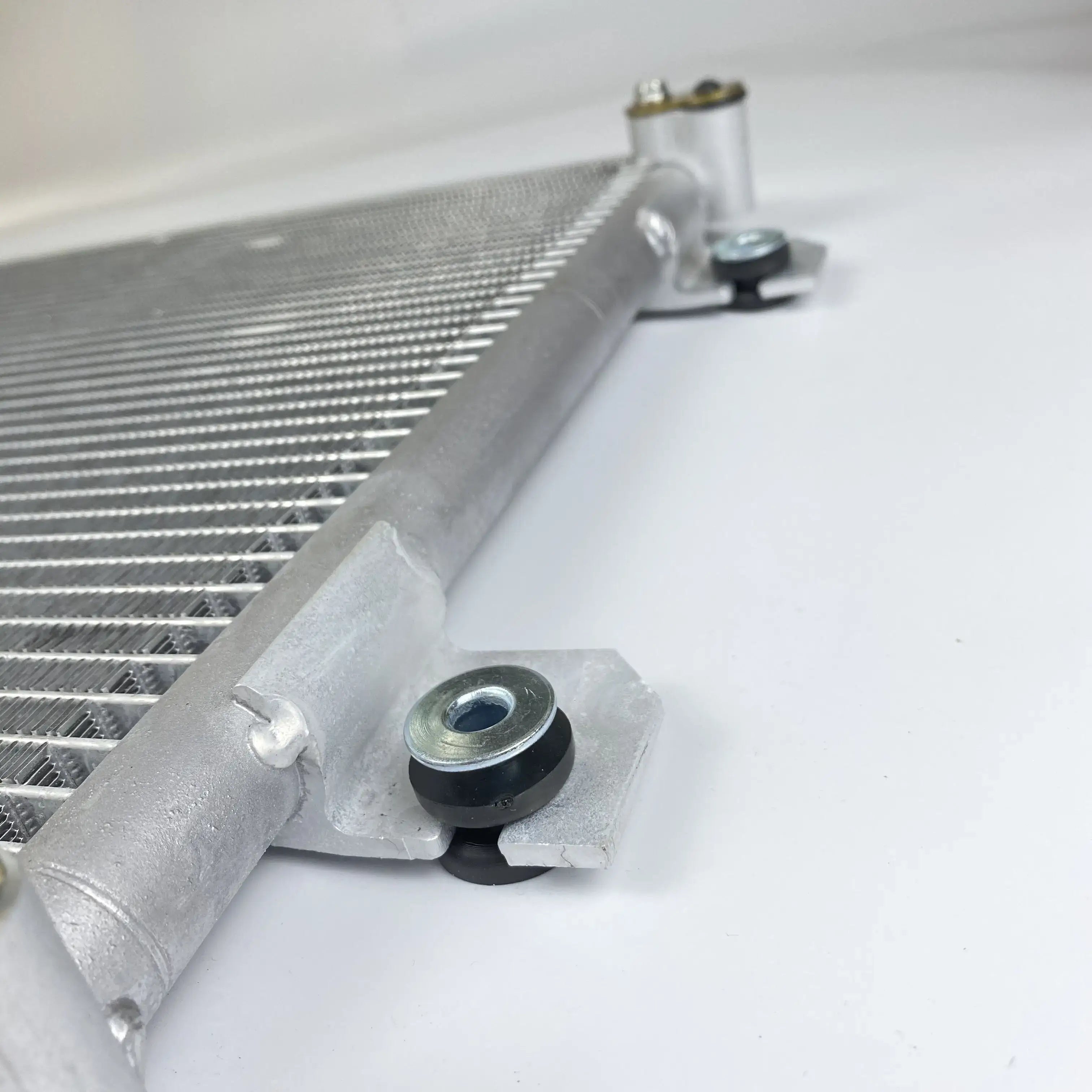
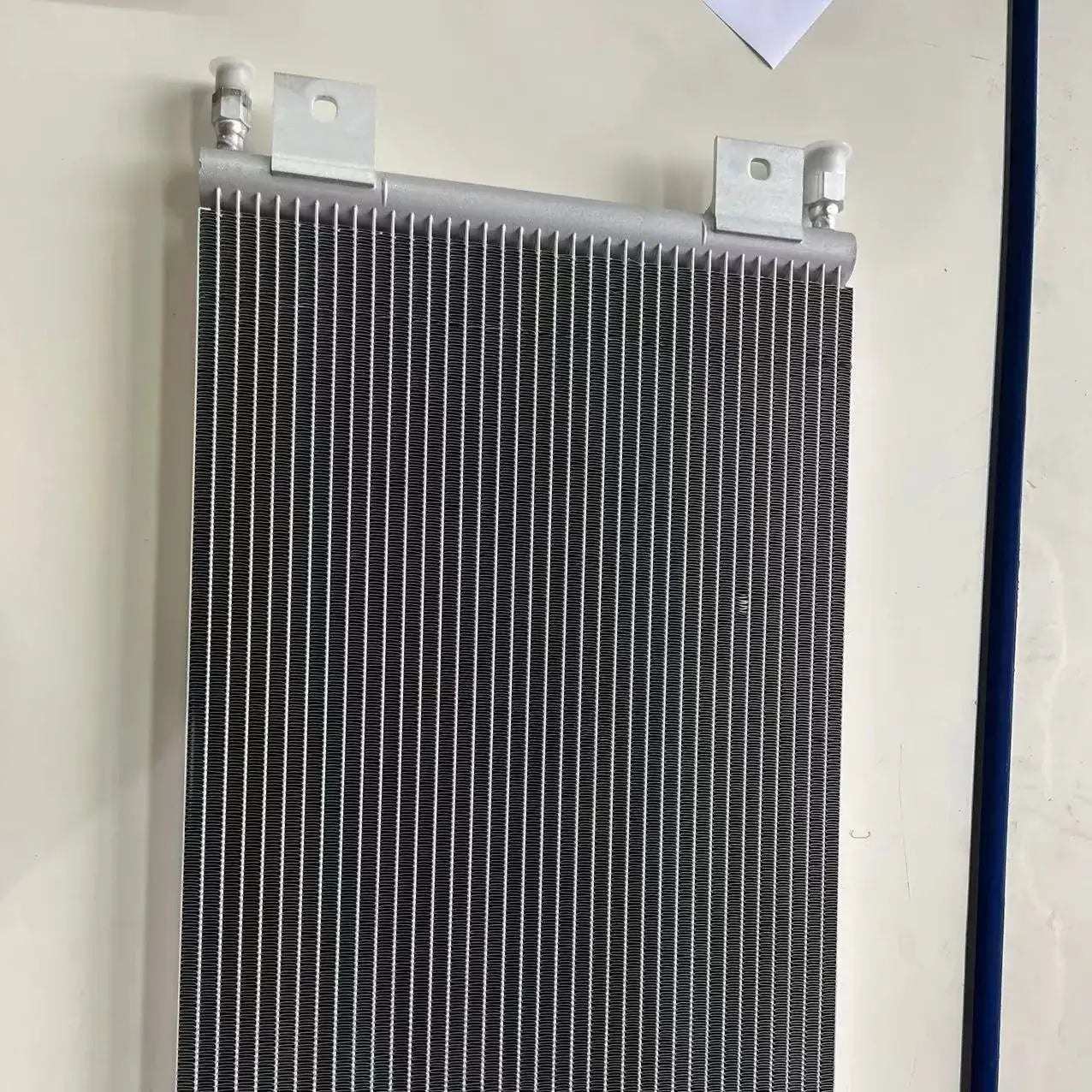
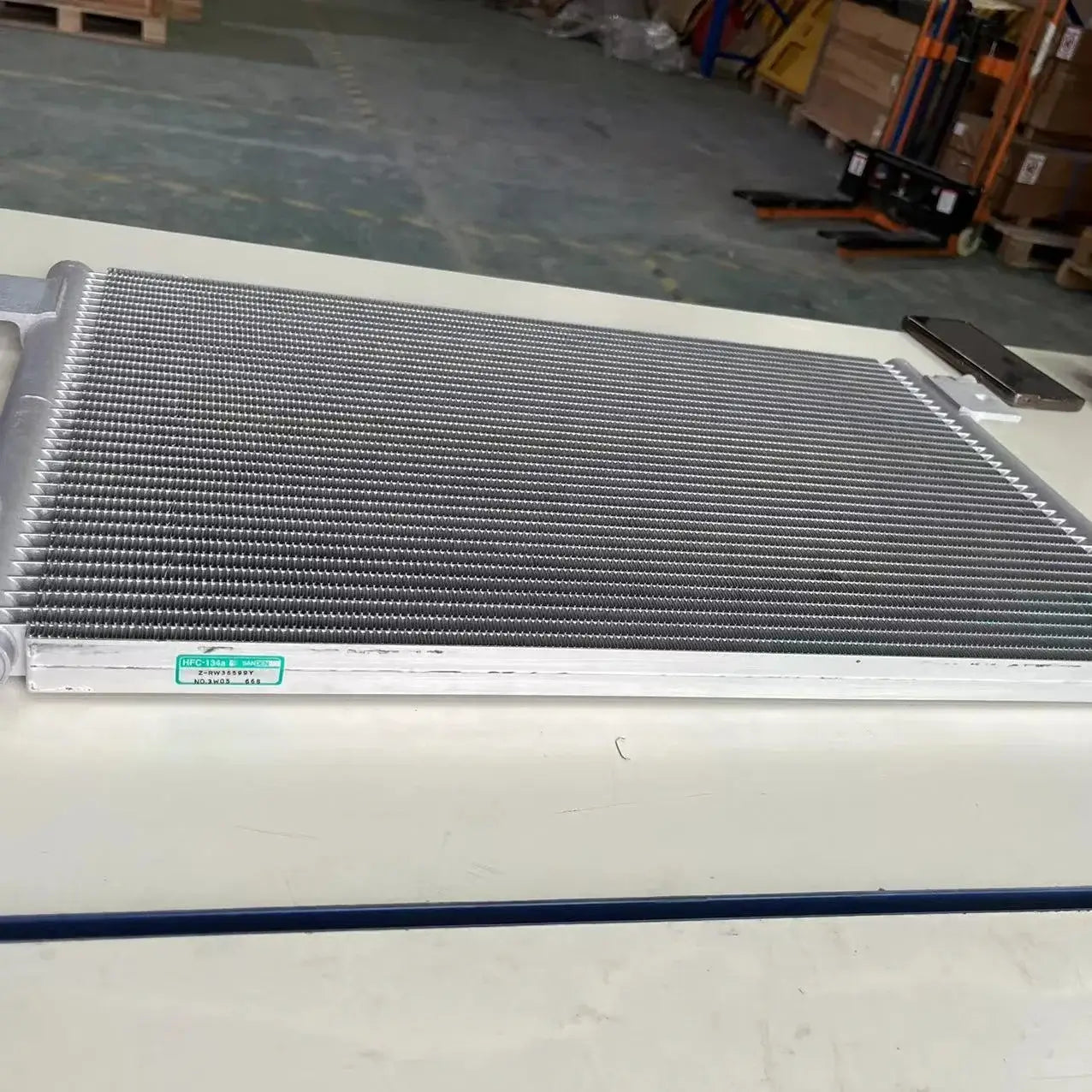
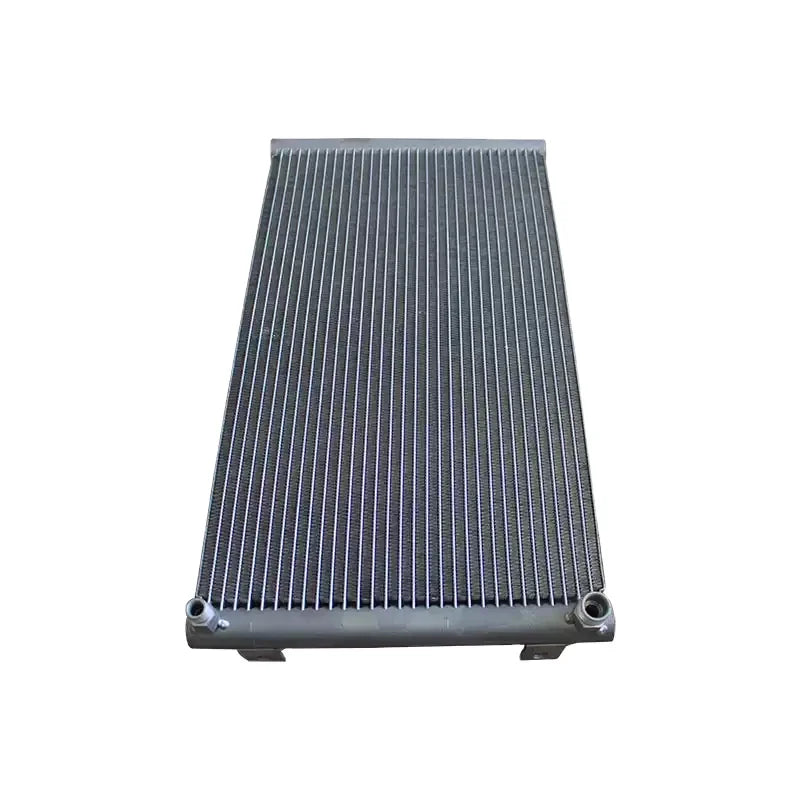
Imara Engineering's heavy equipment condenser range is cross-referenced by machine make, model series, and serial number. Every unit is confirmed to OEM dimensions and circuit specifications before it is listed in the catalogue.
Caterpillar (CAT) AC Condenser
The cat ac condenser range at Imara covers the 320, 323, 330, 336, 349, and 390 excavator series. The Cat 320 condenser is one of the most consistently requested units in the range, stocked for immediate dispatch. The caterpillar condenser catalogue accounts for differences in HVAC mounting configuration across build years, and regional machine specifications fitment is confirmed by serial number for every order placed.
Komatsu Condenser
The komatsu condenser range covers PC200, PC210, PC300, PC360, and PC400 series excavators. The komatsu pc200 coKomatsu PC200ong the highest-demand units in the Imara catalogue, with stock maintained at consistent levels for fast fulfilment. Serial number verification is used to distinguish between HVAC configurations used across different build periods within the same model series.
Hitachi AC Condenser
The hitachi ac condenser range covers ZX130, ZX200, ZX300, ZX450, ZX650, and ZX870 series excavators. Hitachi condenser units carry specific core geometry requirements determined by the cooler stack layout used across machine generations. Imara's fitment process verifies dimensional match alongside refrigerant circuit compatibility for every unit supplied.
Volvo Excavator Condenser
The Volvo excavator condenser range covers EC210, EC300, EC380, and EC480 series machines. Volvo HVAC systems use condenser configurations that vary between machine generations. Fitment is confirmed against build year and serial number to ensure the correct unit is matched to each specific application.
Before You Reinstall and Recharge: What Needs to Be Checked First
Installing a replacement AC condenser unit without verifying the surrounding system is one of the most reliable ways to repeat the failure within a single operating season. Before recharging, the following checks are essential:
-
Receiver dryer replacement — Every time the AC system is opened, the receiver dryer must be redried. A used dryer releases residual moisture directly into the new condenser, initiating internal corrosion from the first run cycle.
-
Compressor integrity — If the condenser failed as a result of a pressure fault, the compressor must be verified as sound before the system is recharged. A degraded compressor circulates metal debris and contaminated oil into the new condenser core from the moment refrigerant starts moving.
-
AC hose and fitting inspection — Pressure-test the full circuit before recharging. Hose cracks or loose fittings that were masked by refrigerant loss through the failed condenser will become the next leak point after a fresh charge.
-
Cooler stack airflow clearance — Confirm the replacement condenser sits correctly within the cooler stack with no baffle misalignment or seal collapse restricting airflow across the new core. Restricted airflow compromises performance regardless of component quality.