What the EGR System Actually Does and What Happens When It Fails
The Exhaust Gas Recirculation system on a modern diesel engine is not a single component; it is an interconnected circuit of valves, cooler, pressure sensors, and aftertreatment controls that work together to manage combustion chemistry and exhaust output within the thresholds required for emissions certification. Understanding the circuit matters because when one component fails, the symptoms often point to a different component than the actual fault.
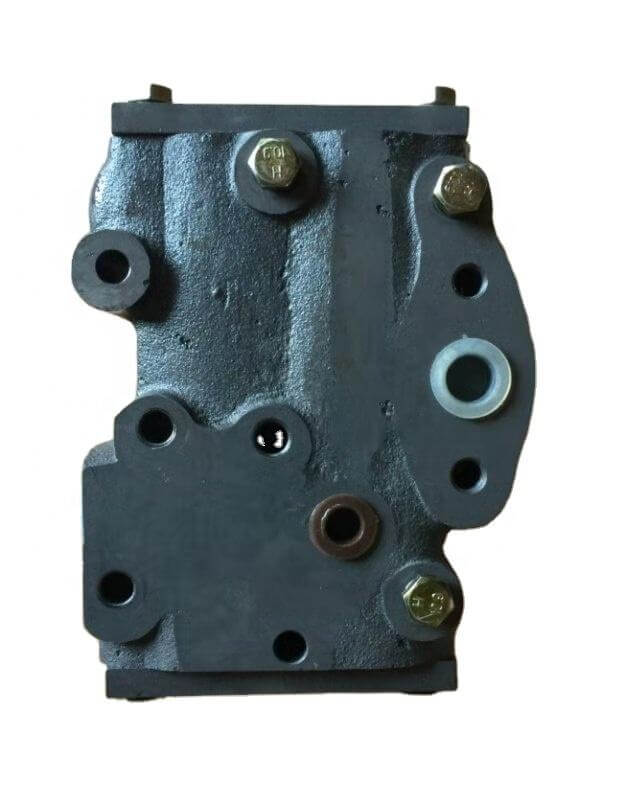
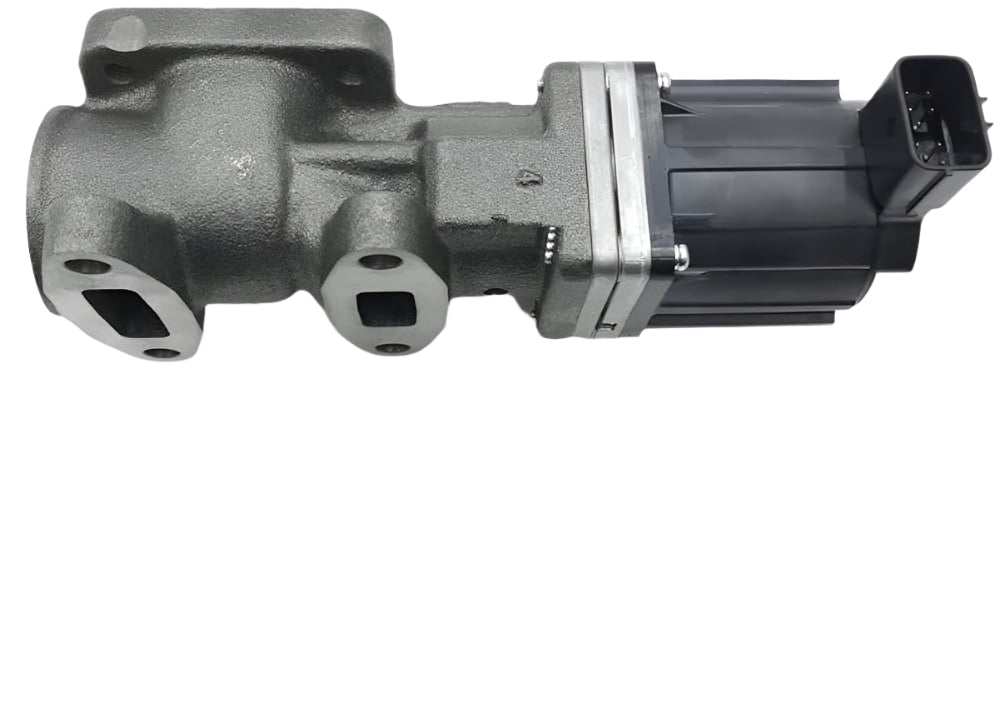
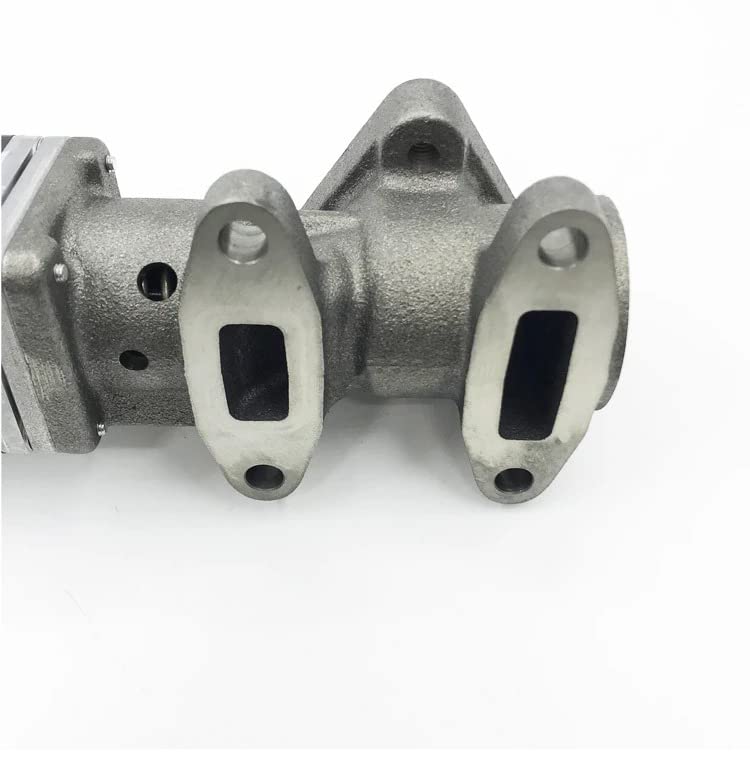
The EGR valve opens under engine management command to allow a measured flow of exhaust gas into the intake manifold. That recirculated gas displaces a portion of the fresh oxygen charge, lowers peak combustion temperature, and reduces the thermal conditions that produce nitrogen oxide at high concentrations. The EGR cooler reduces the temperature of that recirculated exhaust gas before it enters the intake. Hot exhaust gas entering the intake uncooled would reduce charge density and work against the turbocharger's compression effort.
When the system operates correctly, the engine meets its certified emissions output at every load point. When it does not, the consequences are measurable and immediate:
- A stuck-closed EGR valve passes no recirculated gas, NOx output rises, the SCR system is overloaded attempting to compensate, and on regulated sites, the machine may be flagged for emissions non-compliance
- A stuck-open EGR valve floods the intake with exhaust gas at the wrong load points. Rough idle, power loss under load, and black smoke under hard acceleration are the consistent symptoms
- A blocked or leaking EGR cooler allows hot, unfiltered exhaust gas into the intake circuit coolant contamination, white smoke, and rising coolant consumption follow if it is not caught early
- A failed EGR differential pressure sensor sends incorrect feedback to the engine management system. The ECM cannot accurately command valve position, producing the same fault codes as a valve failure without the valve being at fault
Warning Signs of an EGR Valve Failure on Heavy Equipment
EGR valve failure on a diesel excavator or heavy plant machine follows recognisable patterns. The following symptoms, individually or in combination, warrant immediate inspection of the EGR system before fault codes escalate to derating or shutdown events:
-
Rough idle or unstable engine at low load — a stuck-open exhaust gas recirculation valve floods the intake with exhaust gas at idle conditions, where the engine has insufficient airflow to manage the dilution. A rough idle that smooths out under load is a consistent EGR valve indicator.
-
Power loss under load with no visible smoke — a stuck-closed EGR valve does not produce dramatic symptoms initially. The engine runs lean on its emissions circuit, derates progressively, and the operator notices reduced response before any fault code becomes active.
-
Active emissions fault codes with no turbocharger fault — fault codes relating to NOx output, EGR flow rate, or differential pressure across the valve circuit isolate the EGR system directly. Do not replace the turbocharger on an emissions fault without first inspecting the EGR valve and cooler.
-
Coolant loss without visible external leak — a failing EGR cooler can pass coolant into the exhaust gas circuit internally. Rising coolant consumption and white exhaust smoke under load, without a visible external leak, is an EGR cooler failure until proven otherwise.
-
Carbon tracking or deposit buildup on the intake manifold — on machines with access to the intake manifold, heavy carbon deposit accumulation downstream of the EGR inlet port indicates the valve has been passing partially burned exhaust gas at the wrong load points for an extended period.
EGR Valves & Emissions Parts We Stock
Cat EGR Valves: Caterpillar C15 and Broader Range
The Cat C15 EGR valve is the highest-volume Caterpillar EGR unit in our range, reflecting the C15's dominance across Cat 345, 349, and 365 series excavators and Cat on-highway and industrial equipment. Our Caterpillar EGR valve range covers:
- Cat C15 EGR valve — OEM and aftermarket options, cross-referenced by engine serial to confirm correct actuator configuration for ACERT and non-ACERT C15 variants
- EGR valve caterpillar units for C13, C12, and C9 engine platforms
- Cat EGR cooler and Cat C15 EGR cooler — cooler replacement units for Cat platforms where the cooler is a separate serviceable component from the valve assembly
- Aftermarket cat EGR valve options available — dimensionally and electrically verified against OEM specification, not sourced generically
Cummins EGR Valves: ISX, ISX15, and Related Platforms
The Cummins ISX and ISX15 are the most widely operated Cummins platforms in heavy equipment fleets globally, and the Cummins EGR valve replacement requirement across these engines accounts for a significant share of our emissions parts dispatches. Our Cummins EGR valve range covers:
- Cummins ISX EGR valve and ISX15 EGR valve variants — multiple configurations exist across the ISX production run; engine serial number is required to confirm the correct unit
- Cummins ISX EGR differential pressure sensor — the sensor that measures flow across the EGR valve circuit and provides the ECM with the feedback it needs to command accurate valve position
- Cummins exhaust back pressure sensor and Cummins ISX exhaust gas pressure sensor — related pressure sensing components frequently implicated in EGR system fault code diagnosis
- EGR cooler for Cummins ISX platforms — available as a standalone component where the cooler is the identified failure point
Komatsu EGR Valves
Komatsu EGR valve requirements primarily arise from the SAA6D114 and SAA6D125 engine families fitted to PC300 and PC400 series excavators and larger Komatsu dozer platforms. Our Komatsu EGR valve range covers:
- EGR valve replacement units for SAA6D114-powered Komatsu PC300 and PC360 series excavators
- Komatsu EGR valve variants for SAA6D125-powered PC400 and PC450 series machines
- Contact our parts team to confirm fitment on Komatsu dozer and wheel loader platforms machine serial number confirms the correct EGR configuration
EGR Coolers for Cat and Cummins Platforms
The EGR cooler is replaced alongside the EGR valve in a significant proportion of emissions system repairs, particularly on high-hour machines, where both components have been operating in a degraded circuit simultaneously. Ordering both in a single consignment avoids a repeat repair event and a second freight cost.
- EGR cooler excavator units for Cat C15 and C13 platforms
- Cat EGR cooler for the C15 ACERT — confirm build date with our team, as cooler configuration changed across the ACERT production run
- EGR cooler for Cummins ISX — covers ISX and ISX15 applications, confirm engine serial for configuration matching
- EGR cooler excavator units for other Cat and Cummins platforms available on enquiry
Diesel Particulate Filter (DPF) Parts for Excavators
The diesel particulate filter captures soot and particulate matter from the exhaust stream before it exits the stack. On Tier 4 Final machines, the DPF operates in combination with the SCR system and EGR circuit; it is part of the same aftertreatment system, not a separate maintenance item. DPF failure or excessive loading produces its own fault codes and forces active regeneration events that, if blocked or interrupted repeatedly, result in DPF replacement.
- Diesel particulate filter excavator components for Cat and Cummins Tier 4 Final platforms
- DPF excavator sensor components, including differential pressure sensors across the filter body — the primary indicator of DPF loading state used by the engine management system
- Cummins DPF differential pressure sensor — a frequently replaced component on high-hour ISX-powered machines running in high-particulate environments
DEF System Components: Cummins Diesel Exhaust Fluid
The Cummins DEF (Diesel Exhaust Fluid) system injects a urea-water solution into the exhaust stream upstream of the SCR catalyst, where it converts nitrogen oxides into nitrogen and water vapour. The system has multiple serviceable components that degrade independently of the main aftertreatment hardware.
- Aftertreatment diesel exhaust fluid controller — the control module that governs DEF injection rate in response to NOx sensor feedback and engine load data
- Cummins DEF header — the heated injector assembly that delivers DEF into the exhaust stream; crystallisation from DEF contamination or cold-weather deposit buildup is the most common failure mode
- Cummins DEF tank filter — the in-tank filter that prevents contaminated DEF from reaching the dosing pump; a blocked DEF tank filter produces DEF quality fault codes before the dosing pump itself is affected
- Cummins diesel exhaust fluid system components for ISX, ISX15, and QSX15 platforms
SCR System Components & Pressure Sensors
The SCR system excavator components we stock extend beyond the primary DEF and DPF hardware to include the sensing and control components that the engine management system depends on for accurate aftertreatment operation:
- SCR system excavator catalyst components for Tier 4 Final Cat and Cummins platforms — confirm machine model and engine serial for correct specification
- Cummins exhaust back pressure sensor — measures exhaust restriction downstream of the DPF; a failed sensor produces backpressure fault codes that can be misdiagnosed as DPF or turbocharger faults
- Cummins ISX exhaust gas pressure sensor — pressure sensing at the exhaust manifold outlet, used in EGR flow calculation and turbocharger turbine inlet pressure monitoring
EGR Delete on Heavy Equipment: What You Need to Know
The term EGR delete heavy equipment appears regularly in searches from fleet operators and workshop managers, particularly on older Tier 3 machines or in operating jurisdictions where emissions regulation is less stringent. This is a topic worth addressing directly.
An EGR delete removes or disables the exhaust gas recirculation system, typically by blocking the EGR valve port and remapping the engine management system to operate without EGR input. The motivation is usually to eliminate EGR-related maintenance costs, prevent carbon fouling of the intake manifold, and, in some applications, recover the small power and fuel efficiency benefit that EGR operation extracts from the engine.
The practical considerations are significant:
- On Tier 4 Final machines, an EGR delete will produce active fault codes that cannot be cleared without an aftermarket ECM remap and will typically result in engine derating — the emissions system is integrated into the engine management logic at a level that cannot be bypassed with mechanical modifications alone
- On Tier 3 and earlier machines without integrated emissions monitoring, an EGR delete is mechanically straightforward but may render the machine non-compliant for operation on regulated sites, in urban environments, or in jurisdictions that inspect equipment emissions
- In regions where emissions regulations apply to operating equipment, an EGR-deleted machine is a compliance liability regardless of its mechanical condition
If you are managing an EGR system fault on a Tier 3 machine and considering a delete as a maintenance solution, contact our parts team. In many cases, a quality aftermarket EGR valve replacement at a fraction of OEM pricing resolves the issue without the compliance exposure.
OEM vs Aftermarket EGR Valves: Making the Right Call
The EGR valve sits between two extremes of the OEM versus aftermarket decision. It is not as dimensionally simple as a muffler, where fit is the primary variable, but it is not as precision-critical as a turbocharger, where internal tolerances at 100,000 RPM demand the tightest available specification. The EGR valve is an electromechanical component with specific electrical requirements, actuator voltage range, position sensor output, and dimensional requirements, including valve seat diameter, port geometry, and flange configuration.
What matters when evaluating an aftermarket EGR valve for a diesel excavator or heavy equipment application:
- Actuator electrical specification must match the OEM unit exactly — incorrect voltage range or position sensor output produces fault codes regardless of mechanical fit
- Valve seat diameter and flow geometry must match OEM specification — an undersized valve seat limits EGR flow rate and produces the same fault code pattern as a stuck-closed valve
- Flange configuration and gasket face finish must allow full sealing without modification at installation — any deviation here creates an EGR leak point that compromises the entire circuit
Every aftermarket EGR valve in Imara Engineering's catalogue is verified against these criteria before it is listed. We do not stock generic diesel EGR valve units mapped against machine models without dimensional and electrical verification.
How to Confirm the Right EGR Valve for Your Machine
EGR valve identification is engine-serial-specific on most platforms, particularly the Cat C15 and Cummins ISX, where multiple EGR configurations were produced across the engine's production run. Have the following available before contacting our team:
-
Engine model and serial number — the primary reference for EGR valve specification. The same engine designation may carry different EGR valve configurations depending on production date and emissions certification tier
-
Machine model and serial number — useful as a cross-reference when the engine serial is not accessible from the service position
-
OEM part number from the existing valve — stamped on the valve body or found in the machine's parts manual. This is the fastest cross-reference route and eliminates configuration ambiguity entirely
-
Active fault codes — particularly useful if the repair is fault-code driven rather than a scheduled replacement. EGR-related fault codes confirm which component in the circuit is implicated and allow our team to recommend the correct parts for the specific failure mode
Provide any of the above to our parts team, and we will cross-reference, confirm fitment, check stock availability, and advise on the dispatch timeline before you place the order.