What Sprockets Do And Why Their Condition Defines Your Track System
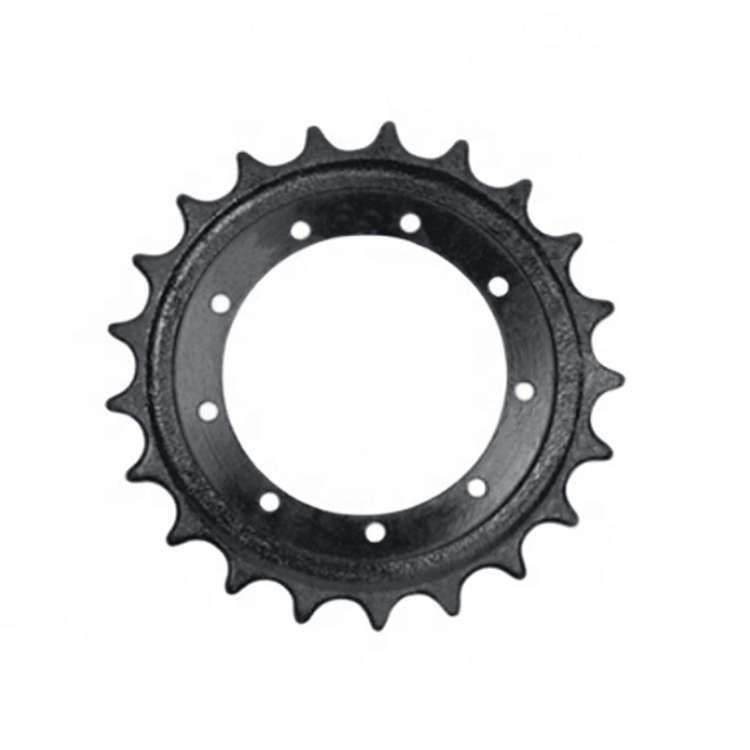
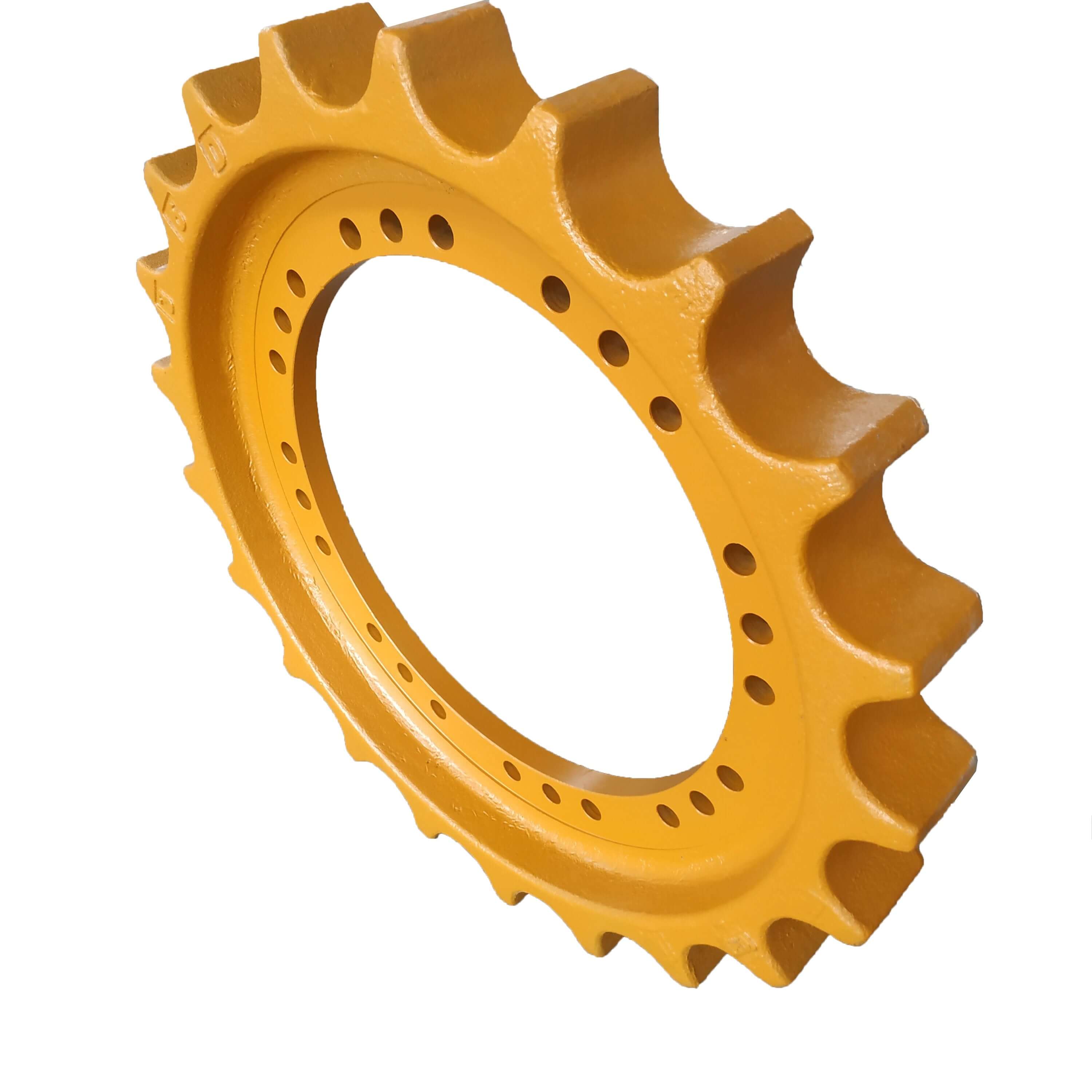
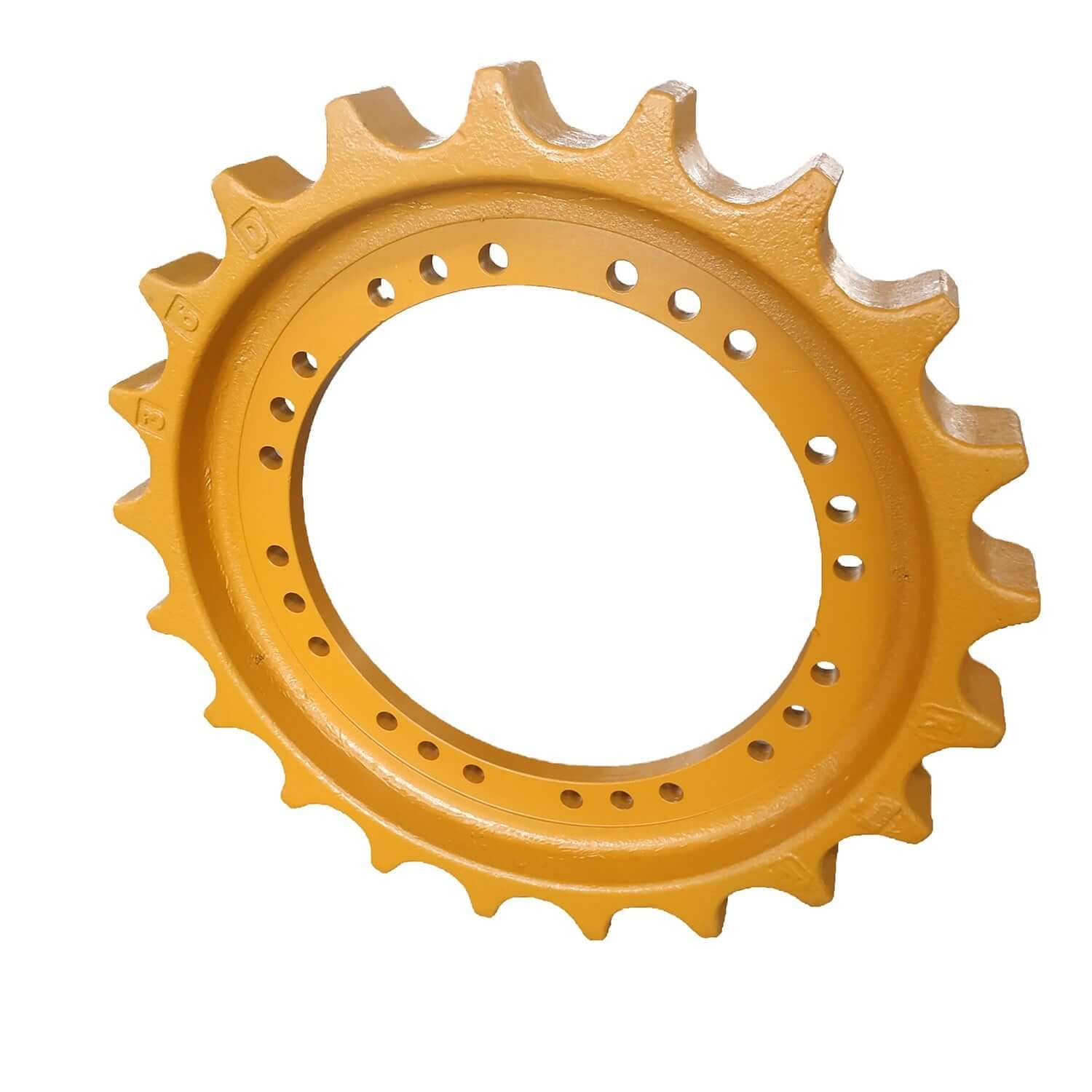
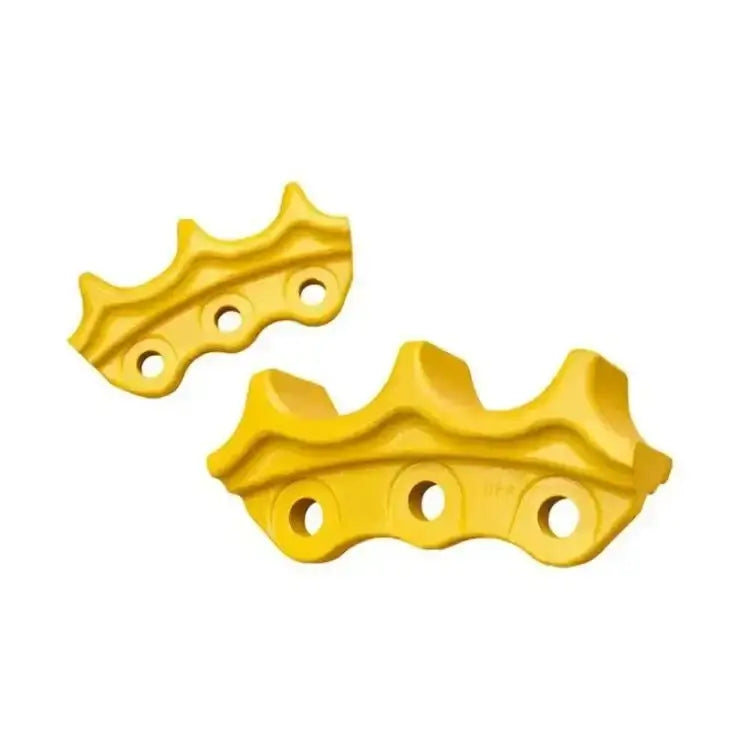
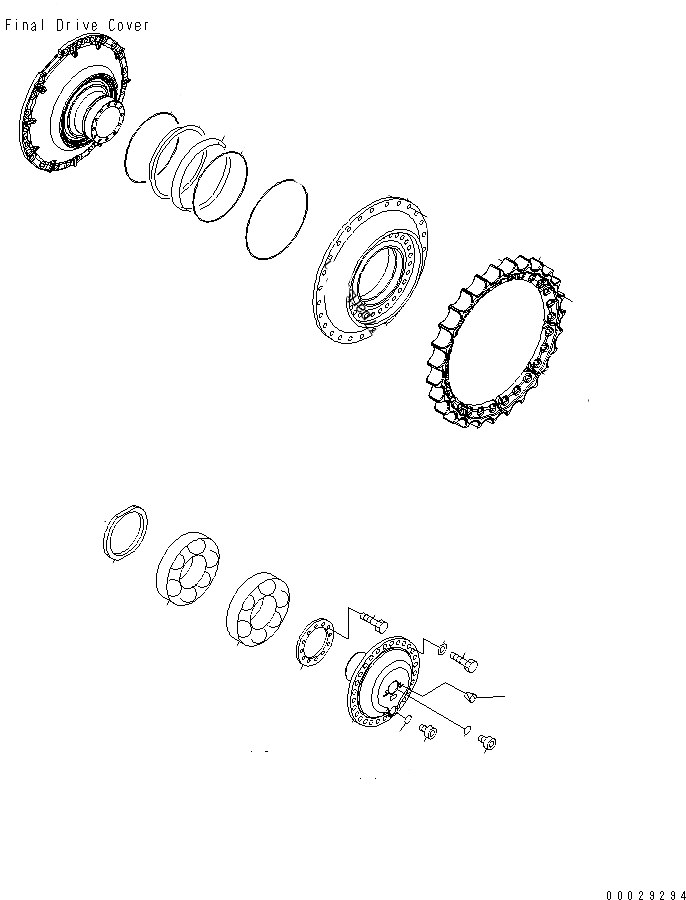
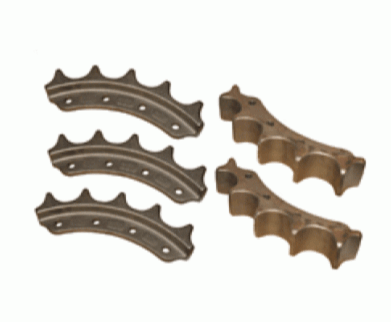
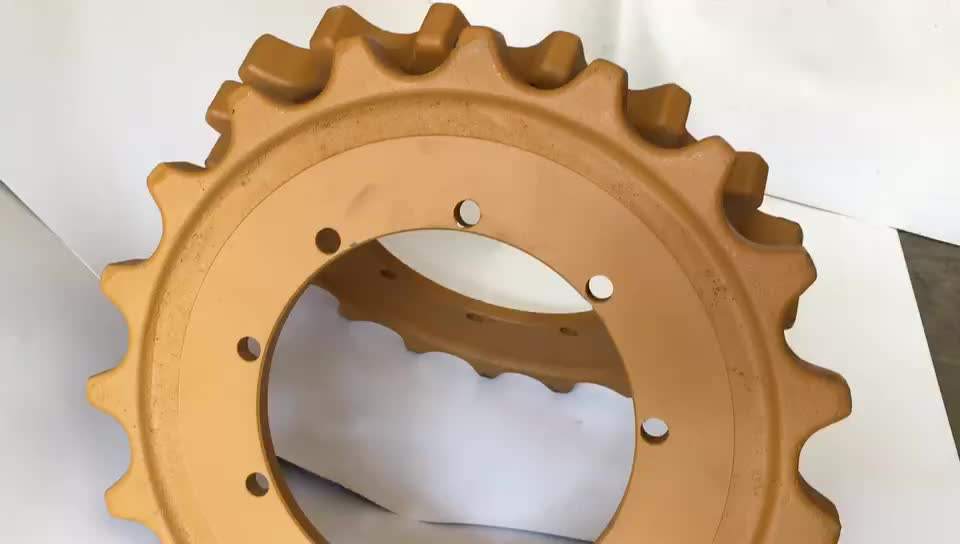
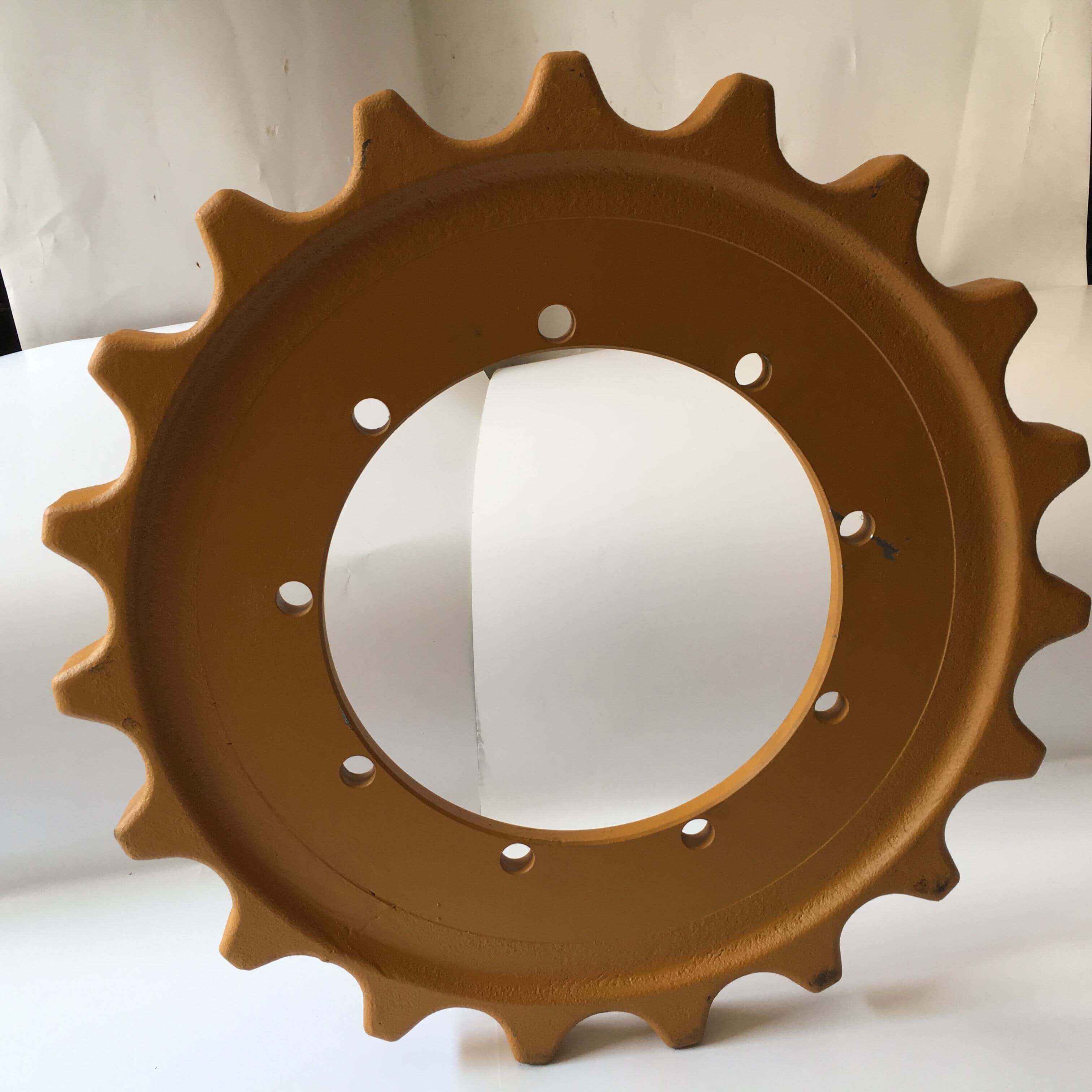
The drive sprocket is mounted at the rear of the track frame on each side of the machine, driven directly by the final drive output shaft. Its teeth engage with the track chain links or with the drive lugs on the inner surface of a rubber track converting the rotational output of the final drive into linear track movement.
The relationship between the sprocket tooth profile and the track chain pitch is precise and non-negotiable. The track chain is manufactured to a specific pitch the centre-to-centre distance between consecutive link pins. The sprocket is manufactured with a tooth spacing that matches that pitch exactly, so each tooth engages a link cleanly and without impact as the chain wraps around the sprocket at the rear of the undercarriage system.
The consequence for a rubber track machine is equally damaging. The drive lugs on the inner surface of a rubber track are manufactured to engage the sprocket teeth at a specific geometry. A worn or incorrectly specified sprocket tooth profile creates abnormal shear stress on those drive lugs with every revolution wearing lug material from the track body and shortening rubber track service life to a fraction of what it should be.
Warning Signs, When Your Sprockets Need Replacing
Sprocket wear communicates itself through the track's behaviour and through visual inspection of the tooth profile. These signals demand attention before a new track chain or rubber track is ordered because fitting either to a worn sprocket guarantees premature replacement:
-
Hook wear on sprocket teeth — tooth tips curving in the direction of chain travel — the definitive sprocket replacement signal. Hook wear means the sprocket is no longer engaging the chain at the correct contact point. Every revolution is generating abnormal impact stress on the chain pins and bushings.
-
Pointed or sharpened tooth profile — the tooth flanks have worn away leaving a sharp, narrow tooth tip. A pointed tooth penetrates the chain link rather than supporting it, concentrating contact stress on a minimal surface area and accelerating chain pin wear exponentially.
-
Visible gap between chain links and sprocket teeth during operation — the sprocket pitch circle has grown through tooth wear to the point where the chain no longer wraps tightly around the sprocket. The chain is skipping rather than being driven smoothly.
-
Rapid track chain elongation on a recently replaced chain — if a new track chain is elongating significantly faster than its expected service life, the sprocket is driving it abnormally. A worn sprocket that was not replaced alongside the chain is the most common cause of accelerated new chain wear.
-
Rubber track drive lug damage — chunks missing from the inner track surface drive lugs — abnormal contact between worn sprocket teeth and the rubber track drive lugs. The sprocket is shearing material from the drive lugs with every revolution.
-
Uneven tooth wear across the sprocket width — the track chain or rubber track is running off-centre across the sprocket face. This is an idler alignment or track tension problem as much as a sprocket problem; both should be investigated when this wear pattern is observed.
Sprocket Specifications, Getting the Right Tooth Profile and Pitch
The correct sprocket specification for your machine is defined by four parameters and a mismatch on tooth profile or pitch circle diameter produces a sprocket that damages the track chain or rubber track it is supposed to drive:
-
Tooth pitch circle diameter — the effective diameter of the circle defined by the contact points of the sprocket teeth. Must match the track chain pitch exactly. A sprocket with an incorrect pitch circle diameter creates the same abnormal chain contact as a worn sprocket the chain does not wrap correctly and impact stress is generated at every tooth engagement.
-
Tooth profile — the shape of the individual sprocket tooth determines the contact geometry between tooth and chain link. OEM tooth profile is engineered to distribute the chain engagement load across the maximum possible tooth surface area. Any deviation from OEM profile — whether from manufacturing tolerance or wear — reduces that contact area and concentrates load stress.
-
Number of teeth — determines the sprocket's rotational speed relative to the chain travel speed. Must match the OEM specification for your machine's final drive output speed and the track chain pitch. An incorrect tooth count produces a machine that either travels at the wrong speed or generates abnormal chain contact stress.
-
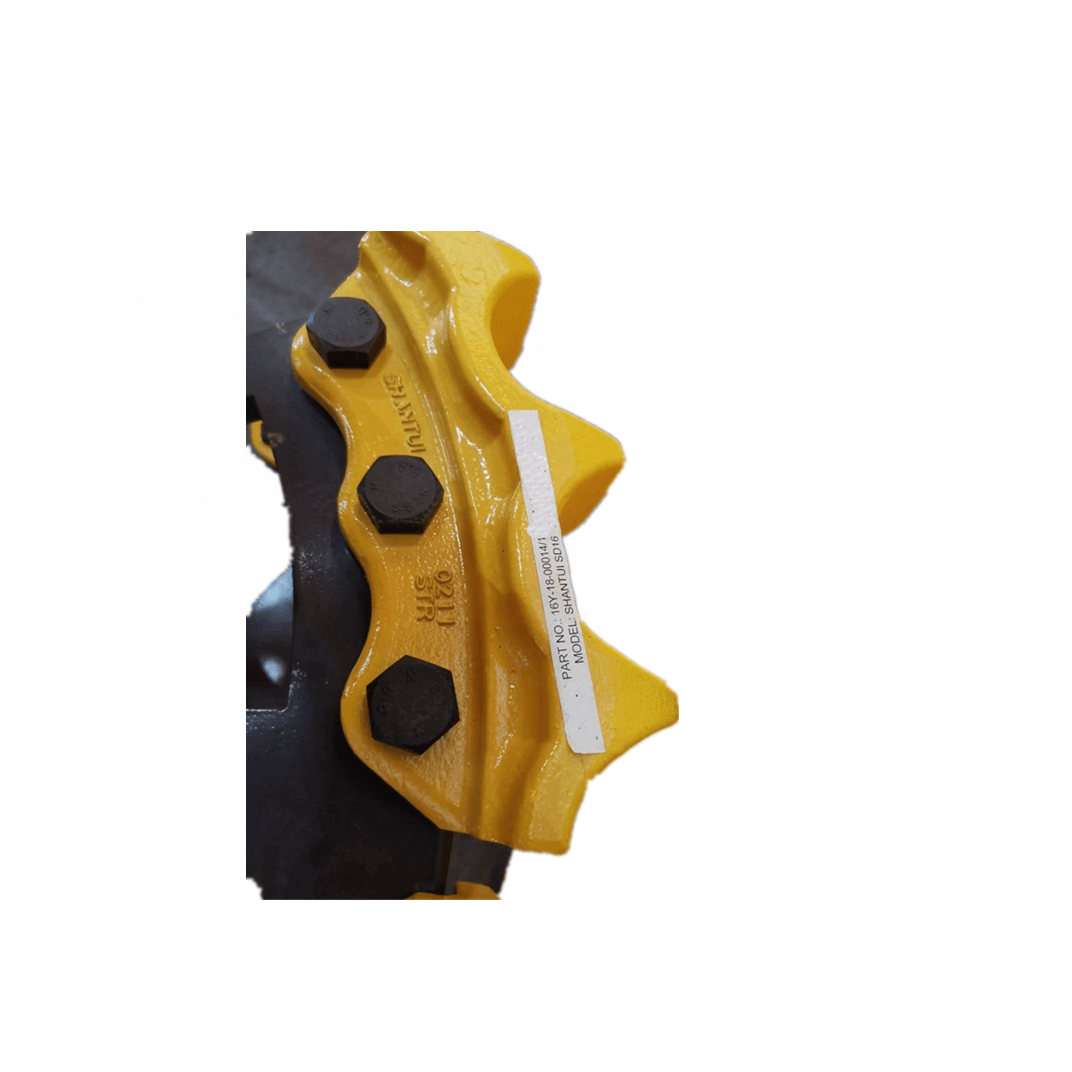
Mounting bore and bolt pattern — the sprocket must mount correctly to the final drive output shaft or hub. Mounting bore diameter, bolt pattern, and bolt circle diameter must match the final drive specification for your specific machine model and production year.
At Imara Engineering, every sprocket order is confirmed against all four parameters using your machine serial number. Provide your machine make, model, and serial number and we confirm the exact sprocket specification before your order is placed.
Sprockets by Machine Brand
Our undercarriage sprocket inventory covers the most widely operated excavator and bulldozer brands all cross-referenced against OEM part numbers and all forming part of our broader undercarriage parts range.
Caterpillar Sprockets
Covering the Cat mini excavator range including the 301, 302, 303, 305, and 308 series and the Cat bulldozer range from D4 through D9. Cat sprockets are manufactured to the precise tooth profile and pitch circle diameter of each Cat model confirmed against Cat OEM part numbers for tooth geometry, mounting bore, and bolt pattern. The Cat 303 and 305 sprocket specifications are priority stock items. Cat D6 and D8 bulldozer sprockets are stocked given the volume of these machines across global construction and mining fleets.
Komatsu Sprockets
Compatible with the PC series mini and compact excavator range from PC15 through PC78 and larger models including the PC200. The Komatsu PC200 sprocket is a consistently demanded specification stocked as a priority item. Komatsu sprocket tooth profile must be confirmed against the PC200 serial number as production variants exist across the PC200 production history. Komatsu D series bulldozer sprockets are stocked across the D39 through D85 range — confirmed against Komatsu OEM part numbers for each D series model.
Hitachi Sprockets
Stocked for the Hitachi ZX series including ZX17, ZX26, ZX35, ZX50, ZX75, and the ZX200. Hitachi sprocket specifications are confirmed against Hitachi OEM part numbers for tooth profile, pitch circle diameter, and mounting configuration across the ZX range. Always specify the ZX model designation when ordering Hitachi undercarriage parts ZX200, not PC200. The ZX200 sprocket specification is distinct from other machines in the same weight class.
Other Brands
We also stock undercarriage sprockets for Kubota, Bobcat, Yanmar, JCB, Takeuchi, Doosan, and Volvo excavators. Contact the Imara Engineering team with your machine make, model, and serial number and we will confirm availability.
OEM Quality, What Every Sprocket Is Built To
Every sprocket in our undercarriage parts range is held to four quality standards each addressing a specific failure mode that under-specification sprockets consistently produce in the track system they drive:
-
Tooth profile machined to OEM geometry — the contact geometry between sprocket tooth and chain link is the engineering variable that determines chain service life. Tooth profile is confirmed against the OEM specification for each machine model not a generic profile applied across multiple machines and track systems.
-
Tooth surface hardness matched to track chain grade — the sprocket tooth surface must be hardened to the grade that resists wear from the chain pin and bushing contact that occurs with every track revolution. Under-hardened teeth wear to hook profile faster than the track chain, destroying the new chain they are supposed to be driving.
-
Pitch circle diameter confirmed to OEM specification — the pitch circle diameter is confirmed against the OEM parts database for your specific machine model and production year. Even a small deviation from the correct pitch circle produces abnormal chain contact that accumulates damage across the full chain service life.
-
Mounting bore and bolt pattern confirmed against final drive specification — dimensional accuracy of the mounting interface confirmed against the OEM final drive output specification. An incorrectly dimensioned mounting bore creates runout in the sprocket rotation that generates abnormal chain contact at every revolution.
OEM sprockets carry a brand premium above equivalent quality aftermarket specification. At Imara Engineering, the tooth profile, hardness specification, pitch accuracy, and fitment guarantee are the same standard. The premium is not.
Sprockets and the Excavator Chains and Sprockets System
The sprocket does not function in isolation; it is one half of the excavator chains and sprockets system, and the performance and service life of each component is directly dependent on the condition of the other. Three system relationships define how sprocket condition affects the full undercarriage:
-
Track chain pitch growth — as a track chain wears through normal operation, the pin and bushing wear causes the effective pitch to grow slightly, the chain elongates. A sprocket that is worn simultaneously with the chain has adapted to the elongated pitch. When a new track chain is fitted to a worn sprocket, the new chain's correct pitch engages with a tooth profile that was adapted to an elongated pitch, generating the abnormal contact stress that destroys the new chain within a fraction of its expected service life. Replace sprockets alongside every track chain replacement.
-
Rubber track drive lug engagement — the rubber track drive lugs are moulded to engage a specific sprocket tooth profile and pitch. A worn sprocket tooth that no longer matches that profile shears material from the drive lugs with every revolution. Replace sprockets alongside every rubber track replacement on rubber-tracked machines.
-
Final drive output condition — the sprocket is mounted directly on the final drive output shaft or hub. A final drive running under degraded conditions delivers uneven torque to the sprocket with every revolution, accelerating tooth wear asymmetrically. Inspect final drive condition alongside every sprocket replacement.
Industries We Supply Sprockets To
-
Construction & Civil Engineering — excavator and bulldozer sprockets for machines on active construction programmes where worn sprocket teeth destroying a new track chain or rubber track is one of the most consistently preventable and consistently occurring costs in undercarriage maintenance
-
Mining & Quarrying — heavy bulldozer and large excavator sprockets for machines operating in continuous high-load production cycles where sprocket tooth hardness and pitch circle accuracy define the quality requirement for mining undercarriage parts
-
Agriculture & Land Management — compact excavator and bulldozer sprockets for machines operating in wet, abrasive agricultural conditions where sprocket tooth wear rate is accelerated by the abrasive soil contact that tracks carry onto the sprocket engagement zone
-
Pipeline & Utility Trenching — excavator sprockets for machines working on stony easement corridors where the abrasive particle contact between chain links and sprocket teeth accelerates tooth wear at a rate that demands more frequent inspection than standard 250-hour intervals
-
Plant Hire & Rental Fleets — undercarriage sprockets across mixed-brand hire fleets. Imara Engineering supplies hired operators with trade pricing and serial number verified specifications as standard on every sprocket order.