

A machine losing power on site, smoking under load, burning more diesel than it should,d these symptoms have a long list of possible causes. But when the injectors are the source, every additional operating hour makes the repair more expensive.
Worn fuel injectors do not just underperform,m they load the injection pump with incorrect back-pressure and delivery resistance, accelerating pump wear simultaneously. What starts as an injector replacement becomes an injector and pump replacement if the fault runs long enough.
These six warning signs tell you the injectors are the problem. Recognising them early is the commercially intelligent decision.
For the complete range of excavator fuel system components, visit our heavy equipment fuel system parts hub.
Why Injector Faults Cost More the Longer You Wait
The injection pump on a diesel excavator is calibrated to work against the delivery resistance of correctly functioning injectors. When injectors experience nozzle tip erosion, seat leakage, or valve wear, the back-pressure profile they present to the pump changes.
The pump compensates by working harder against an irregular load, accelerating wear on its own precision internal components. The injector fault that costs a controlled amount to fix at the warning sign stage can reach the pump and double the repair cost within a few hundred operating hours.
The Six Warning Signs
Warning Sign 1: Black or White Smoke Under Load
Black smoke under load indicates excess fuel delivery relative to available air. A worn injector nozzle tip is delivering fuel in a degraded spray pattern that does not atomise correctly for complete combustion. On common rail systems, a leaking injector delivering excess fuel per cycle produces the same result. Particularly persistent white smoke beyond the normal cold-start duration indicates unburned fuel passing through the combustion chamber. This points to an injector that is not opening and closing cleanly, allowing fuel to pass without igniting.
Warning Sign 2: Rough Idle and Low-RPM Misfire
A healthy diesel excavator idles evenly. Rough idle, a lumpy, uneven power delivery at low RPM points, points to one or more cylinders receiving incorrect fuel delivery. This is typically an individual injector fault rather than a system-wide issue.
Identifying which cylinder is misfiring narrows the diagnosis before parts are ordered. A brief throttle response check across individual cylinders during idle can isolate the fault to a specific injector position.
Warning Sign 3: Loss of Power and Sluggish Throttle Response
Power loss that develops gradually under increasing load, rather than appearing suddenly, typically indicates progressive injector nozzle wear, causing under-delivery per cycle. The engine cannot maintain rated output because combustion is consistently incomplete.
The key diagnostic distinction is whether the power loss occurs across all load ranges or only at high demand. Across-the-board sluggishness points to injectors or fuel supply. Power loss only at high load with acceptable low-load performance is more characteristic of a boost or air management fault.
Warning Sign 4: Increased Fuel Consumption Without Load Change
Injector nozzle wear causes excess fuel delivery per cycle. The worn nozzle tip passes more fuel than the calibrated rate but produces less power from it because the atomisation quality has degraded. The machine burns more fuel per operating hour without a corresponding increase in productive output.
This is one of the earliest measurable signs of injector degradation and one of the easiest to detect on a machine with consistent operating patterns and tracked fuel consumption records.
Warning Sign 5: Hard Starting or Extended Cranking
On common rail injection systems, worn injectors allow fuel rail pressure to bleed down between shutdown and the next start. The high-pressure fuel system relies on injector seat integrity to hold pressure when the pump is not running. Worn injector seats leak that pressure down, requiring extended cranking to rebuild sufficient rail pressure for combustion.
On mechanical injection systems, the equivalent symptom is weak injection pressure at cranking speed; the injector opening pressure has dropped below the minimum needed for fuel atomisation in a cold combustion chamber.
Warning Sign 6: Fuel Smell or Staining in the Engine Bay
External injector leakage visible as fuel staining around the injector body, hold-down clamp, or return line connections indicates injector seal or body failure. This is not a monitor-and-review situation. An externally leaking injector in an engine bay operating at exhaust temperatures is a fire risk and requires immediate replacement.
Is it the injectors or the Injection Pump?
These symptoms overlap with injection pump faults, a nd the distinction matters before ordering parts.
Symptoms that point specifically to injectors: individual cylinder misfire, external injector leakage, hard starting on a common rail system with confirmed adequate lift pump pressure, and smoke from a specific load range only.
Symptoms that point more toward the injection pump: system-wide power loss across all cylinders simultaneously, confirmed low rail pressure under cranking despite adequate lift pump supply, and erratic fuel delivery that affects all cylinders equally.
For injection pump diagnosis across Cummins, Caterpillar, and other platforms, visit our fuel injection pumps page.
Which Injectors Does Your Machine Use?
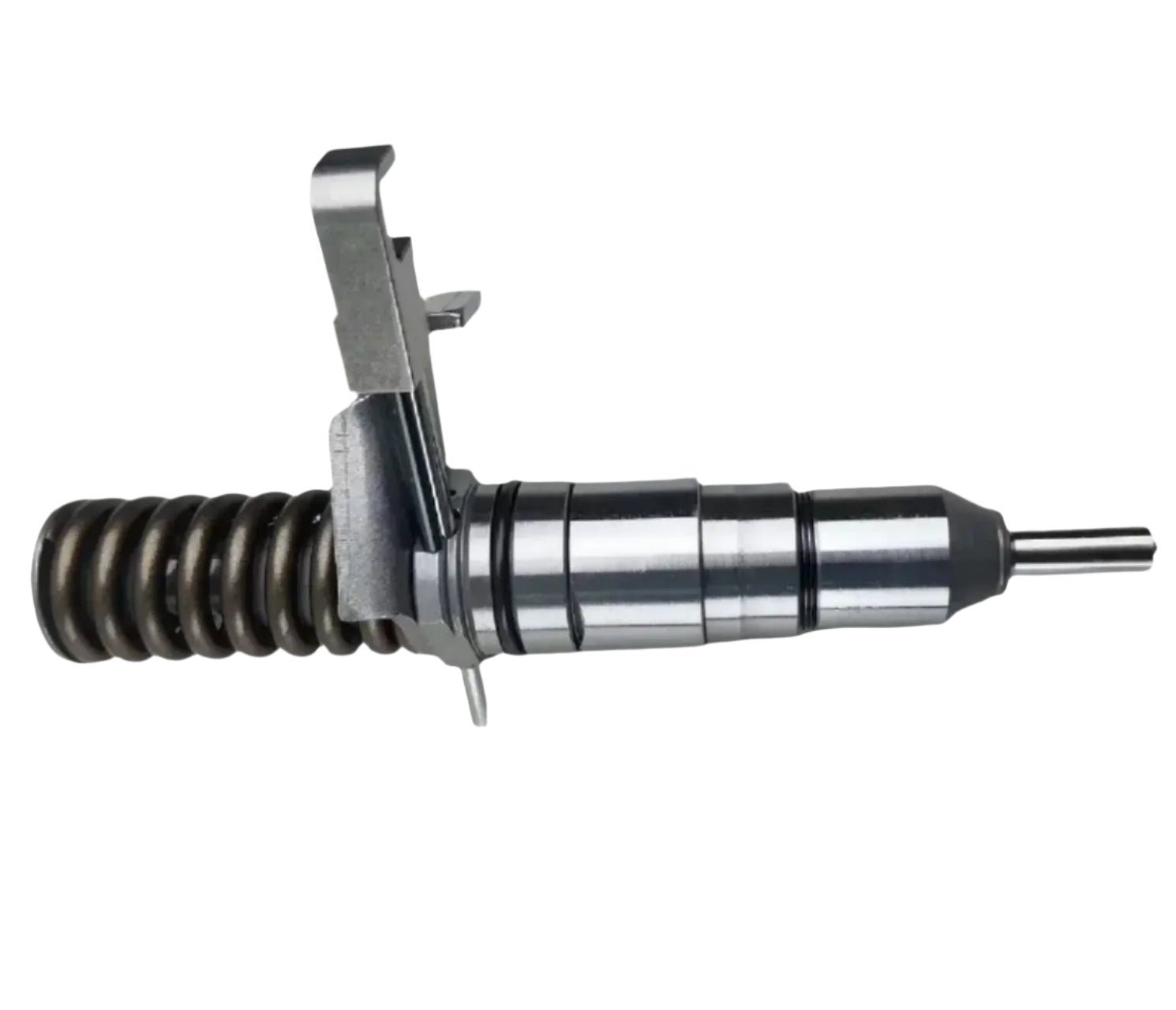
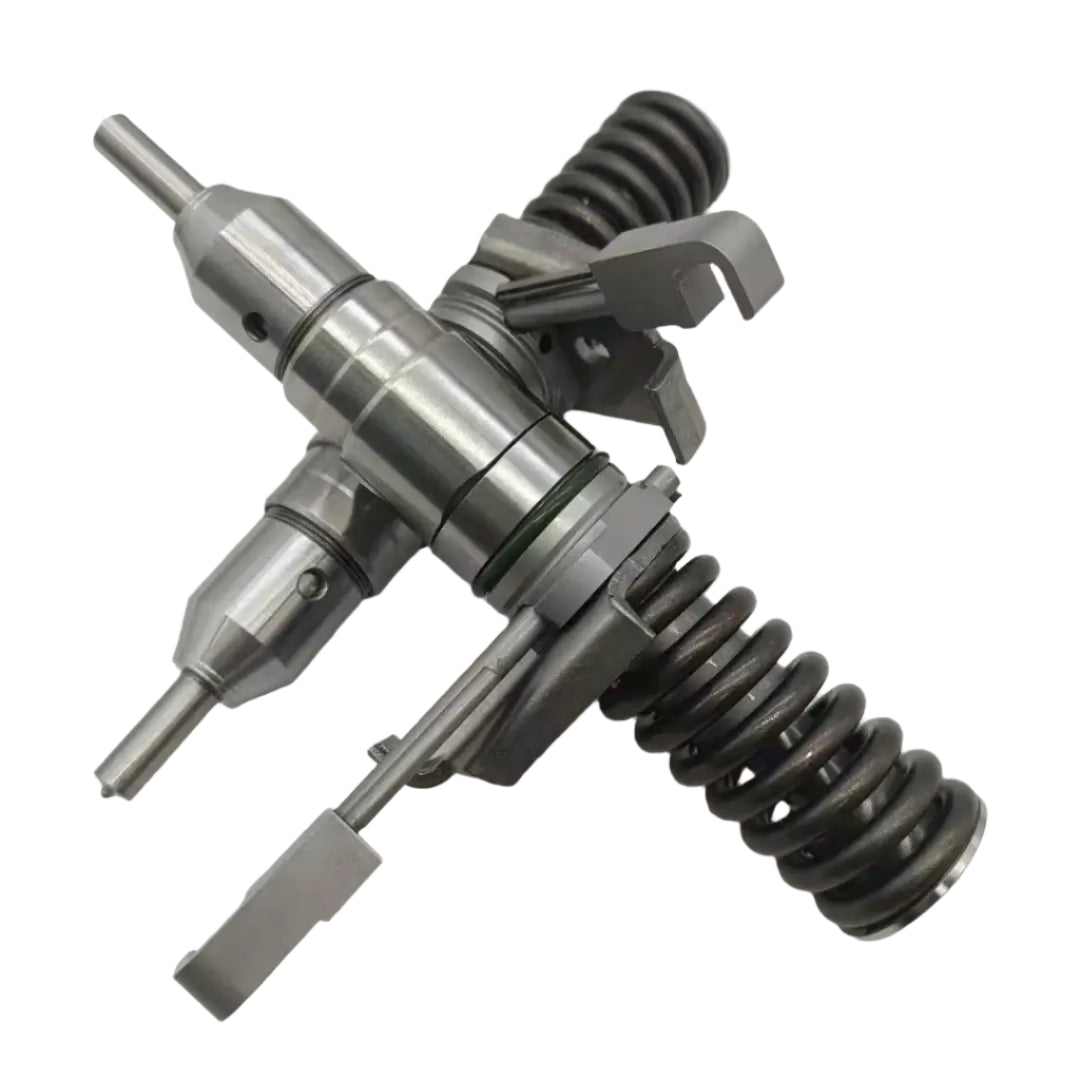
Caterpillar C7, C13, C15, and 3406-family engines use hydraulic electronic unit injectors (HEUI) on older ACERT variants and common rail piezo injectors on current platforms. For the correct specification by engine serial number, visit our Caterpillar fuel injectors page.
Cummins ISX, ISX15, X15, and N14 engines use Cummins XPI common rail injectors on current platforms and electronic unit injectors on older ISX variants. For Cummins ISX, N14, and 6BT applications, visit our Cummins fuel injectors page.
Perkins 4.236, 1004, and 3024C engines use mechanical pencil-type injectors on older variants and electronic injectors on current platforms. For Perkins 4.236 and 1004 series applications, visit our Perkins fuel injectors page.
Volvo D series engines use Volvo-specified common rail injectors across the EC series excavator range. For Volvo D7, D11, and D13 applications, visit our Volvo fuel injectors page.
Conclusion
Fuel injector faults are diagnosable, predictable, and significantly cheaper to address at the warning sign stage than after the fault has progressed to the injection pump.
Six symptoms. Any one of them warrants investigation. Two or more warrant immediate action.
At Imara Engineering Supplies, we stock OEM-compliant fuel injectors for Caterpillar, Cummins, Perkins, and Volvo excavator engines confirmed against engine serial numbers before every order, with worldwide shipping and full warranty coverage.
Contact our team with your engine details and symptoms, or visit our heavy equipment fuel system parts hub to find the right injectors for your machine.


