

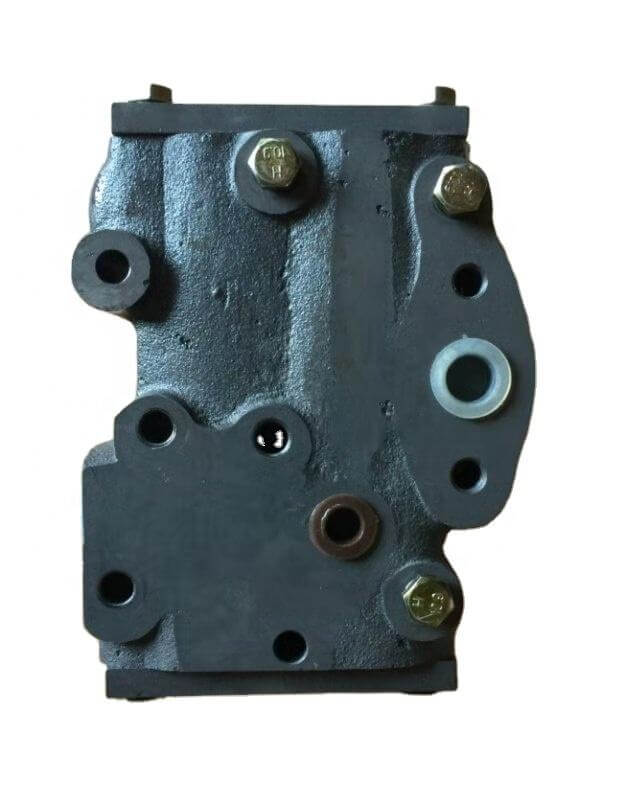
The CAT 3406 engine family has powered construction equipment, haul trucks, marine vessels, and generators for decades, and the oil cooler on every variant of this engine is one of the components that eventually needs replacing on any high-hour machine.
When a 3406 oil cooler fails, the consequences are not subtle. Coolant enters the oil circuit, oil enters the coolant circuit, and the engine's lubrication and thermal management systems begin failing simultaneously. The longer the machine keeps running in this condition, the more expensive the repair becomes.
This guide covers exactly what the CAT 3406 engine oil cooler does, the symptoms that tell you it is failing, the critical differences between the 3406, 3406B, and 3406E oil cooler configurations, and how to confirm the correct replacement specification, including the 0R9056 part number,r before you order.
For CAT 3406 compatible engine oil coolers, visit our engine oil coolers page.
What the CAT 3406 Engine Oil Cooler Does
The engine oil cooler sits within the 3406's cooling circuit and transfers heat from the engine oil into the coolant circuit before that coolant passes through the radiator. Its job is to keep the oil temperature within the operating range that allows the oil to maintain its viscosity and lubrication properties under full load.
Without a functioning oil cooler, engine oil temperature rises unchecked under load. As oil temperature climbs beyond its rated range, viscosity drops, meaning the oil film between bearing surfaces thins, metal-to-metal contact increases, and bearing wear accelerates from hours to minutes under severe conditions.
The 3406 oil cooler also serves as a physical barrier between the oil and coolant circuits. When this barrier fails through internal cracking, seal degradation, or gasket failure, the two circuits mix. This is the failure mode that most 3406 operators encounter, and it is the one that produces the most visible and most urgent symptoms.
Symptoms of a Failing CAT 3406 Oil Cooler
These symptoms do not all appear simultaneously. The earlier you identify the fault, the less damage occurs before the cooler is replaced.
Coolant in the Oil
This is the most diagnostic symptom and the most urgent. Pull the oil dipstick and inspect the oil on the tip. Oil contaminated with coolant has a distinctive milky, grey-brown appearance like a caramel milkshake rather than clean amber or dark engine oil.
Check the oil filler cap as well. A creamy brown deposit on the inside of the cap is the same contamination presented in a more visible form.
If you see this, stop the machine. Emulsified oil has severely degraded lubrication properties. Continuing to operate accelerates bearing and journal damage that transforms a cooler replacement into an engine rebuild.
Unexplained Coolant Loss Without a Visible External Leak
If your 3406 is consuming coolant but there is no visible leak at hoses, fittings, the radiator, or the water pump, and there is no white exhaust smoke suggesting combustion-chamber ingestion the coolant is most likely migrating into the oil circuit through a failing cooler.
Top up the coolant, check the oil immediately after a run cycle, and look for the milky contamination described above. This sequence of symptoms consistently points to the cooler as the source.
Rising Engine Temperature Under Normal Load
A partially failed 3406 oil cooler that is not yet mixing fluids but has reduced heat transfer capacity contributes to elevated engine temperatures under load. The effect is gradual, the engine runs warmer than it used to under equivalent conditions,s and it is easy to attribute incorrectly to the radiator or cooling fan before the oil cooler is inspected.
White Exhaust Smoke
White exhaust smoke on a 3406 indicates coolant is burning in the combustion chamber. This can indicate head gasket failure, a cracked cylinder head, or oil cooler failure that has progressed far enough to push coolant into the engine's internal passages. If white smoke appears alongside any of the other symptoms above, the diagnosis window is closing. Stop the machine and investigate immediately.
What Happens If You Keep Running a 3406 with a Failed Oil Cooler
This section exists because operators frequently try to manage a failing 3406 oil cooler by topping up coolant and oil while they arrange parts. It is worth understanding clearly what is happening inside the engine during that time.
Bearing wear accelerates from the first minute the engine runs with contaminated oil. The emulsified oil-coolant mixture does not provide adequate hydrodynamic lubrication at the crankshaft bearings, connecting rod bearings, or camshaft journals. Every operating hour with contaminated oil is an hour of service life removed from those components.
The coolant itself degrades rapidly when contaminated with oil. Its corrosion inhibitors are overwhelmed, and the coolant begins attacking internal metal surfaces, particularly aluminum components,s rather than protecting them.
A 3406 oil cooler replacement is a manageable repair cost. An engine rebuild necessitated by bearing failure from contaminated oil is not.
Identifying Your Exact CAT 3406 Oil Cooler Part Number
The 3406, 3406B, and 3406E are related but distinct engine platforms with different oil cooler configurations. Ordering the wrong variant is a common and avoidable mistake.
The 3406 and 3406B
The original 3406 and its 3406B variant use a mechanically injected fuel system. The oil cooler on these variants is identifiable by the engine serial number prefix 92U, 7FB, 8TC, and several others, depending on the production year and application. The 3406B oil cooler part number most commonly referenced across the working fleet is the 0R9056, which covers a significant portion of the 3406B production range.
Confirm the 0R9056 applies to your specific serial number range before ordering. It covers many but not all 3406B configurations, and using the wrong part number produces a cooler that will not fit correctly.
The 3406E
The 3406E introduced electronic unit injection to the HEUI system, and this change affected the engine's thermal management requirements. The 3406E oil cooler specification differs from the 3406B, and the two are not interchangeable. The 3406E serial number prefixes are 5EK, 6TS, and 2WS, among others.
How to Confirm Your Serial Number and Build Date
The engine serial number and arrangement number are stamped on the engine data plate, typically mounted on the valve cover or engine block,k depending on the application. The arrangement number, combined with the serial number prefix, is the most reliable reference for confirming the correct oil cooler part number.
Provide both the serial number and arrangement number to your supplier, a supplier who works from these references rather than just the engine model name will confirm the correct specification before the order is placed.
OEM vs Aftermarket CAT 3406 Oil Cooler: What You Need to Know
Quality aftermarket 3406 oil coolers are a practical and cost-effective option, particularly given that OEM availability for some 3406 and 3406B variants is now limited or on extended lead time.
The specification points that matter most for the 3406 oil cooler:
The internal core must be manufactured to the correct tube diameter and baffle configuration to match the original heat transfer performance. An under-performing core that fits physically but transfers heat less efficiently will not resolve the overheating or contamination fault.
The gaskets and seals must use correct-specification elastomers rated for the operating temperatures and the chemical composition of Caterpillar coolant and engine oil. Incorrect seal material degrades rapidly and produces the same failure mode as the original cooler.
The warranty period is the clearest quality indicator. Six to twelve months is the standard for quality aftermarket 3406 oil coolers. A supplier offering no warranty on a critical engine component is communicating something important about their confidence in the product.
Conclusion
The CAT 3406 engine oil cooler is a well-understood failure point on a well-understood engine platform. The symptoms are clear, the diagnosis is straightforward, and the repair is manageable when it is addressed before the contamination has time to cause secondary damage.
Identify the symptoms early. Confirm your serial number and arrangement number. Verify the correct part number, including whether the 0R9056 applies to your specific 3406B build, and source from a supplier who can confirm the specification before dispatch.
At Imara Engineering Supplies, we stock OEM-compliant CAT 3406, 3406B, and 3406E engine oil coolers confirmed against engine serial numbers and arrangement numbers before every order. Our team can also advise on related cooling components where the oil cooler failure has contributed to wider thermal system damage.
Contact our team with your engine serial number and arrangement number, or visit our engine oil coolers for Caterpillar and heavy equipment engines page to find the correct replacement for your 3406 platform.


