What an Exhaust Manifold Does and Why Failure Escalates Fast
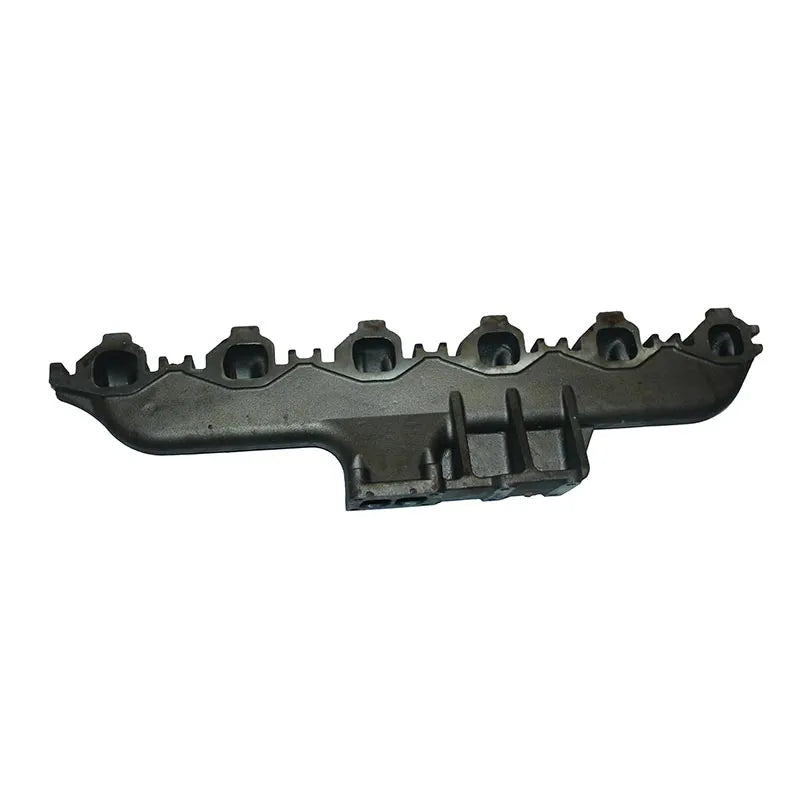
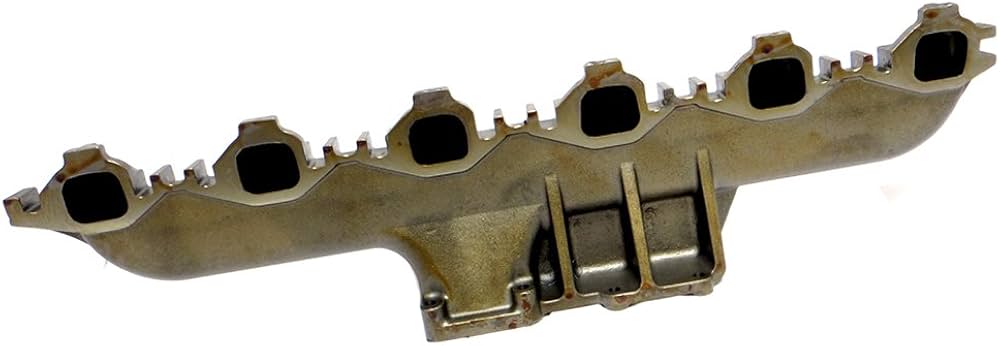
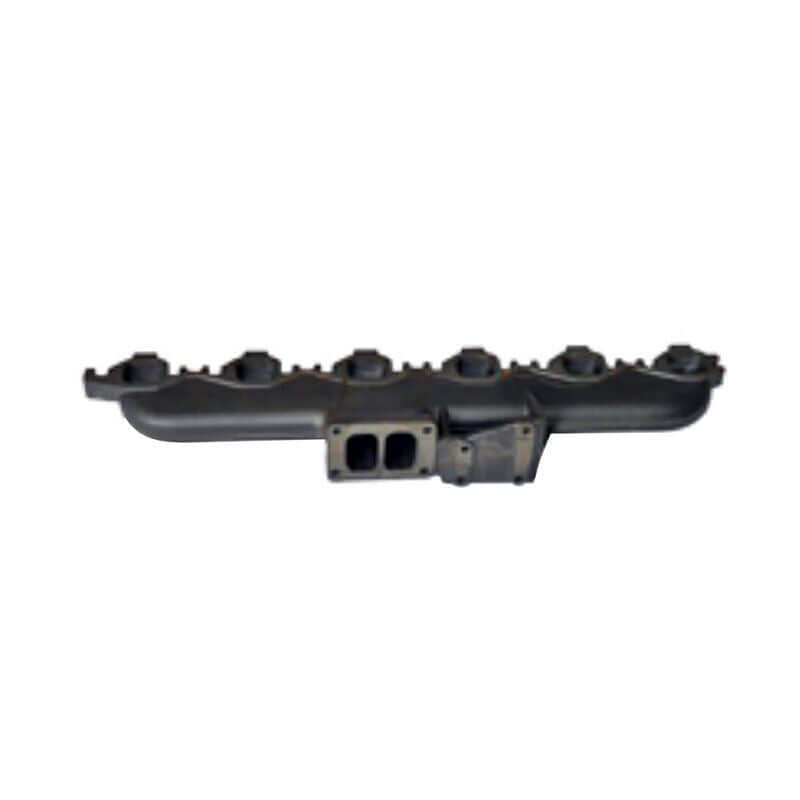
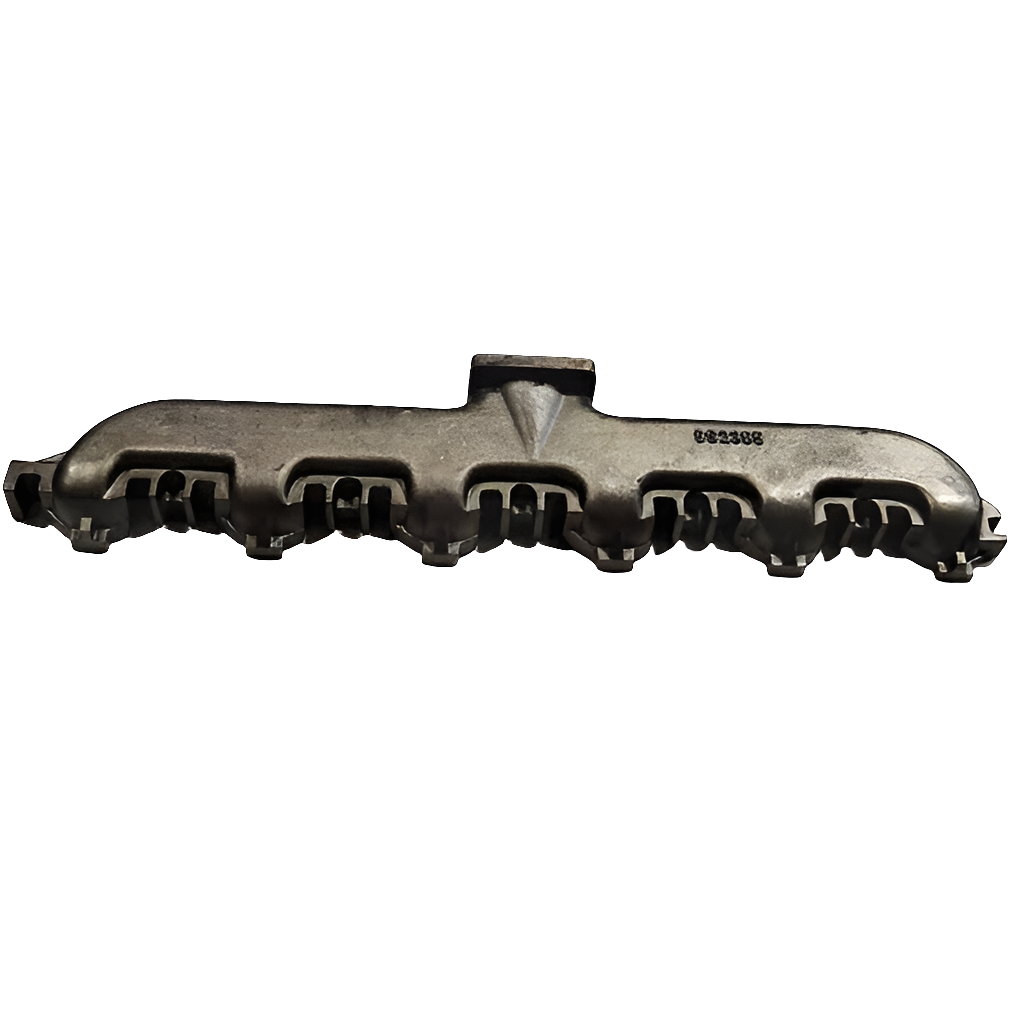
The exhaust manifold performs a deceptively simple function: collect exhaust gases from each cylinder head port and delivers them to the turbocharger turbine inlet as a unified, pressure-controlled stream. The efficiency of that delivery, the pressure consistency, the temperature retention, and the sealing integrity at every joint directly affect turbocharger response, engine backpressure, and the EGR flow rate on emissions-controlled machines.
The failure modes that develop in a diesel exhaust manifold are products of the thermal cycling environment it cannot escape:
- Thermal expansion causes the manifold to grow dimensionally during operation and contract on cooling. Every cycle loads the mounting studs and gasket surfaces with mechanical stress that accumulates over the manifold's service life
- Cast iron manifolds develop hairline cracks most commonly at the runner junctions, where the stress concentration from differential thermal expansion between runners is highest
- Aluminised steel manifolds used on some lighter-duty and performance applications are susceptible to corrosion at the port flanges and can develop sealing failures at the head gasket interface before the manifold body itself cracks
When a manifold joint fails, whether through a cracked casting, a blown gasket, or a pulled stud, the consequences are not limited to a performance loss. A pressurised exhaust leak at the manifold produces:
- Progressive heat damage to wiring harnesses, coolant lines, and fuel lines routed near the manifold
- EGR flow disruption on emissions-controlled machines, a manifold leak changes the pressure differential that the EGR system is calibrated to measure, producing EGR fault codes without an EGR valve fault
- Turbocharger oil seal damage from elevated turbine inlet temperatures caused by uncontrolled exhaust gas expansion at the leak point
- Operator exposure to combustion gases in enclosed or semi-enclosed machine cabs, with a pressurised exhaust leak at manifold pressure, is not a nuisance; it is a safety issue
Warning Signs of a Failing Exhaust Manifold on Heavy Equipment
Most exhaust manifold failures develop progressively and are detectable before they escalate to the damage patterns above. The following symptoms warrant immediate inspection:
-
Audible ticking or tapping from the exhaust side of the engine at startup — exhaust manifold leaks are loudest when the manifold is cold and contracted, before thermal expansion seals the crack or joint temporarily under operating heat. A ticking noise that diminishes after warmup and returns on cold start is a manifold leak until confirmed otherwise.
-
Carbon tracking or black staining on the cylinder head around manifold ports — pressurised combustion gas escaping a failed manifold gasket or cracked port leaves a characteristic carbon deposit trail on the head face and manifold flange. Visible carbon tracking is a confirmed leak, not a warning.
-
Unexplained EGR fault codes on a machine with a recently serviced EGR valve — an exhaust manifold leak between the EGR pickup port and the turbocharger inlet changes the pressure differential that the EGR differential pressure sensor is measuring. EGR flow faults that persist after EGR valve replacement should prompt a manifold inspection before the EGR cooler is condemned.
-
Rising oil consumption with no visible external leak — a manifold leak that elevates turbine inlet temperature beyond the turbocharger's design envelope accelerates turbocharger seal degradation. Unexplained oil consumption following the onset of an exhaust smell in the engine bay should include a manifold inspection.
-
Exhaust smell inside the operator cab — a pressurised exhaust leak at manifold level can find pathways into the cab through HVAC intake routing on some machine configurations. Any combustion gas odour in the cab is a safety event requiring immediate shutdown and inspection.
Exhaust Manifolds We Stock
Cat Exhaust Manifolds: Full Engine Range
Caterpillar exhaust manifolds account for the largest share of our manifold dispatches, driven by the C15 and 3406 engine families that power the Cat excavators, dozers, and trucks most widely operated in global heavy equipment fleets. Our caterpillar exhaust manifold range covers:
- Cat C15 exhaust manifold and C15 exhaust manifold variants — the highest-volume Cat manifold in our range, covering the C15 platform across Cat 345, 349, and 365 series excavators and Cat 777 and 785 series mining trucks
- Cat C15 ACERT exhaust manifold — the ACERT-specific manifold configuration used on emissions-certified C15 machines; not directly interchangeable with pre-ACERT C15 units on all configurations
- 6NZ exhaust manifold — the 6NZ engine serial prefix identifies the Cat C15 across its production run; 6nz exhaust manifold is a direct reference to the same C15 manifold range
- Cat C13 exhaust manifold and C13 exhaust manifold variants — for C13-powered Cat 325 to 330 series excavators and wheel loaders
- Cat C12 exhaust manifold and C12 exhaust manifold units — for C12-powered Cat 325 series and earlier platform machines
- Cat 3406e exhaust manifold and 3406e exhaust manifold — for 3406E-powered Cat 365, 375, D9, and 992 series machines; the 3406E and early C15 share manifold architecture on some configurations
- Cat 3406b exhaust manifold, exhaust manifold for 3406b cat engine, and 3406b manifold — for 3406B-powered machines in active mining and civil fleet service; one of the most consistently demanded legacy manifold units we stock
- Cat 3406 exhaust manifold — covering earlier 3406-series Cat engines still operating in long-cycle mining and civil applications
- Cat 3306 exhaust manifold — for 3306-powered Cat D8, 980, and 140G series machines
- Cat 3208 exhaust manifold — for 3208-powered Cat 950 loaders, marine, and generator set applications
Cummins Exhaust Manifolds: ISX, 6BT, ISC & More
Cummins exhaust manifolds in our range cover the engine families most widely fitted to heavy plant, construction equipment, and on-highway machines in active service:
- Cummins ISX exhaust manifold and Cummins ISX manifold — the ISX is the highest-volume Cummins platform in our manifold range; ISX manifolds are available in standard and non-EGR configurations
- Cummins ISX non-EGR exhaust manifold — for ISX machines configured without an EGR system, either as original specification or following a compliant delete on non-regulated applications; the non-EGR manifold deletes the EGR gas return port present on standard ISX manifolds
- Cummins ISX exhaust manifold slip joint seal kit — the ISX uses a slip joint connection system between manifold sections to accommodate thermal expansion without rigid bolted joints; the slip joint seal kit is a standalone service item for machines where the manifold body is intact, but the slip joint seals have degraded
- 3-piece exhaust manifold Cummins — the ISX manifold is produced in a 3-piece sectional configuration on many platforms; each section can be replaced independently where only one section has cracked, reducing replacement cost versus a full manifold assembly
- Cummins 6BT exhaust manifold — for 6BT-powered compact excavators, skid steers, and light construction equipment
- Cummins ISC exhaust manifold — for ISC-powered medium equipment applications
- T6 Cummins manifold — the T6 flange designation identifies the turbocharger mounting flange specification on Cummins manifolds; T6-flanged manifolds are used across ISX and ISM applications where the Holset HX55 and HX60 turbocharger series are fitted
Performance Aftermarket Manifolds: PDI Big Boss & Full Tilt for Cat C15
For Cat C15-powered machines operating in high-output applications where maximising exhaust flow efficiency and reducing drive pressure on the turbocharger is a priority, two performance aftermarket manifold options are available:
- PDI Big Boss exhaust manifold and PDI exhaust manifold c15. The PDI Big Boss is a performance cast manifold designed to increase exhaust port cross-section and reduce flow restriction compared to the OEM C15 manifold, improving turbocharger response and reducing pumping losses at high load
- Full Tilt manifold c15. The Full Tilt is a tubular stainless steel manifold design for the C15 that prioritises exhaust velocity and equal-length runner geometry over the OEM cast iron unit's durability-first construction
Both options are used primarily in high-duty-cycle applications where the OEM manifold's flow restriction becomes a measurable constraint on engine output. Contact our team before ordering either unit to confirm compatibility with your C15 build specification and turbocharger configuration.
Exhaust Manifold Gaskets, Studs & Companion Parts
Exhaust manifold replacement on Cat and Cummins engines almost always involves companion hardware that is either damaged during removal or has degraded to the point where reinstalling it with a new manifold creates an immediate second repair event:
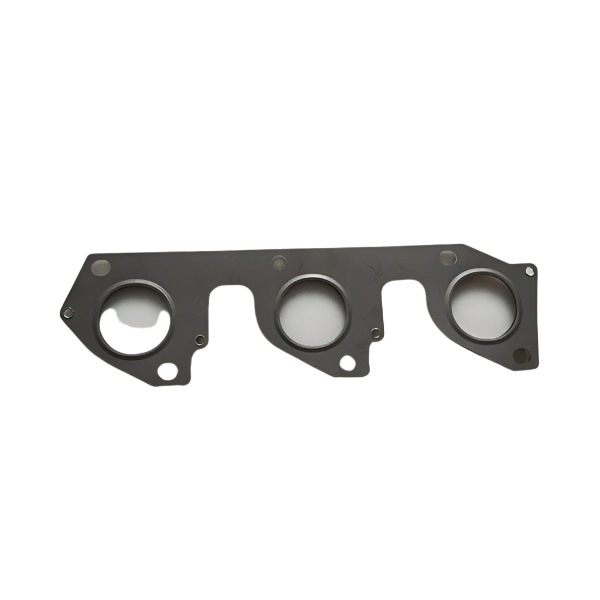
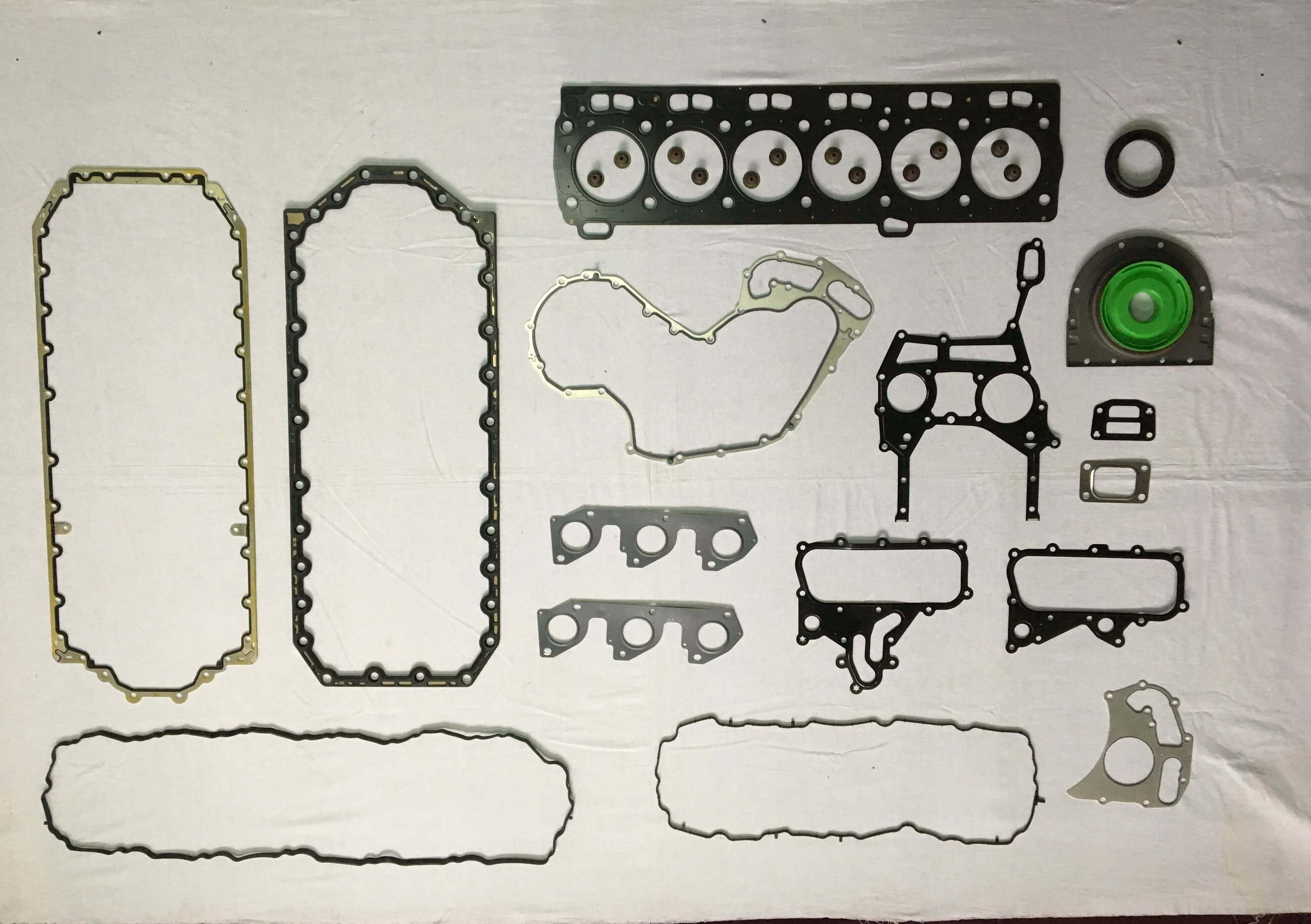
- Exhaust manifold gasket excavator kits for Cat C15, C13, 3406b, and 3406e platforms — the cylinder head-to-manifold gasket is a single-use component that must be replaced with the manifold on every removal
- Cat C15 exhaust manifold studs and 3406b exhaust manifold studs — manifold studs on high-cycle engines frequently seize, corrode, or pull threads on removal; replacing the studs at the time of manifold replacement avoids a repeat repair event on the next manifold service
- Cummins ISX slip joint seal kits — available as a standalone order for ISX platforms where only the slip joint seals require replacement
For exhaust manifold gasket kits covering a broader range of engine platforms and gasket types, our Engine Parts range includes a dedicated Gasket Kits collection. Contact our team for cross-reference assistance.
OEM vs Aftermarket Exhaust Manifolds: Making the Right Call
For exhaust manifolds, the aftermarket decision is more straightforward than it is for precision components like turbochargers or NOx sensors. The manifold's performance requirement is fundamentally dimensional: correct port geometry, correct flange face finish, correct stud spacing, and correct thermal expansion specification for the alloy used in the original casting. When those criteria are met, a quality aftermarket diesel exhaust manifold performs comparably to OEM at a lower cost and with comparable or better availability for legacy engine platforms.
What to assess in a quality aftermarket manifold:
- Casting alloy specification — the manifold must be cast in an alloy with a coefficient of thermal expansion that matches the cylinder head material. A mismatched alloy will produce accelerated gasket wear and stud loading regardless of dimensional accuracy
- Port geometry — cross-sectional area and port taper at the cylinder head interface must match OEM specification exactly; deviation here creates flow turbulence that affects both backpressure and EGR flow measurement on emissions-controlled engines
- Flange face finish — the gasket sealing faces on both the cylinder head flange and the turbocharger outlet flange must meet the surface finish specification required by the head gasket and turbocharger gasket; an inadequate finish produces a leak from the first heat cycle
Every aftermarket exhaust manifold in Imara Engineering's range is assessed against these criteria. We do not stock generic heavy equipment exhaust manifold units catalogued against machine models without dimensional and alloy specification verification.
How to Confirm the Right Exhaust Manifold for Your Machine
Exhaust manifold identification on Cat and Cummins platforms requires engine-serial-level confirmation on several platforms where manifold specification changed across the production run. Have the following available before contacting our team:
-
Engine model and serial number — the primary reference. The Cat C15 ACERT and non-ACERT configurations use different manifold specifications, and the Cummins ISX EGR and non-EGR variants require different manifolds. Engine serial confirms which configuration applies
-
OEM part number from the existing manifold — stamped on the manifold body or found in the machine's parts manual. The fastest cross-reference route and the most reliable way to confirm whether a multi-piece manifold requires a full assembly or a single-section replacement
-
Machine model and serial number — useful as a cross-reference on platforms where the engine serial is not accessible from the service position
-
Companion parts required — advise whether gasket kits and studs are needed alongside the manifold; ordering the complete set in a single consignment avoids a second freight cost and a second downtime event