

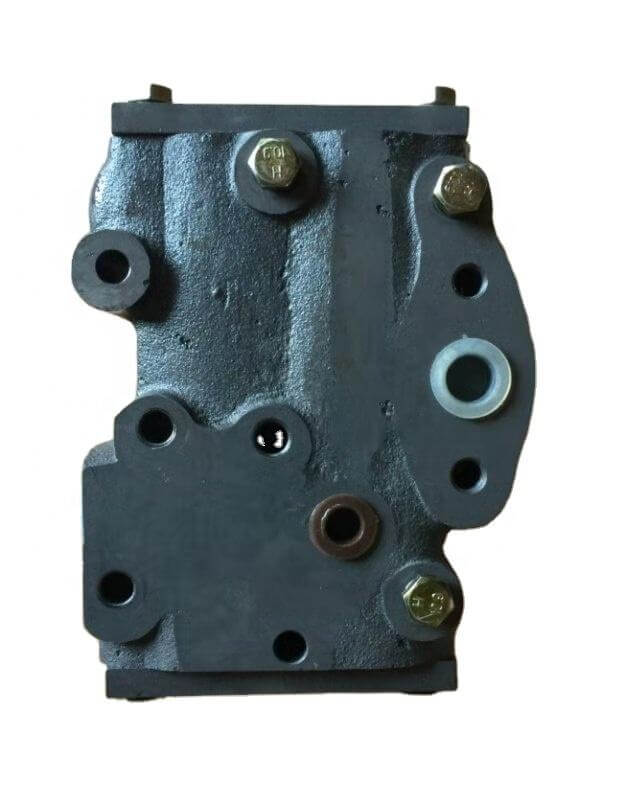
Steering Linkages, Drag Links, and Steering Arms for Heavy Equipment and Wheel Loaders
Steering linkages carry the mechanical force from the steering cylinder to the wheel assembly on wheel loaders, motor graders, and articulated machines. Imara Engineering supplies heavy equipment steering linkages within our Suspension and Steering Parts range, covering Cat, Komatsu, and JCB platforms worldwide.
Every steering linkage component we supply is matched to OEM-equivalent specifications in geometry, joint taper, and material grade for your machine. Whether you need a Cat 966 drag link, a Komatsu WA380 steering linkage assembly, a motor grader steering linkage, or an individual steering arm loader replacement, complete assemblies and individual components are available. Aftermarket options meet full engineering standards, and we ship worldwide.


Collection:
Steering Linkages
The Mechanical Chain Between What the Operator Commands and What the Machine Does
Every steering input on a wheel loader or motor grader begins as hydraulic pressure at the steering pump and ends as rotational movement at the front wheel. Between those two points, one component converts the hydraulic energy into mechanical force, the steering cylinder,r, and a separate series of rigid links carries that mechanical force to the wheel knuckle. That series of links is the steering linkage assembly, and its job is precision transmission, not force generation.
The steering linkage does not create steering force. It transmits the force the cylinder has already generated, through a defined geometric pathway, to the wheel hub connection point that completes the circuit. The drag link carries that force from the steering cylinder output across the distance to the steering arm. The steering arm converts that linear force into the rotational movement required to swing the wheel knuckle through its designed arc. The steering rod, where present, completes the transmission pathway at the axle extremity.
What this architecture means in practice is that every joint, every rod, and every arm in the heavy equipment steering linkage assembly must hold its position within its geometric design tolerance for the transmission to be accurate. A drag link that is bent, a steering arm that has cracked at its weld, or a rod end joint that has developed play does not simply reduce the precision of one component; it introduces a deviation into the transmission pathway that is felt at every downstream point in the circuit, including the tyre contact patch, from the first loaded steering cycle it enters service in that condition.
The Components That Make Up a Heavy Equipment Steering Linkage System
Steering linkage assemblies across wheel loaders, motor graders, and articulated heavy equipment are not a single component; they are a coordinated system of structural members, each with a defined role in the transmission pathway.
Drag Links
The drag link is the primary longitudinal force transmission member in most wheel loader and motor grader steering linkage configurations. It connects the steering cylinder's output arm to the steering arm at the wheel knuckle, carrying the full mechanical force of the cylinder output across the structural span between those two points with every steering input the operator makes.
The Cat 966 drag link and the broader steering drag link loader range we supply are manufactured to OEM-specified tube section, end joint taper, and overall length,h all three of which determine the geometric accuracy the linkage delivers. A drag link that has been bent through ground contact or impact with site debris does not always show the deviation as an obvious visual curvature. A minor bend that reduces the effective straight-line length of the link by a few millimetres alters the geometric relationship between the cylinder output point and the steering arm pivot,ot producing a measurable toe deviation at the wheel that accumulates as tyre wear and steering imprecision with every loaded cycle.
Steering Arms
The steering arm is the lever that converts the linear push of the drag link into the rotational force that swings the wheel knuckle. Its length determines the mechanical advantage the steering system has at the wheel pivot, and its angular orientation determines the geometric relationship between drag link travel and wheel rotation angle throughout the full lock-to-lock arc.
Steering arm heavy equipment fatigue damage develops characteristically at the attachment interface with the steering knuckle and at the drag link connection point, both of which are high-stress concentration locations under sustained dynamic steering loading. A steering arm that has cracked at either location must be replaced immediately. Unlike a bent drag link, a cracked steering arm has a defined structural failure timeline; the crack will propagate under continued cyclic loading, and the transition from cracked to fractured is not a gradual performance decline. It is a sudden loss of mechanical connection between the cylinder force and the wheel knuckle.
Steering Rods
Steering rods complete the linkage transmission pathway, where the geometry of the axle requires a connecting member between the primary drag link system and the wheel hub assembly. On motor grader platforms in particular, the steering rod heavy equipment configuration must accommodate the wide steering lock angles and the extended geometric span of the grader's front axle, making dimensional accuracy and end joint specification critical variables for both straight-line tracking precision and full-lock turning performance.
Where Steering Linkage Wear Differs From Every Other Steering Component
The failure profile of a steering linkage assembly is distinct from both the hydraulic components upstream of it and the terminal components downstream. The steering cylinder degrades through seal wear and pressure loss,s measurable through system pressure testing. The tie rod end degrades through bearing wear and seal breach, ch detectable through play measurement at the joint. The steering linkage sits between those two failure modes and, in most cases, does not degrade through wear at all. It degrades through impact damage and structural fatigue.
This failure profile means that a standard bearing play check or seal inspection programme, the maintenance actions that catch cylinder and terminal joint degradation early, will not reliably detect a bent drag link or a fatigue crack in a steering arm. These are dimensional and structural findings that require a deliberate visual and measurement inspection of the linkage geometry against OEM specification, not a functional test of joint movement or fluid retention.
The practical consequence is that the steering linkage condition is the most systematically under-inspected area of the heavy equipment steering circuit across fleet maintenance programmes. The components are visually robust, they carry no hydraulic fluid to leak, and they produce no gradual performance signal when they sustain impact damage. They simply hold an incorrect geometry silently from the moment the damage occurs until a dimensional inspection or an unacceptable tyre wear rate identifies the deviation.
Machine Platforms We Cover
Our heavy equipment steering linkage inventory is catalogued and stocked across the following OEM platforms:
Caterpillar (Cat)
- Cat 966 drag link — wheel loader front axle steering linkage, individual drag link replacement, and complete steering linkage assembly options are stocked.
- Cat wheel loader steering linkage range across the Cat 966 and Cat 972 series, covering drag link, steering arm, and complete assembly configurations.
- Cat 140-series motor grader steering linkage assemblies and individual components for front axle steering circuit positions.
Komatsu
- Komatsu WA380 steering linkage — wheel loader front axle, complete steering linkage assembly,y and individual drag link and steering arm options stocked.
- Komatsu wheel loader steering linkage range for WA-series platforms across additional front axle steering configurations.
JCB
- JCB steering linkage assemblies for the JCB 3CX backhoe loader and JCB wheel loader series — complete assemblies and individual arm and rod replacement components available.
If your platform is not listed above, contact our team with the machine serial number, and we will confirm the correct geometry, joint specification, and stock availability before any order is placed.
Motor Grader Steering Linkages: A Distinct Specification Requirement
Motor grader steering linkage geometry is meaningfully more complex than wheel loader or backhoe loader configurations, and the consequences of incorrect specification are more immediately visible in the machine's operational output.
The motor grader operates across a wider front axle steering lock range than most other heavy equipment platforms, and the steering linkage assembly must accommodate that range while maintaining the geometric precision that the blade grading function requires at every point in the arc. A motor grader steering linkage that has sustained impact damage or been replaced with a component that deviates from the OEM geometric specification will not simply produce steering vagueness; it will produce inaccurate blade positioning across every grading pass, because the relationship between operator steering input and front wheel rotation angle will be distorted at one or more points through the operating arc.
The motor grader steering linkage and motor grader drag link configurations we supply are specified to the correct OEM joint taper, rod geometry, and angular accommodation range for each supported platform,m not generic heavy equipment steering linkage substitutes applied across machine types. Confirming the correct motor grader steering linkage specification before procurement is a grading quality decision, not only a mechanical replacement decision.
Five Field Indicators That a Steering Linkage Requires Inspection
Steering linkage damage and fatigue are among the least operationally obvious failure conditions in the heavy equipment steering circuit. These are the five most reliable field indicators that an immediate structural and dimensional inspection of the steering linkage assembly is warranted:
- A steering pulling or tracking deviation to one side that persists after the tie rod end condition and tyre pressure have both been confirmed correct — straight-line deviation that survives those two checks points to a dimensional error in the linkage geometry as the remaining unexamined variable in the steering circuit.
- Any confirmed ground strike, kerb impact, or obstacle contact involving the underside or front axle area of the machine — steering linkage impact damage does not require a dramatic collision event to produce a measurable geometric deviation. A moderate ground contact during confined-space manoeuvring is sufficient to bend a drag link outside its OEM tolerance without producing a visible curvature at casual inspection.
- Accelerated or asymmetric tyre wear on the front axle that inflation management and wheel alignment adjustment cannot resolve — a steering linkage assembly holding an incorrect geometric position will produce a persistent toe deviation that no amount of tyre management can correct, because the source of the deviation is structural and upstream of the wheel hub.
- A visible crack, deformation, or displacement at the steering arm attachment to the knuckle or at the drag link end joint housing — any structural crack in a steering arm is an immediate replacement requirement with no monitoring interval. Structural fatigue in a steering arm does not stabilise — it propagates.
- Play detectable at the drag link end joints during a stationary manual load test — any measurable movement at the drag link end joint housing under manual axial load, on a machine where the terminal tie rod joints have already been confirmed serviceable, confirms the steering linkage joint is outside its serviceable clearance tolerance.
Frequently Asked Questions
The machine model and serial number allow us to match the correct drag link geometry, steering arm dimensions, and joint taper to the OEM parts list for your specific platform. Share those details with our team before placing any order, and we will confirm the correct assembly.
No. A drag link that has been bent through impact has sustained work-hardening and microstructural damage at the deformation point that straightening cannot reverse. A straightened drag link will not hold its corrected geometry under the sustained dynamic loading of normal steering operation. Replacement is the only correct resolution.
Yes, in most cases. Where a steering arm has sustained the impact or fatigue event that required its replacement, the drag link connecting to it will have carried the same load event and should be dimensionally inspected and, in most cases, replaced concurrently to restore the complete linkage assembly to a known correct baseline.
Yes, provided the aftermarket component is manufactured to OEM-equivalent geometry, material grade, and joint taper specification. Dimensional accuracy is the critical variable across every steering linkage component; a drag link or steering arm that deviates from OEM geometry produces the same tracking and tyre wear consequences as a damaged original from the moment it enters service.
Most orders are dispatched within 24 to 48 hours of confirmed payment and ship to all locations worldwide. Express freight options are available for urgent breakdown requirements. Contact us in advance for less common model specifications to confirm stock availability before placing your order.