Why Bulldozer Track Rollers Are a Different Product Category
This distinction matters and it is one that causes costly mistakes when buyers order excavator and bulldozer bottom rollers without understanding the specification difference between them.
A bulldozer pushes. That is its primary function and the resistance it pushes against transfers directly through the blade, the push arms, the machine frame, and into the track frame and rollers beneath it. At full blade load on hard ground, the front rollers on the push side of a bulldozer are absorbing load combinations that no excavator track roller in an equivalent size class ever encounters. Add the continuous nature of dozer work, sustained pushing cycles across full working shifts rather than the intermittent load profile of excavation and the cumulative stress on the dozer bottom roller per operating hour is consistently higher than any other tracked machine type.
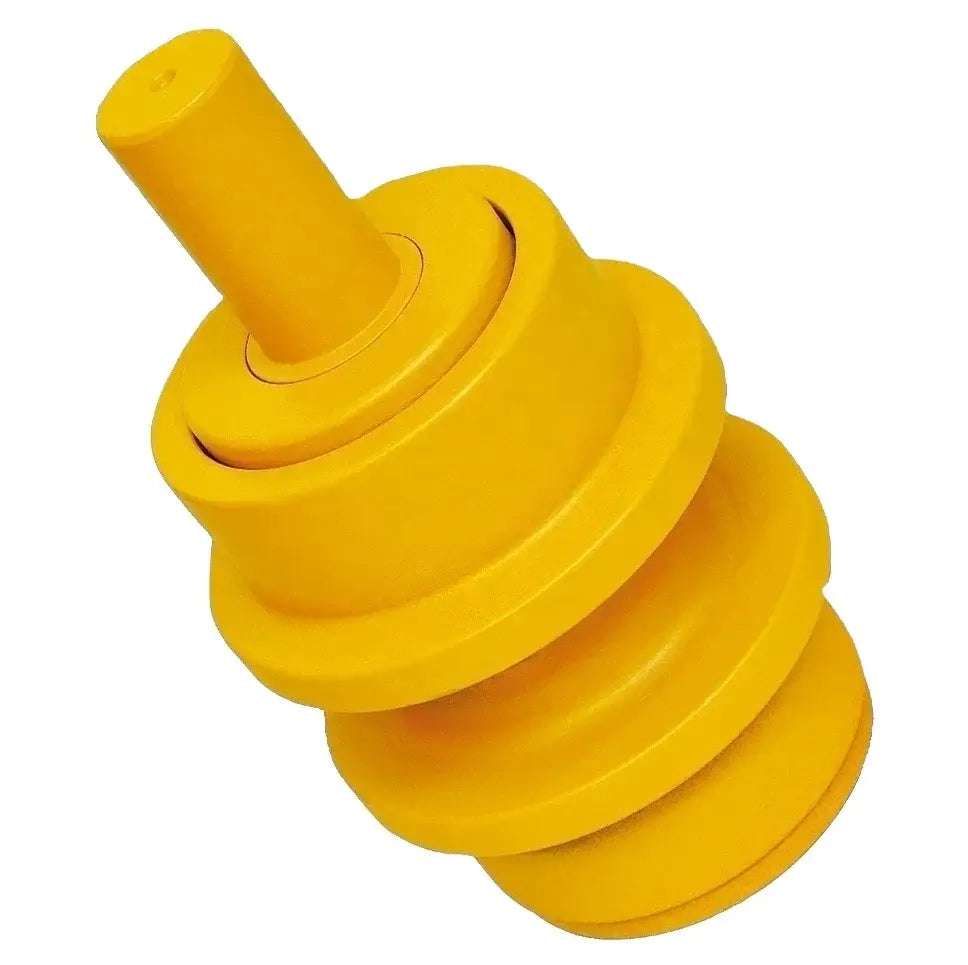
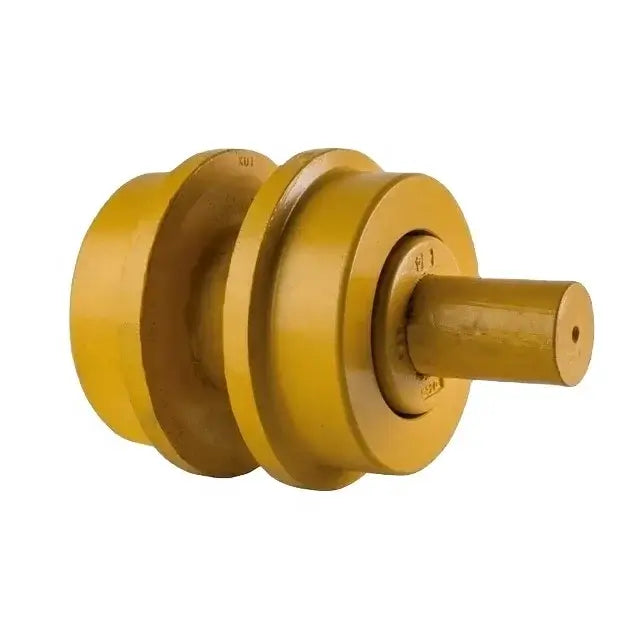
The consequence is a bottom roller that must be specified to a higher static and dynamic load rating, with a shaft hardness and bushing clearance that can sustain those loads across the extended duty cycles that define dozer operation. At Imara Engineering, bulldozer track rollers are sourced and specified as a distinct product category within our undercarriage parts range, not shared inventory with the excavator roller range with different part numbers applied.
Warning Signs, When Your Dozer Undercarriage Needs Attention
Bulldozer undercarriage wear communicates itself through the machine's behavior and through visual inspection of the track frame. These signals demand immediate action, a seized dozer bottom roller progresses to track chain and sprocket damage faster than an equivalent seized excavator roller because the sustained push loads compound the damage with every operating hour:
-
Oil pooling beneath the dozer track frame in the roller area — face seal failure. On a bulldozer running sustained pushing cycles, oil loss rate from a compromised seal accelerates faster than on an excavator due to the higher continuous contact pressure on the seal faces.
-
Flat spots or worn flats on roller shells — the roller has seized and is being dragged. On a bulldozer under full blade load, the progression from flat spot to shell destruction happens rapidly.
-
Abnormal track chain link wear directly above specific roller positions — point loading from a seized dozer bottom roller concentrating the machine's full push weight on a single track link contact point.
-
Track riding off-centre across the dozer roller flanges — worn flanges no longer guiding the track chain correctly. Under full blade load this produces accelerated track link side wear and increases track derailment risk.
-
Machine instability or drift during pushing cycles — asymmetric roller wear across one side of the dozer track frame affecting straight-line pushing performance and ground contact geometry.
-
Cracked or broken roller flanges — impact damage from rock contact on quarry or hard dozer sites. A cracked flange on a dozer bottom roller under full push load stresses the track frame mounting points and must be replaced immediately.
Bulldozer Track Roller Specifications, What Differs From Excavator Rollers
The four parameters that define an excavator track roller shell diameter, flange configuration, shaft dimensions, and face seal grade all apply to bulldozer track rollers as well. But the specification values within those parameters differ fundamentally between the two machine types:
-
Shell wall thickness — dozer bottom rollers carry a thicker shell wall than equivalent excavator rollers. The sustained high-load contact of track chain link passage under full blade resistance demands greater shell material depth to resist wear and impact simultaneously.
-
Shaft hardness and diameter — the bending load on a dozer roller shaft from a D6 or D65 under full blade resistance is fundamentally different from the bending load on a PC50 excavator roller. Shaft hardness and diameter are confirmed against the OEM load rating for each dozer model and weight class.
-
Face seal grade for continuous duty — the face seal on a dozer bottom roller is under higher and more sustained contact pressure than any other tracked machine roller. Seal grade is confirmed specifically for the continuous duty cycle profile of bulldozer operation — not a general-purpose seal specification applied across all machine types.
-
Roller position specification — on a bulldozer track frame, front and rear rollers carry different loads from mid-frame rollers and in some dozer models carry different specifications. Roller position on the track frame must be confirmed alongside the machine serial number on every dozer track roller order.
At Imara Engineering, every bulldozer track roller order is confirmed against all four parameters using your machine serial number and roller position on the track frame before dispatch.
Bulldozer Track Rollers by Brand
Our dozer bottom roller inventory covers the most widely operated bulldozer brands across global construction, mining, and land clearing operations all cross-referenced against OEM part numbers and all forming part of our broader undercarriage parts range.
Caterpillar Bulldozer Track Rollers — covering Cat D4, D5, D6, D7, D8, and D9 series bulldozers. Cat dozer track rollers are manufactured to the precise load rating and undercarriage geometry of each D series model. The Cat D6 dozer track roller is our highest-volume Cat bulldozer specification — stocked as a priority item given the volume of D6 machines across global construction and mining operations. Shell diameter, shaft specification, and face seal grade confirmed against Cat OEM part numbers for each listed D series model.
Komatsu Bulldozer Track Rollers — compatible with Komatsu D39, D51, D61, D65, D85, and D155 series bulldozers. Komatsu dozer bottom rollers are engineered to the undercarriage geometry and load rating of each D series model confirmed against Komatsu OEM part numbers for shell diameter, flange profile, and shaft specification. The Komatsu D65 dozer track roller is a priority stock specification given the wide distribution of D65 machines across construction and land clearing fleets globally.
Other Brands — we also stock or can source bulldozer track rollers for John Deere, Case, Liebherr, and Dresser-Komatsu dozers. Contact the Imara Engineering team with your machine model, serial number, and roller position and we will confirm availability.
OEM Quality, What Every Dozer Roller Is Built To
Every bulldozer track roller supplied by Imara Engineering is held to the load-rated specification that sustained dozer operation demands across the full heavy equipment undercarriage parts range:
-
Shell hardness and wall thickness rated for dozer push loads — confirmed to a higher shell specification than equivalent excavator rollers, built to resist the sustained high-load contact of dozer track chain passage under full blade resistance
-
Shaft hardness and bushing clearance matched to dozer operating weight class — confirmed against the OEM load rating for each D series model. An under-rated shaft deflects under peak push loads and destroys the face seals from the inside out within a fraction of the expected service life.
-
Face seal grade confirmed for continuous high-load duty cycle — not a general-purpose seal specification. The face seal grade for a Cat D6 dozer bottom roller operating under sustained blade pushing loads is confirmed specifically for that application and duty cycle.
-
Roller position specification — shell diameter, flange configuration, and shaft specification confirmed for the specific roller position — front, mid, or rear — on your dozer track frame before dispatch.
OEM bulldozer track rollers carry a brand premium above equivalent quality aftermarket specification. At Imara Engineering, the load rating, seal specification, and fitment guarantee replicate the OEM dealer standard. The premium does not.
Industries That Depend on Bulldozer Track Roller Reliability
-
Construction & Civil Engineering — Cat D6 and Komatsu D65 dozers on construction sites operate sustained pushing cycles on compacted earth, rock fill, and aggregate. OEM-rated shell hardness and face seal specification are non-negotiable for construction dozer undercarriage parts.
-
Mining & Quarrying — heavy dozers in mining and quarry applications operate in the most abrasive conditions in the tracked machine category. Shell hardness, flange integrity, and face seal grade for abrasive dust environments are the defining quality parameters for mining dozer bottom rollers.
-
Land Clearing & Agriculture — Cat D5 and Komatsu D51 machines in land clearing and agricultural applications operate in wet, root-laden, and debris-heavy conditions. Face seal specification for high-moisture environments and impact resistance against root and stump contact are the critical parameters for this application.
-
Road Building & Infrastructure — bulldozer track rollers for D series machines on road construction program where sustained high-load pushing cycles on compacted gravel and aggregate drives accelerated roller wear across the full dozer undercarriage system.
-
Plant Hire & Rental Fleets — dozer track rollers across hire fleets where consistent quality and reliable lead times define the supplier relationship. Imara Engineering supplies hire operators with trade pricing and serial number verified specifications as standard.