

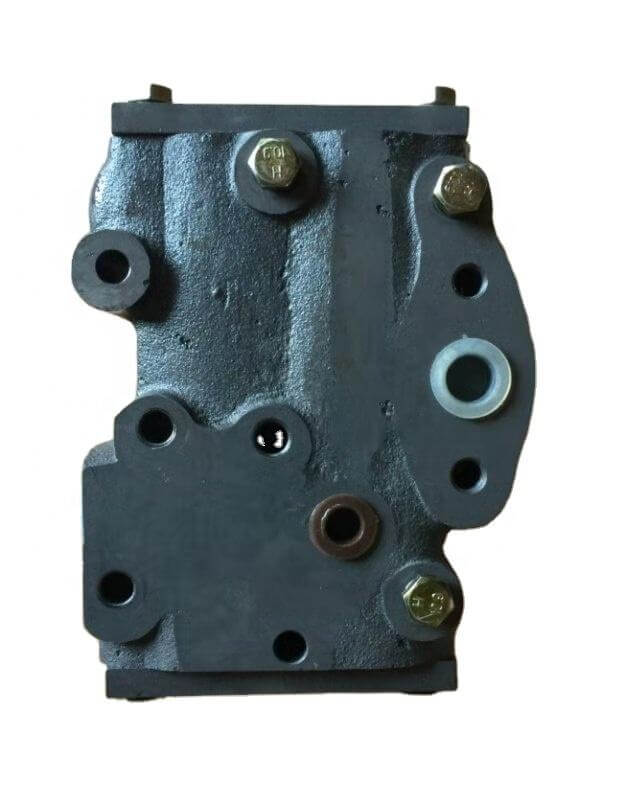
Clutch Pressure Plates for Heavy Equipment: Heavy-Duty Assemblies for CAT and Komatsu Dozers, Excavators, and Loaders
The pressure plate is the component in a heavy equipment clutch system that receives the least diagnostic attention and generates the most misdiagnosed clutch slip. Imara Engineering stocks clutch pressure plates for heavy equipment across Caterpillar and Komatsu platforms, covering dozers, excavators, and loaders, within our Clutch Parts inside the broader Transmission & Drivetrain catalogue.
Every pressure plate is manufactured to OEM diaphragm geometry, spring load rate, and friction face specifications, with fitment confirmed against your machine model and serial number before dispatch. Heavy-duty configurations are available for high-resistance dozer and loader applications where the standard OEM spring load rate reaches its service limit ahead of the expected overhaul interval. For machines where the pressure plate inspection reveals comparable wear in the friction disc and release bearing, our Clutch Kits collection carries the complete assembly renewal. Imara Engineering ships heavy equipment pressure plates worldwide with fast dispatch and priority freight available.


Collection:
Clutch Pressure Plates
The Pressure Plate's Role in Clutch System Performance
Understanding the mechanical function of the pressure plate clarifies why it is so often the true source of clutch slip that gets attributed to the friction disc. The pressure plate performs two functions simultaneously during every clutch engagement and disengagement cycle:
Clamping during engagement: The diaphragm spring or coil spring assembly within the pressure plate generates a defined clamping force against the friction disc face, pressing it against the flywheel with enough load to transmit full engine torque without slip at the friction interface. This clamping force is not a fixed mechanical value it is the product of the spring geometry, spring rate, and the diaphragm deflection characteristics of the specific pressure plate design. As the diaphragm fatigues over its service life, that force diminishes progressively.
Releasing during disengagement: When the operator depresses the clutch pedal, the release bearing pushes against the diaphragm fingers, deflecting the diaphragm inward and reducing the clamping load on the friction disc to allow the disc to float free of the flywheel. The geometry of the diaphragm fingers at the release bearing contact zone determines how cleanly this release occurs and how much pedal force is required to complete it.
Both functions degrade together as the pressure plate accumulates service hours. A pressure plate that can no longer generate its rated clamping force during engagement and can no longer release cleanly during disengagement is not a pressure plate in need of servicing; it is a pressure plate in need of replacement.
How Pressure Plate Wear Presents in the Field
Pressure plate degradation produces symptoms that closely mirror friction disc wear, which is why it is so frequently replaced as a secondary item after the friction disc rather than identified as the primary fault source. The following symptom pattern helps distinguish pressure plate wear from friction disc wear before the repair decision is made:
- Clutch slip that develops progressively over a short period after a friction disc replacement: A new friction disc installed against a pressure plate that was at the lower end of its clamping load range will begin slipping earlier than the friction material wear rate accounts for. The disc has not worn, and the pressure plate is not clamping it with sufficient force
- Clutch slip that is load-dependent rather than progressive: Slip that occurs under peak torque loading but is absent at moderate load is consistent with a pressure plate operating at reduced clamping force. The spring load is sufficient for moderate torque transfer but not for peak demand events
- Difficult or stiff clutch release: Diaphragm finger fatigue that alters the deflection geometry of the release zone increases pedal effort during disengagement. If a clutch pedal has become noticeably heavier without any change in the linkage or release bearing, the diaphragm finger condition should be assessed before the release bearing or linkage is replaced
- Clutch judder during engagement from a stationary position: A pressure plate friction face that has developed micro-surface irregularities from running against a worn disc produces an uneven clamping surface that generates judder as the friction disc transitions through the slip phase of engagement
- Heat discolouration on the pressure plate friction face: Blue or brown discolouration indicates the pressure plate has been running at elevated temperatures generated by slip events, confirming that the pressure plate was experiencing insufficient clamping load and has been thermally stressed across its service life
CAT Pressure Plate Coverage
CAT Dozer Pressure Plate Applications
The pressure plate dozer application across the CAT D-series represents the highest-demand pressure plate environment in the heavy equipment clutch range. Every push cycle on a dozer generates a peak torque demand at the clutch interface that the pressure plate must clamp against without slip, and the cumulative effect of those peak demand cycles on the diaphragm spring geometry is what determines how quickly a dozer pressure plate reaches the end of its clamping load range compared to a lighter-duty application.
Cat pressure plate replacements for CAT D-series dozer main drive clutch applications are available as heavy-duty pressure plate configurations within our range, with diaphragm spring load rates specified for the peak torque demands of the dozer operating cycle, rather than the median load the standard pressure plate is designed around. Serial number verification confirms the correct mounting bolt pattern, diaphragm finger count, and friction face diameter for the specific D-series variant before the unit is dispatched.
CAT Excavator and Loader Pressure Plate Applications
The pressure plate excavator application on CAT platforms operates under a different load profile than the dozer assembly, sustained torque loading during travel and positioning cycles rather than repeated peak engagement events during push cycles. Cat pressure plate variants for excavator applications are available in standard OEM-equivalent configurations, with diaphragm geometry and spring load rate matched to the clutch housing dimensions and friction disc specification of the specific CAT excavator platform.
Pressure plate assembly configurations for CAT wheel loader applications address the high-cycle engagement profile of loader operation, where the combination of engagement frequency and sustained torque loading during bucket fill cycles places the pressure plate under a combined thermal and mechanical demand that standard configurations manage differently from either the dozer or excavator application.
Komatsu Pressure Plate Coverage
Komatsu Dozer and Excavator Pressure Plate Applications
The Komatsu pressure plate range at Imara Engineering covers main drive clutch applications across Komatsu D-series dozers and PC-series excavators, where the clutch system uses a conventional friction disc and pressure plate arrangement rather than a full TorqFlow powershift integration. Komatsu pressure plate specifications for D-series dozer applications vary between the main drive clutch position and the steering clutch positions. These are not interchangeable assemblies, and serial number verification is the only reliable method of confirming which configuration applies to the specific machine and clutch position being serviced.
Heavy-duty pressure plate variants are available within the Komatsu range for D-series dozer applications in high-demand operating environments, with diaphragm spring load rates uprated for machines where the standard pressure plate configuration is reaching its service limit before the expected overhaul interval.
Komatsu Loader Pressure Plate Applications
Komatsu pressure plate coverage for WA-series wheel loaders addresses the high-cycle clutch engagement demands of loader operation across the Komatsu wheeled platform range. Pressure plate assembly replacements for Komatsu wheel loaders are available with friction face diameters and diaphragm specifications confirmed against machine serial number before dispatch, ensuring the clamping load delivered by the replacement unit matches the torque capacity of the specific loader clutch assembly.
Inspecting a Pressure Plate Before Committing to Replacement
Not every pressure plate requires replacement as a routine item during every clutch service. The following inspection steps determine whether the pressure plate in service is genuinely at its replacement threshold or whether it has remaining serviceability:
- Measure the diaphragm finger height uniformity across all fingers using a straight edge and feeler gauge. Height variation beyond the manufacturer's specified tolerance indicates uneven diaphragm finger fatigue and confirms replacement is required
- Check the friction face for heat discolouration and scoring. Blue or brown discolouration indicates thermal stress from slip events, while radial scoring indicates the friction disc backing plate has been making contact with the friction face
- Assess the diaphragm spring load using a pressure plate spring tester if available. A measured spring load below the manufacturer's minimum confirms that the diaphragm has fatigued beyond its serviceable clamping force range
- Inspect the pivot ring condition on diaphragm-type pressure plates. The pivot ring is the fulcrum point for the diaphragm action, and wear at the pivot contact zone affects both clamping load and release geometry
- Check the mounting face for distortion using a surface plate or verified flat reference. A distorted mounting face that prevents the pressure plate from seating flush against the flywheel housing introduces clamping force asymmetry across the friction disc face
Frequently Asked Questions
A slip that develops shortly after a recent friction disc replacement, before the new disc could reasonably have worn points to the pressure plate as the primary fault source. Slip that develops progressively over a full service interval with no recent disc replacement points to the friction disc. Both components should be measured against the manufacturer's wear specification during any clutch inspection.
For machines operating in high-resistance ground conditions with high engagement energy per cycle, yes. For machines in lighter-duty construction or grading cycles, the standard OEM-equivalent specification is appropriate. Our team will advise on the correct configuration for your specific operating environment and machine model.
Resurfacing is only appropriate where the friction face discolouration or minor scoring is within the manufacturer's material removal allowance, and the diaphragm spring load remains within its serviceable range after machining. Most field pressure plates presented for resurfacing have diaphragm fatigue that machining will not address, making replacement the more cost-effective outcome in practice.
In most heavy equipment clutch applications, the pressure plate assembly is a complete unit incorporating the diaphragm spring and the cover plate as an assembled component. Individual diaphragm springs are not typically available as separate service items. Our team will confirm the assembly configuration for your specific application at the time of order.
Yes, where stock is available. Both standard and heavy-duty pressure plate configurations are available for legacy CAT and Komatsu models through our global supply network. Contact Imara Engineering with your machine model and serial number, and we will confirm availability and the appropriate load specification for your application.