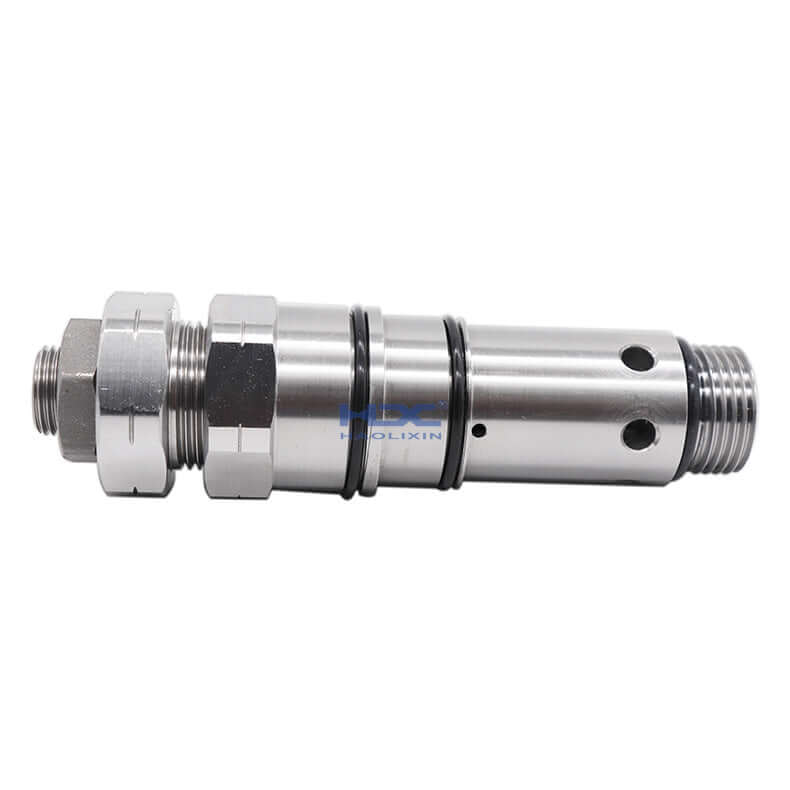
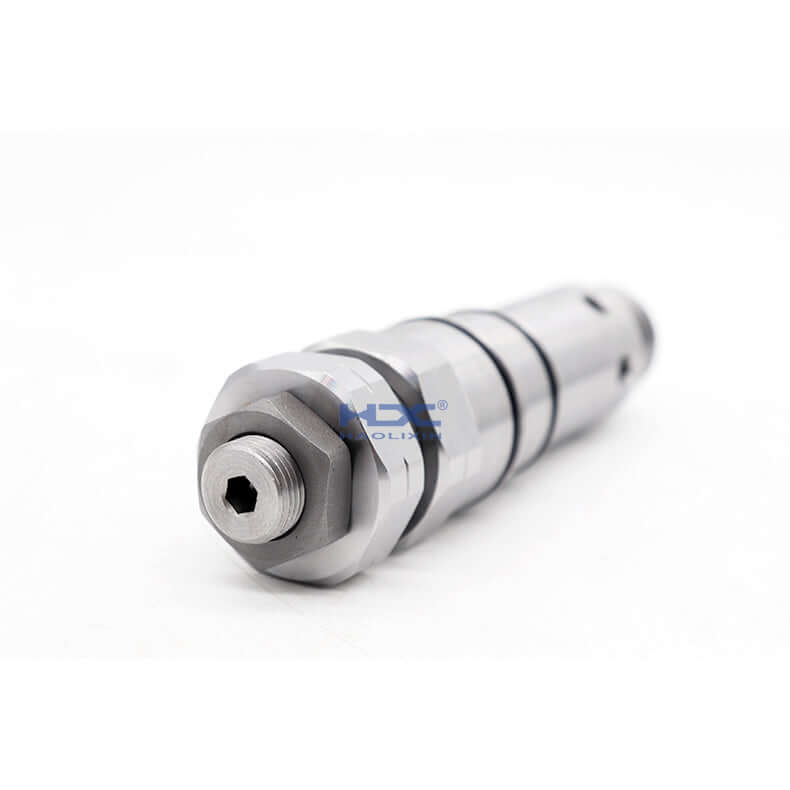
What Does a Hydraulic Relief Valve Do on an Excavator?
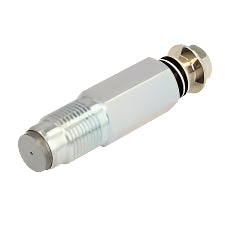
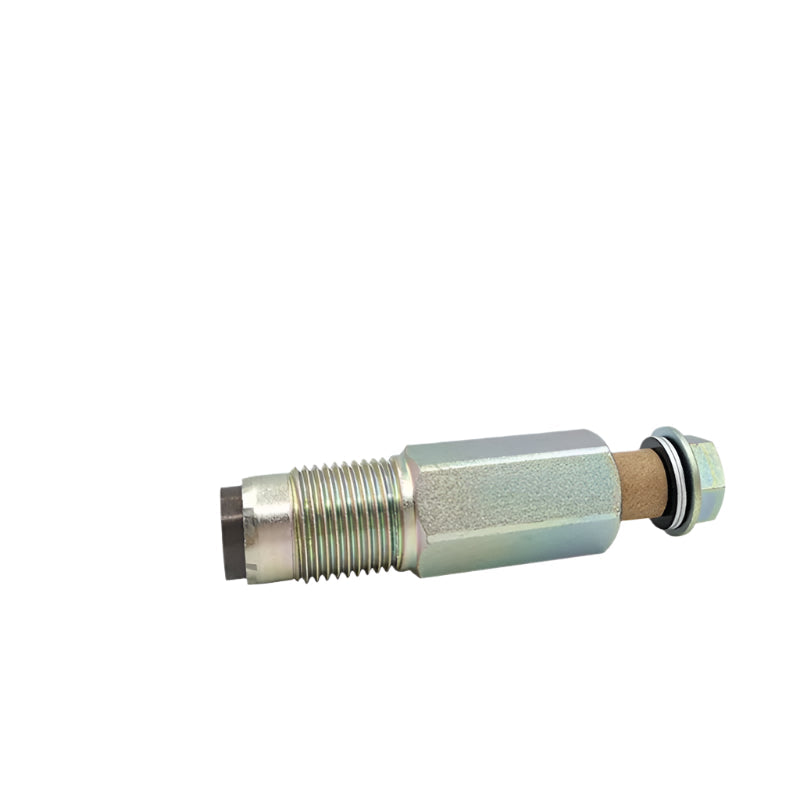
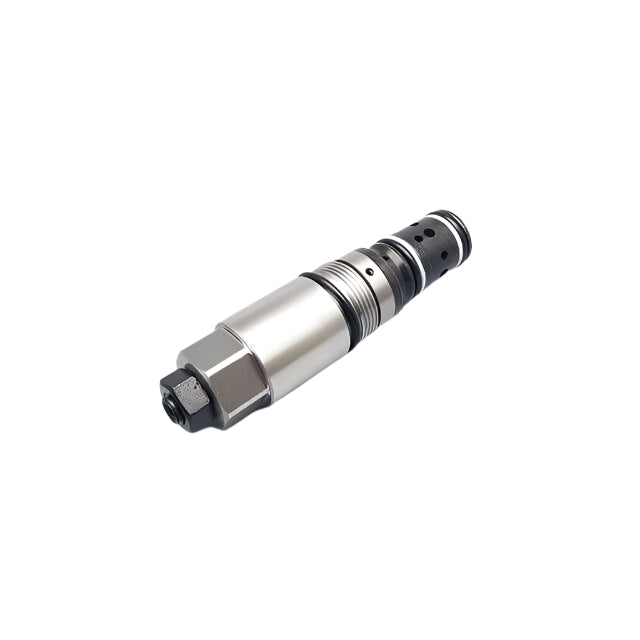
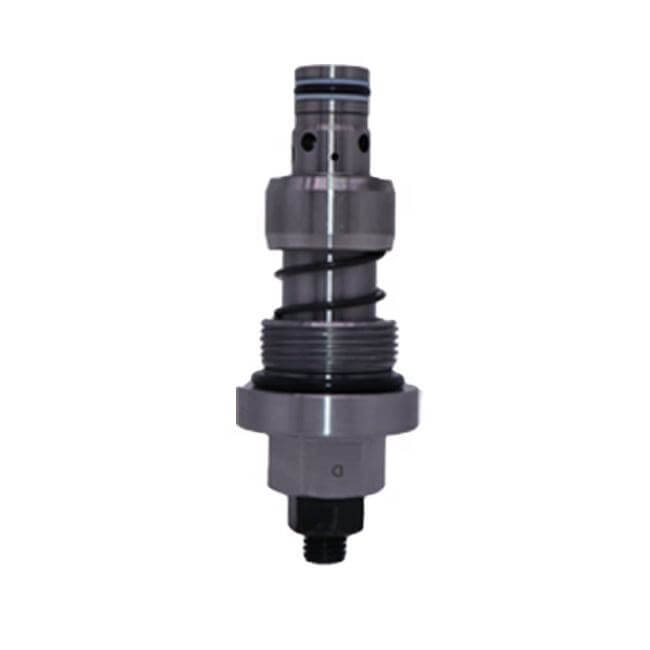
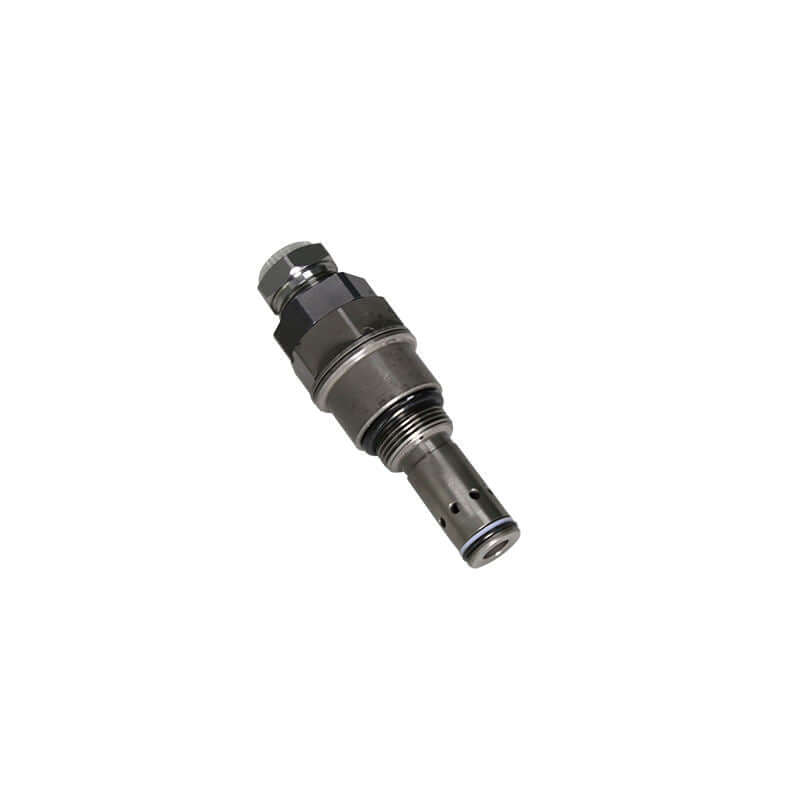
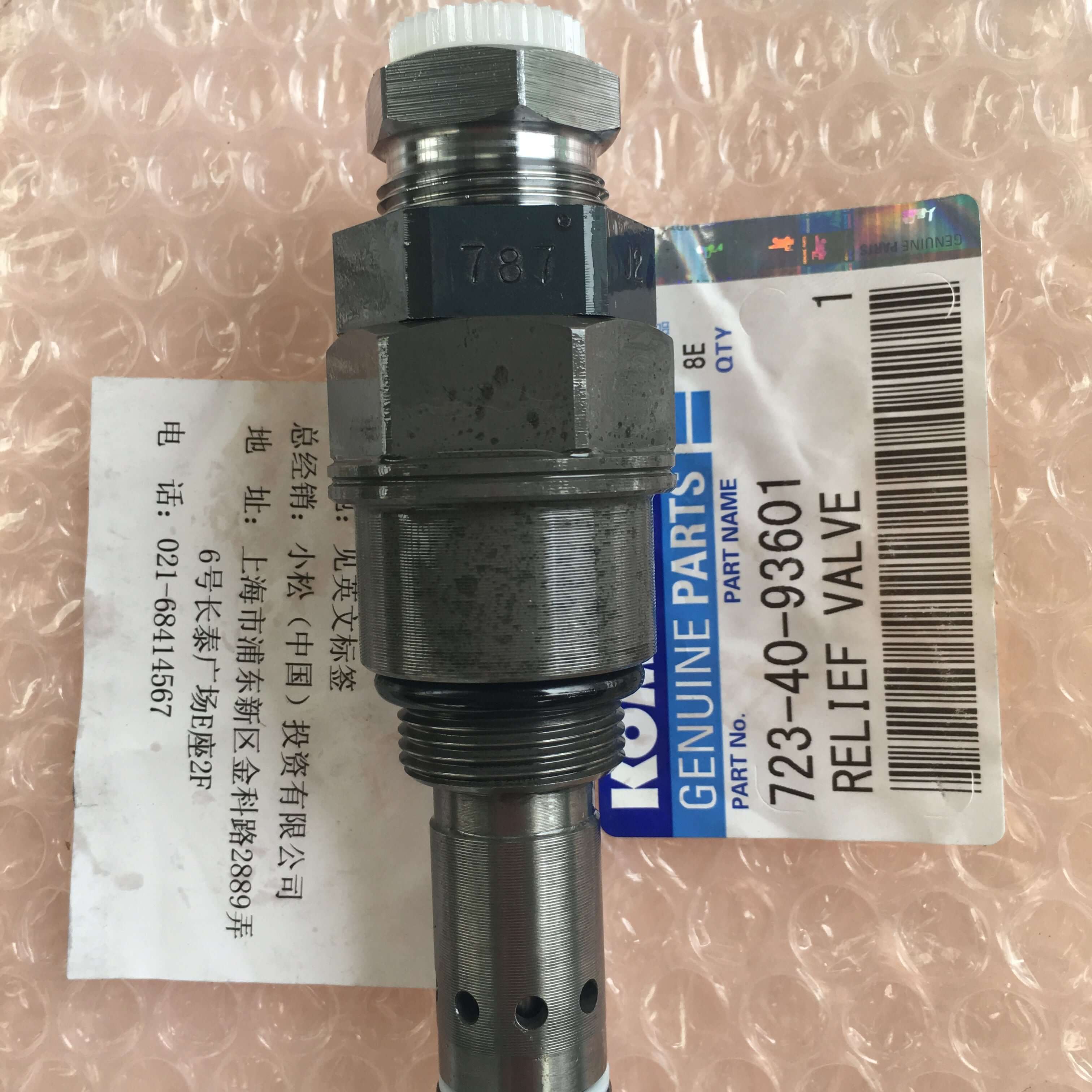
A relief valve operates on a straightforward but critical mechanical principle: a hardened steel ball or poppet, is held closed against its seat by a calibrated spring, pre-set to a specific compression that corresponds to the maximum allowable circuit pressure. Under normal operating conditions, circuit pressure remains below the spring setting, and the valve stays closed, allowing all pump flow to pass through the circuit to the working components. When a pressure spike occurs from a sudden load, end-of-stroke shock, or pump surge and circuit pressure rises to the spring's preset cracking pressure, the valve opens, bypassing excess flow directly to the tank until pressure drops back within the safe operating range, at which point the spring closes the valve again.
This continuous open-and-close cycling happens in milliseconds across hundreds of pressure events every working shift, making the relief valve one of the most dynamically active components in the entire hydraulic circuit despite its compact size and apparently simple design. The precision of the spring setting, the quality of the poppet-to-seat interface, and the cleanliness of the fluid passing through the valve are all critical to reliable long-term performance.
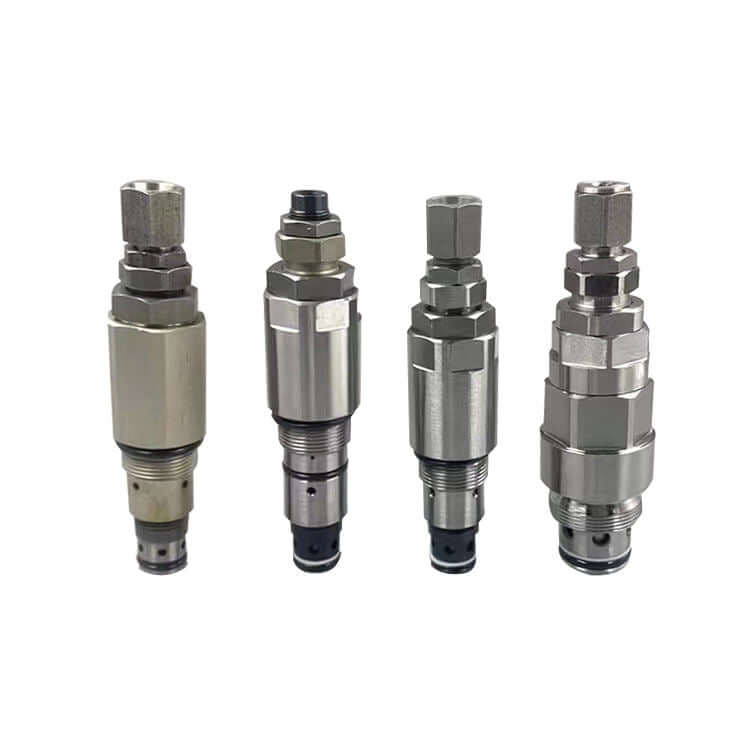
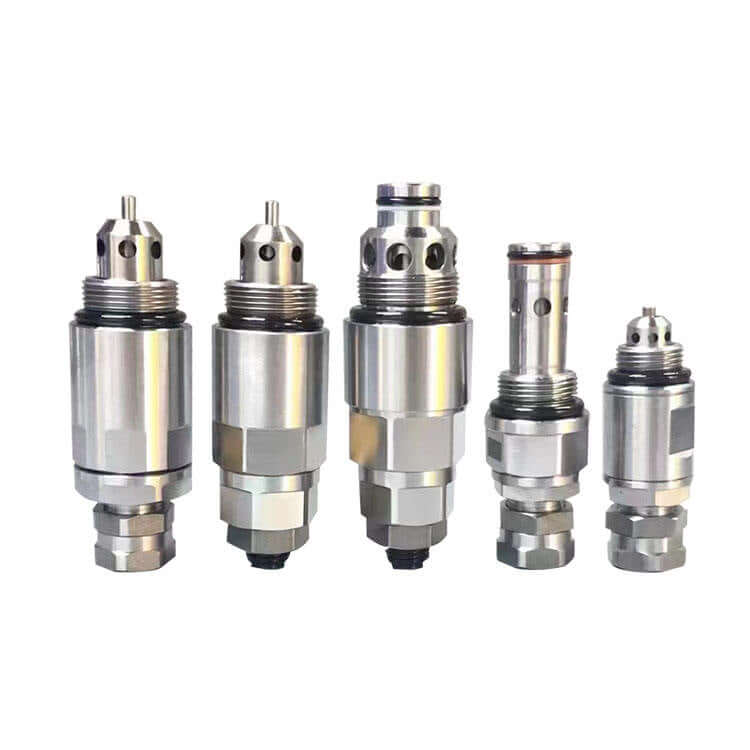
Types of Relief Valves Used on Excavators
Modern excavators use multiple relief valves across the circuit, each serving a specific pressure protection role at different locations and pressure settings. Understanding which type is relevant to your fault is essential before ordering:
-
Main System Relief Valve — Sets the maximum pressure limit for the entire main hydraulic circuit — the highest-pressure, most critical relief valve on the machine. Typically set between 300 and 380 bar on modern excavators, depending on brand and model specification. A failed main relief valve affects all functions simultaneously and is the first valve to suspect when system-wide low pressure is confirmed on testing.
-
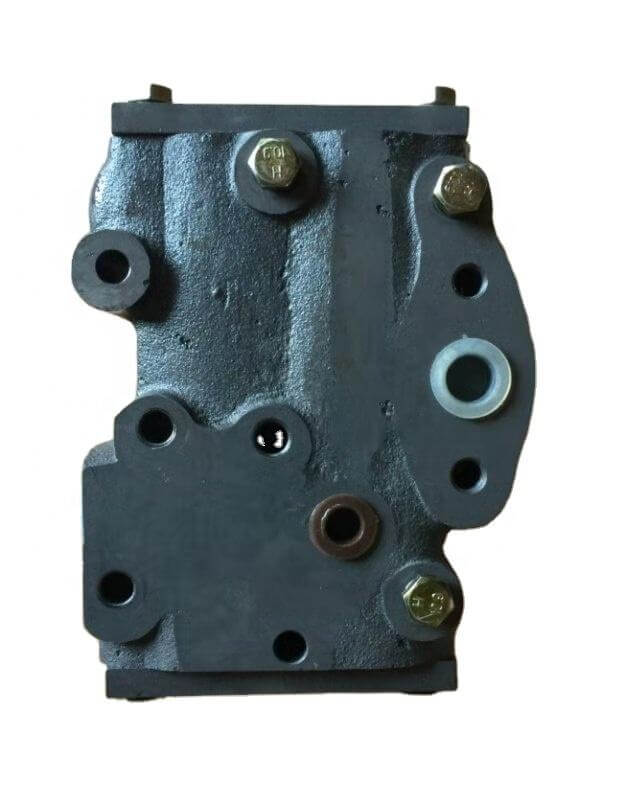
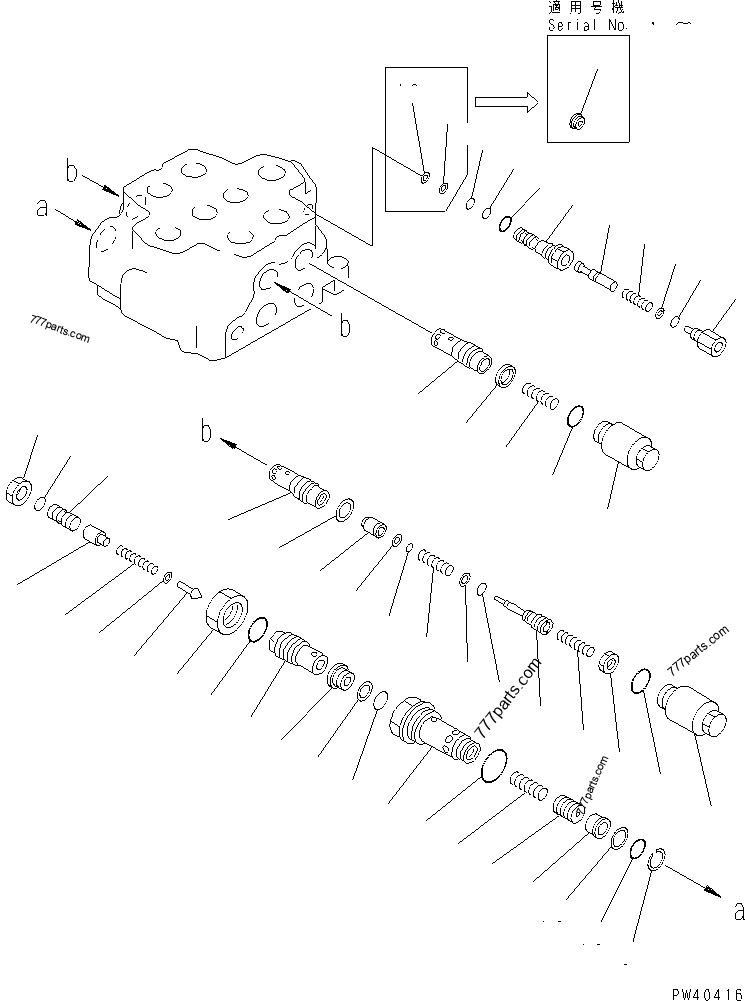
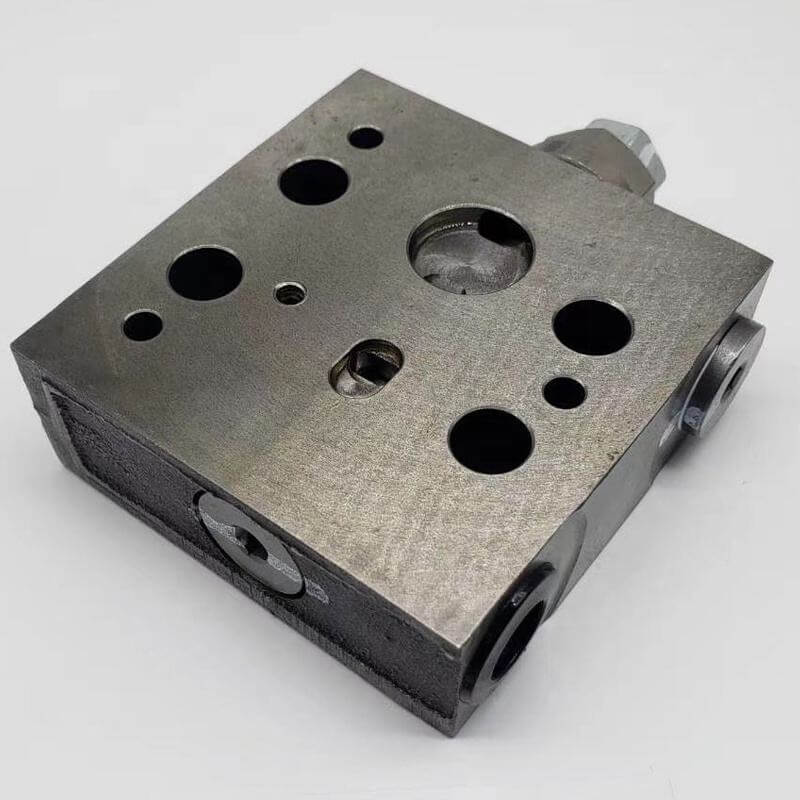
Port Relief Valves — Individual relief valves fitted at each function port of the main control valve — one for each side of the boom, arm, bucket, swing, and travel circuits. Port relief valves provide localised overpressure protection for each specific function, allowing individual circuits to be protected at different pressures appropriate to the component they serve. Port relief valve failure typically produces function-specific symptoms rather than system-wide pressure loss.
-
Overload Relief Valves — Fitted in travel and swing motor circuits specifically to absorb the high-pressure shock generated when a moving motor is suddenly decelerated or reversed. These valves protect the motor and associated circuit from the pressure spikes generated by the kinetic energy of a heavy rotating or travelling mass being brought to a stop. Overload relief valve failure accelerates motor wear and can cause sudden motor circuit hose failure from unabsorbed pressure spikes.
-
Pilot Circuit Relief Valves — Lower-pressure relief valves protecting the pilot circuit from overpressure. While operating at much lower pressures than the main circuit, pilot relief valve failure still affects machine control by destabilising the pilot pressure that governs all control valve spool responses.
Common Symptoms of Relief Valve Failure
Relief valve failure presents differently depending on whether the valve has failed open, failed closed, or drifted from its correct pressure setting. These are the key symptoms to monitor:
-
System-wide low pressure across all functions — The most common symptom of main relief valve failure is that all functions become slow and weak simultaneously as the pump flow bypasses directly to the tank rather than building pressure in the working circuit.
-
Overheating hydraulic oil without an obvious cause — A relief valve stuck open continuously converts pump flow energy into heat as it bypasses to the tank, causing rapid and unexplained hydraulic oil temperature rise even under light working loads.
-
Function-specific pressure loss — A single function losing power while all others remain normal indicates a port relief valve failure open on that specific circuit. The affected function cannot build sufficient pressure to work against the load.
-
Hose or seal failures recurring without an obvious cause — A relief valve drifting to a higher cracking pressure silently exposes the circuit to repeated overpressure events that progressively fatigue hoses, cylinder rod seals, motor shaft seals, and pump components, causing recurring failures that appear unrelated until the relief valve setting is checked.
-
Machine unable to lift rated load — A main or boom port relief valve set below specification limits the maximum pressure available to the boom cylinder, reducing rated lift capacity and causing the boom to stall under loads the machine should comfortably handle.
-
Noisy or chattering relief valve — A valve oscillating rapidly between open and closed states produces an audible chatter or buzz from the valve location, typically caused by contamination on the poppet seat, spring fatigue, or a circuit pressure hovering near the valve cracking threshold.
Relief Valve Models and Specifications We Supply
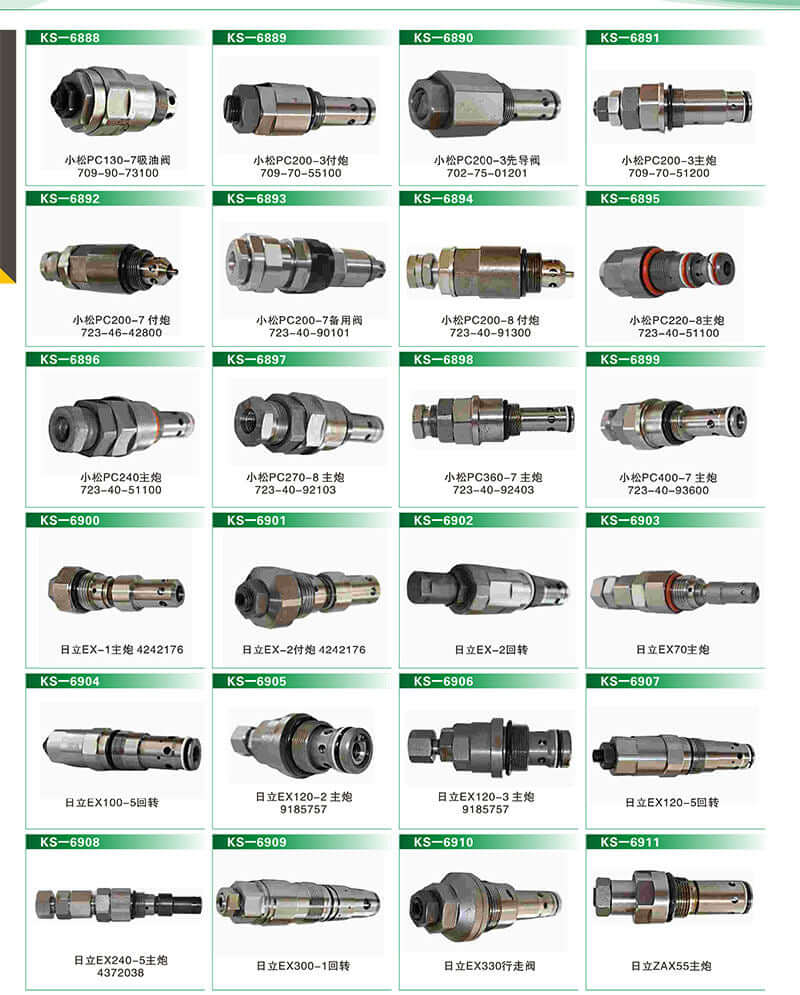
Imara Engineering supplies hydraulic relief valves across a wide range of pressure specifications and circuit applications for all major excavator brands and model series. Commonly supplied specifications include:
-
Komatsu — PC200-7, PC200-8, PC210-8, PC300-7, PC300-8, PC360-7, PC400-7, PC400-8, PC450-8
-
Caterpillar (CAT) — 320C, 320D, 320D2, 323, 325C, 325D, 330C, 330D, 336D, 336E
-
Hitachi — ZX200-3, ZX210-3, ZX300-3, ZX330-3, ZX450-3, ZX500-3, EX200-5, EX300-5
-
Volvo — EC210B, EC240B, EC290B, EC380, EC480, EC700
-
Doosan — DX225LC, DX300LC, DX380LC, DX480LC
-
Kobelco — SK200-8, SK300, SK350-8, SK480, SK850
-
Hyundai — R210LC-9, R290LC-9, R380LC, R480LC
-
Case — CX210, CX300, CX350, CX470
Cannot find your model or pressure specification listed? Contact our parts team with your machine serial number, circuit application, and required cracking pressure, and we will confirm the correct relief valve for your specific application immediately.
Relief Valve Specification: What to Confirm Before Ordering
Relief valves are pressure-specific components; installing a valve with an incorrect cracking pressure setting is as damaging as installing a failed valve. Before ordering, confirm the following specification details with our parts team:
-
Cracking Pressure Setting — The precise pressure at which the valve opens. Must match the original manufacturer specification for the specific circuit main system, port relief, or overload. Never substitute a different pressure setting without reference to the machine service manual.
-
Port Thread Specification — Thread type and size at the valve inlet and outlet ports must match the original valve and manifold connection — BSP, metric, or JIC, depending on brand and circuit location.
-
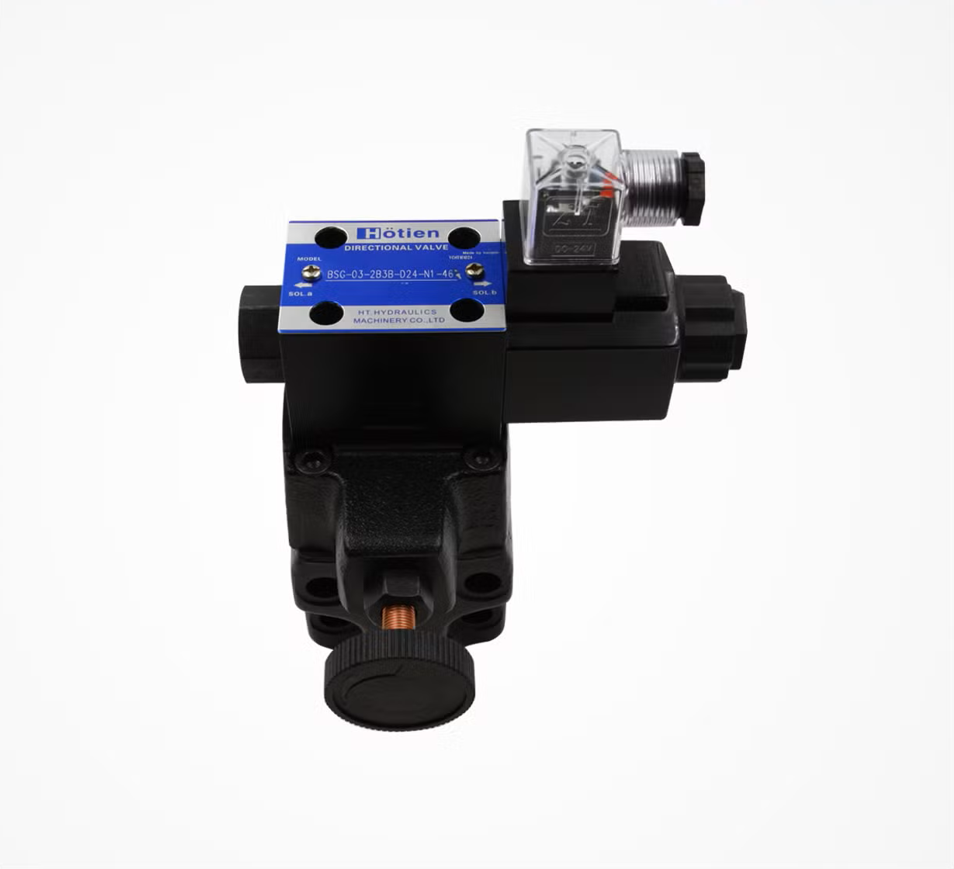
Valve Type — Confirm whether a direct-acting relief valve or pilot-operated relief valve is required for the specific circuit. Direct-acting valves are used for most port and overload applications; pilot-operated valves are common in main system relief circuits on larger machines.
-
Flow Capacity — The valve must be rated to handle the maximum bypass flow volume of the circuit it protects — an undersized valve cannot open fast enough to prevent overpressure during a high-flow pressure spike.
-
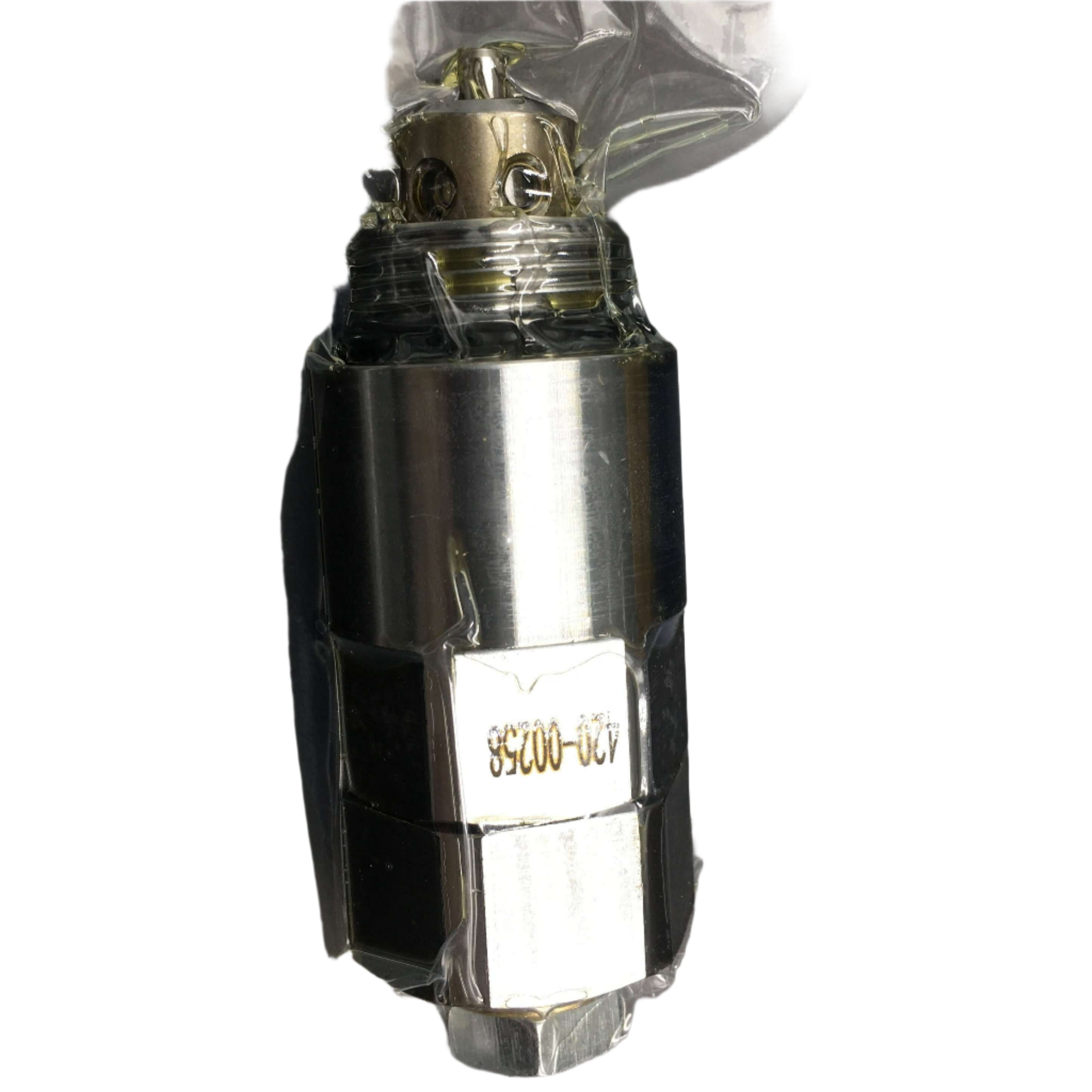
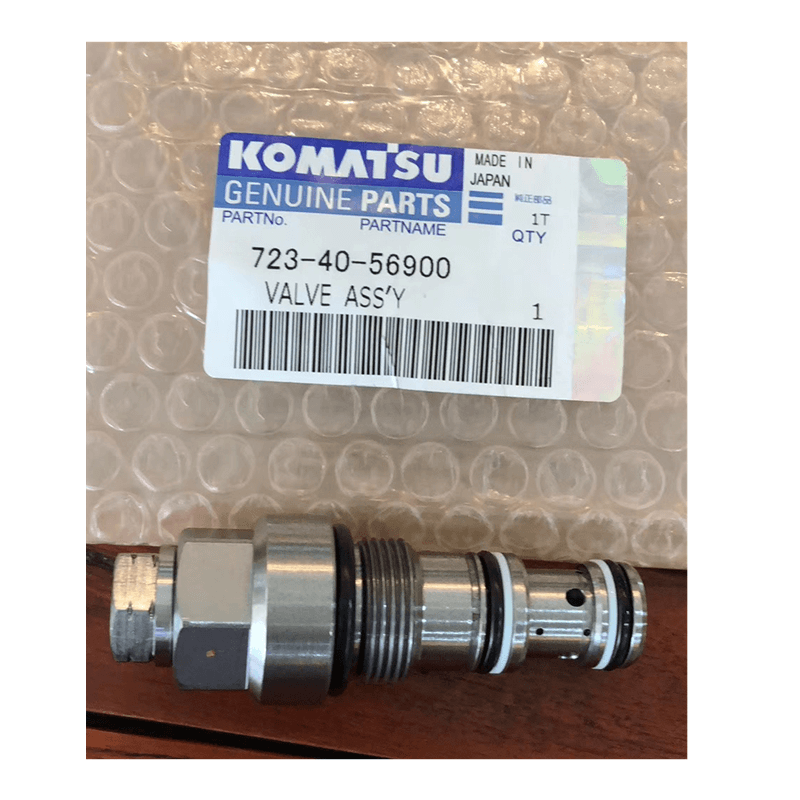
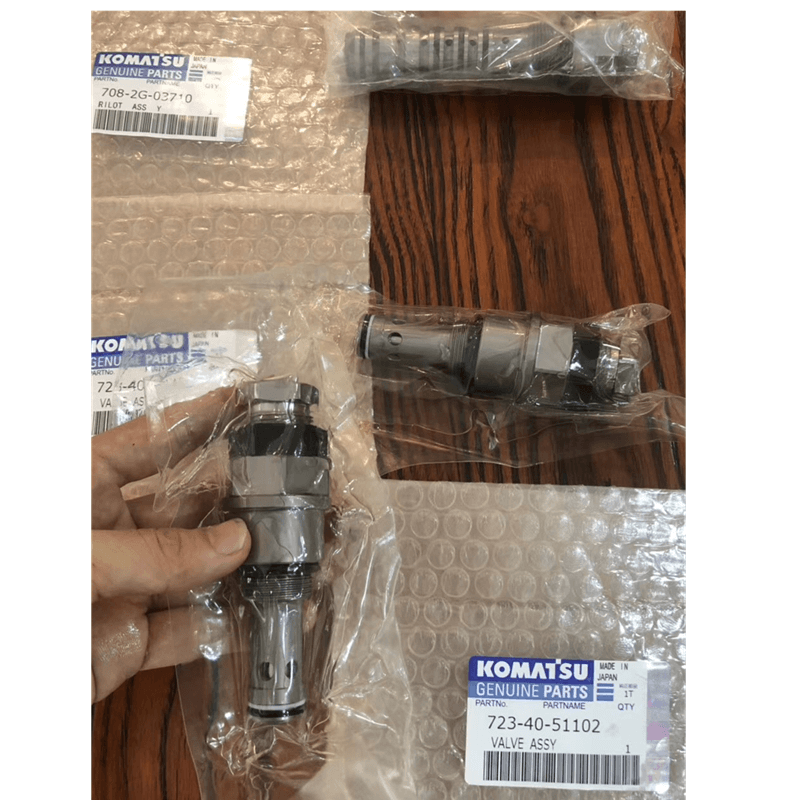
OEM Part Number — Where available, providing the OEM part number from the existing valve body or the machine service manual is the most reliable method of confirming the exact correct replacement specification.
Relief Valve Adjustment vs Replacement
When relief valve performance is suspected, the first diagnostic question is whether the valve requires adjustment or full replacement:
-
Adjustment is appropriate when the valve mechanism is clean and undamaged, but pressure testing confirms the cracking pressure has drifted from specification due to spring fatigue or gradual seat wear. Many relief valves have an external adjustment screw, allowing cracking pressure to be reset to specification without valve removal. Always verify the adjusted setting with a pressure gauge after any adjustment.
-
Replacement is required when the valve fails to close after opening, indicating poppet seat damage or contamination preventing positive sealing; the valve chatters continuously, indicating spring fatigue or seat scoring; the cracking pressure cannot be adjusted within the specification range, indicating internal spring or seat damage; or the valve body shows external leakage, indicating o-ring or thread seal failure.
-
Never set relief pressure above manufacturer specification — Increasing relief valve pressure beyond the manufacturer's specified limit to compensate for perceived low power is a common but damaging practice that overstresses every downstream component and will cause premature failure across the entire hydraulic circuit. If machine power is insufficient at correct pressure settings, the root cause is pump wear or internal component bypass, not the relief valve setting.
Related Hydraulic Parts You May Need
Relief valve replacement or diagnosis frequently connects to wider hydraulic circuit inspection. Consider sourcing these components alongside your relief valves:
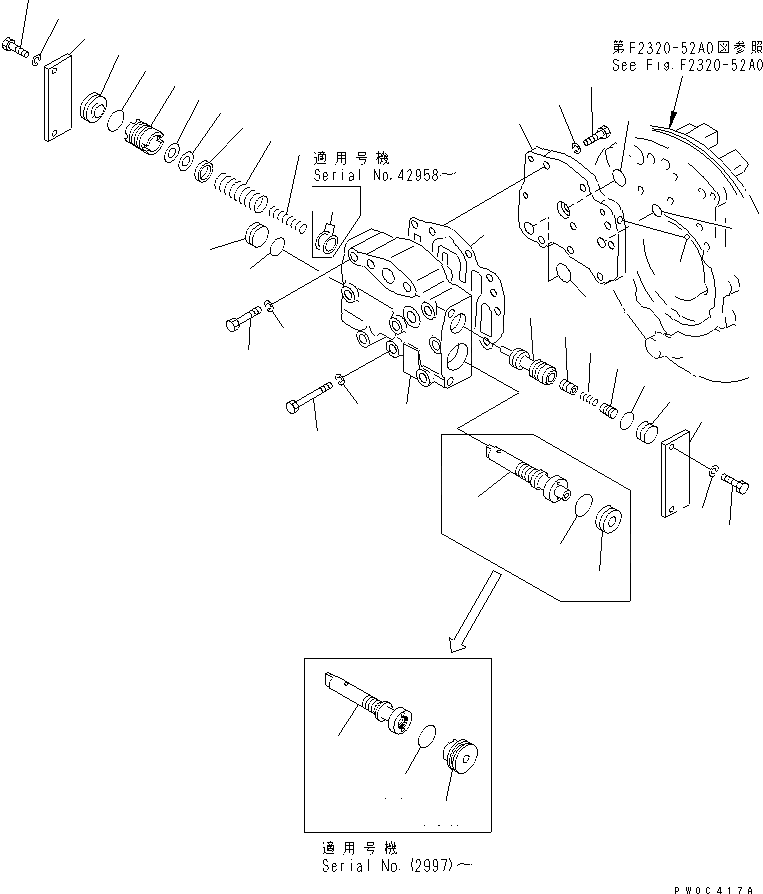
- Control Valves — Port relief valves are integrated into or directly associated with the main control valve block. Inspect the MCV simultaneously when replacing port relief valves
- Regulator Valves — Inspect pilot circuit regulator valves when diagnosing pressure instability across the hydraulic circuit
- Hydraulic Pumps — Confirm main pump output pressure before replacing the main relief valve — pump wear produces identical symptoms to relief valve failure open
- Hydraulic Hoses & Pipes — Inspect main circuit hoses for fatigue damage after any confirmed overpressure event caused by the relief valve failure
- Pump Seal Kits — Inspect pump seals after any sustained overpressure event that may have stressed pump internal sealing components