

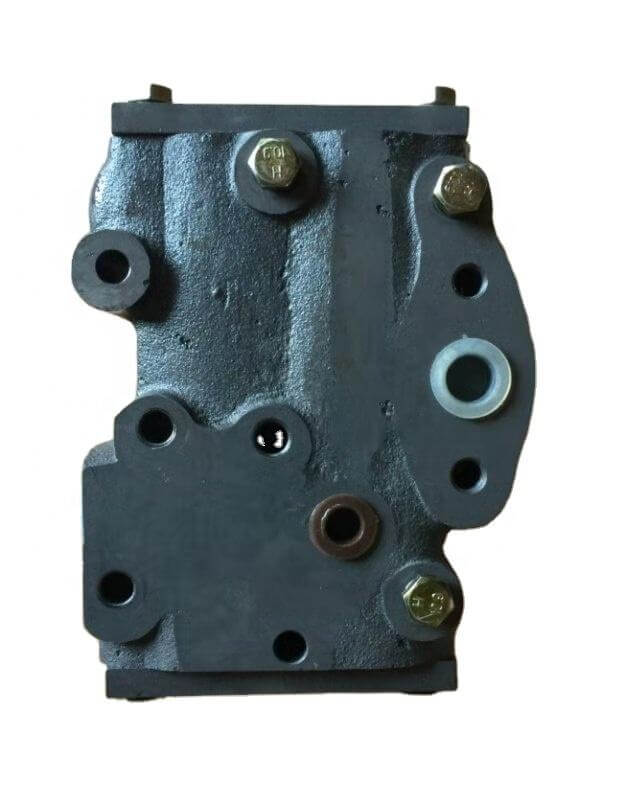
Transmission Shift Components for Heavy Equipment: Shift Forks, Rails, Levers, Drums, and Detents for CAT and Komatsu
The shift mechanism in a heavy equipment manual transmission translates the operator's cab-level input into a precise mechanical event inside the gearbox. Imara Engineering stocks a targeted range of transmission shift components for heavy equipment, covering shift forks, shift rails, shift levers, shift drums, and shift detents for CAT and Komatsu platforms, within our Transmission Components hub inside the broader Transmission & Drivetrain catalogue.
Every shift component is manufactured to OEM dimensional and material specifications, with fitment verified against your machine model, serial number, and transmission type before dispatch. Shift mechanism wear generates no noise, no fluid contamination, and no fault codes. For machines where shift mechanism wear has introduced secondary synchroniser damage, our Synchronisers collection carries the complementary repairs. Imara Engineering ships heavy equipment shift components worldwide with fast dispatch and priority freight for urgent breakdown orders.


Collection:
Transmission Shift Components
Why the Shift Mechanism Is a Maintenance Category on Its Own
Shift mechanism components occupy an unusual position in heavy equipment transmission maintenance: they are mechanical wear items that generate no noise, no fluid contamination, and no diagnostic fault codes as they degrade. They communicate their condition exclusively through the quality of the gear change, a signal that operators and maintenance managers frequently attribute to synchroniser wear, gear wear, or clutch condition, long before the shift mechanism itself is inspected.
The shift mechanism is a maintenance category on its own for three reasons:
- It determines synchroniser service life. A shift fork with worn engagement pads does not guide the synchro sleeve through a centred engagement stroke; it introduces lateral force into the sleeve movement that concentrates wear on one side of the synchroniser ring. Synchroniser rings replaced without addressing the shift fork condition that caused the asymmetric wear pattern will develop the same wear on the same side within a fraction of their expected service life.
- It amplifies the cab input into gearbox events. The force an operator applies to the gear lever is multiplied and directed through the shift rail and fork before it reaches the synchro sleeve. A worn or bent shift rail that introduces even minor misalignment into that force path is delivering a destructive input to the synchroniser assembly with every gear change the operator makes.
- Its wear is cumulative and invisible. Shift fork pad wear, rail bore wear, and detent spring fatigue all develop gradually over thousands of shift cycles without producing any symptom other than a progressive change in shift feel, which is frequently normalised by operators over time and not identified as a mechanical fault until the secondary damage it has generated in the synchroniser or gear assembly makes the problem unavoidable.
Shift Component Range
Shift Fork
The shift fork is the component that physically moves the synchro sleeve across the hub into gear engagement. It is a forked arm that straddles the sleeve groove, transmitting axial force from the shift rail into the sleeve face through two engagement pads. Shift fork pad wear is the most common shift mechanism fault in heavy equipment transmissions and presents as a loose, imprecise engagement feel combined with increased shift effort as the worn pad surfaces no longer transmit force cleanly to the sleeve face.
The gearbox shift fork in our range is produced to OEM pad width, engagement groove radius, and fork arm geometry for CAT and Komatsu transmission applications. Cat shift fork and Komatsu shift fork replacements are available as direct-fit units with fork arm material hardness and pad surface geometry matched to the sleeve groove specifications of the specific transmission variant.
Shift fork wear at the pad face is measurable with a feeler gauge against the sleeve groove. A clearance beyond the manufacturer's maximum specification confirms that the fork is generating lateral sleeve deflection during engagement and requires replacement before the synchroniser ring wear it is causing progresses further.
Shift Rail
The transmission shift rail is the precision-ground bar that guides the shift fork through its engagement stroke, constraining fork movement to a single axial plane and preventing rotation under shift force. Rail bore wear at the fork mounting position and rail deflection from impact damage are the two primary failure modes, both of which introduce misalignment into the fork stroke and degrade shift precision progressively as the wear accumulates.
The shift rail works in conjunction with the shift detent system to establish the neutral position and the in-gear positions at each end of the fork stroke. A worn rail bore that allows fork rotation under shift force will also compromise detent function, producing a shift that feels imprecise both in its travel path and at its end position.
Our transmission shift rail replacements are produced to OEM diameter, straightness, and surface finish specifications for the fork mounting position, with bore tolerances matched to the fork mounting dimensions of the CAT and Komatsu transmission applications in our range.
Shift Lever Transmission
The shift lever transmission component is the mechanical linkage between the cab-level gear selector and the shift rail inside the gearbox. In heavy equipment applications, this linkage is often a multi-part assembly connecting the operator's gear lever through a series of pivots, rods, and joints to the internal shift mechanism. Wear at any pivot point in this linkage introduces play into the shift path that reduces the precision with which the operator can position the fork and in severe cases, produces missed gear engagements where the fork stops short of the full engagement position because the accumulated play in the linkage has absorbed the final millimetres of the operator's shift stroke.
Shift lever transmission replacements in our range cover the primary lever and pivot assembly for CAT and Komatsu heavy equipment platforms, with pivot bore tolerances and lever geometry matched to the original linkage specification.
Shift Drum Gearbox
The shift drum gearbox is a cylindrical component with profiled cam tracks that guide the shift forks through their engagement sequence as the drum rotates under gear selection input. It is found in heavy equipment transmissions that use a drum-type shift mechanism rather than a conventional rail and fork layout, and its advantage is that a single drum rotation sequences multiple fork movements simultaneously, eliminating the possibility of a partial gear engagement where one fork completes its stroke before an adjacent fork has begun.
Shift drum wear concentrates in the cam track profiles, where the fork follower pins run continuously under load. A worn cam track that allows follower pin slop produces imprecise fork positioning at every gear selection and accelerates wear on every synchro sleeve the drum-controlled forks actuate. Our shift drum gearbox replacements are produced to OEM cam track profile geometry and drum diameter specifications for the transmission variants in our range.
Shift Detent
The shift detent is the indexing mechanism that holds the shift rail in its neutral position and in each engaged gear position by providing a positive tactile resistance at each defined point in the fork stroke. It typically consists of a spring-loaded ball or plunger that seats in a series of detent grooves machined into the shift rail surface. Shift detent wear presents as a shift that lacks a positive engagement feel, produces false neutral positions mid-stroke, or fails to hold the gear under vibration during operation.
A worn shift detent spring that has lost its load rate will allow the shift rail to drift out of its engaged position under transmission vibration, producing the gear jump-out symptom that is most commonly attributed to synchroniser or gear dog wear but originates entirely within the shift detent mechanism. Shift detent components in our range cover spring and ball assemblies for the CAT and Komatsu shift mechanisms in our coverage, with spring load rates matched to the rail groove geometry of the specific transmission variant.
Diagnosing Shift Mechanism Faults Before Ordering
Shift mechanism faults are identified through a sequence of checks that systematically isolate each component in the mechanism before ordering a replacement:
- Assess shift effort across all gear positions with the machine stationary and the engine running. Consistent heavy effort across all gears points to the shift lever linkage. An effort that varies by ratio points to a fork or detent fault at the affected gear position
- Check for shift rail deflection by applying lateral force to the exposed shift rail end with the transmission accessible. Visible deflection under hand pressure confirms rail damage beyond serviceable tolerance
- Measure the shift fork pad clearance against the synchro sleeve groove using a feeler gauge. Clearance beyond the manufacturer's maximum indicates pad wear requiring fork replacement
- Assess detent function by moving the shift rail through its travel range and confirming that each detent position produces a positive, consistent resistance. A detent that offers no resistance or resistance that varies across the rail travel confirms spring or groove wear
- Inspect the shift drum cam tracks on drum-type mechanisms for follower pin groove wear visible as a polished, widened track surface where the original profile geometry has been eroded by follower pin movement under load
Frequently Asked Questions
Asymmetric sleeve wear on one side, combined with correct fork pad clearance points to the synchroniser ring. Shift fork pad clearance beyond the manufacturer's maximum, combined with even sleeve wear, confirms the fork is the primary fault source. Both components should be assessed before an order is placed.
In most field repair applications, straightening is not recommended. A rail produced from through-hardened steel cannot be safely cold-straightened without introducing residual stress at the bend point that produces premature fatigue fracture under subsequent shift loading. Replacement is the correct and more cost-effective path.
Yes, when produced to OEM pad width, arm geometry, and material hardness specifications. The shift forks Imara Engineering supplies are manufactured to original specifications and are an accepted industry-standard replacement for genuine components across both platforms.
Not necessarily, but the detent should be inspected during any rail replacement. A worn detent spring that has been running against a worn rail groove will have adapted its load characteristics to the worn geometry and may not function correctly against a new rail with sharp, unworn groove profiles.
Machine model, serial number, and the affected gear position are the minimum requirements. The fault symptom description, whether it is shift effort, imprecision, false neutral, or gear jump-out, also helps our team identify which component in the shift mechanism sequence is most likely at fault before the order is confirmed.