

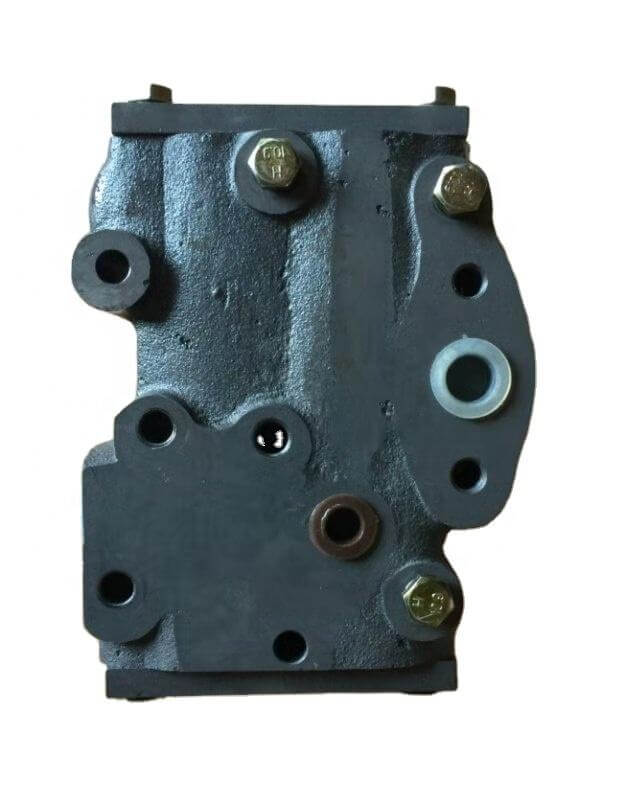
Clutch Release Bearings for Heavy Equipment: Hydraulic and Mechanical Throw Out Bearings for CAT and Komatsu Dozers, Excavators, and Loaders
Of all the components in a heavy equipment clutch system, the release bearing is the one most routinely installed as an afterthought bolted in because it happened to be accessible rather than assessed against the correct specification for the application and this is precisely why release bearing failure is the most common cause of a clutch system returning to the workshop well before the service interval the rest of the assembly was designed to deliver. Imara Engineering stocks clutch release bearings for heavy equipment across Caterpillar and Komatsu platforms, covering hydraulic and mechanical throw-out bearing configurations for dozers, excavators, loaders, and motor graders, within our Clutch Parts hub inside the broader Transmission & Drivetrain catalogue.
Every release bearing is manufactured to OEM thrust face geometry, housing diameter, and dynamic load rating specifications, with hydraulic or mechanical configuration confirmed against your machine serial number before dispatch. Aftermarket release bearings in our range are a proven industry-standard replacement for genuine components across both platforms. For machines where the release bearing inspection reveals comparable wear in the friction disc and pressure plate, our Clutch Kits collection carries the complete assembly renewal. Imara Engineering ships heavy equipment release bearings worldwide with fast dispatch and priority freight for urgent orders.


Collection:
Clutch Release Bearings
What the Release Bearing Actually Does and Why Its Specification Matters
The release bearing sits in a unique mechanical position within the clutch kits system: it is a stationary component that must engage with a rotating component, the pressure plate diaphragm fingers under axial load every time the clutch pedal is depressed, transmit that load cleanly through the full release travel, and then retract to a defined clearance from the rotating diaphragm the moment the pedal is released.
This combination of repeated axial loading, contact with a rotating surface, and continuous proximity to a high-speed rotating assembly makes the release bearing one of the most thermally and mechanically demanding bearing applications in the entire drivetrain. Three variables determine how long it survives in that environment:
Thrust face geometry: The contact geometry of the release bearing thrust face must match the diaphragm finger profile of the pressure plate it contacts. A mismatch in contact geometry concentrates the axial load onto a narrow band of the diaphragm finger surface, generating localised wear on both the bearing face and the diaphragm fingers that accelerates failure in both components simultaneously.
Dynamic load rating: The axial load generated by a heavy equipment clutch pedal through its mechanical or hydraulic linkage is substantially higher than in automotive applications, and the release bearing must carry that load across thousands of engagement and disengagement cycles per operating shift. A bearing produced to a lower dynamic load rating than the application demands will fail within a fraction of the expected service life.
Running clearance management: In mechanical release bearing systems, the clearance between the stationary bearing face and the rotating diaphragm fingers in the released position determines whether the bearing runs in continuous contact with the diaphragm, generating heat and wear throughout the operating shift, or maintains the correct clearance that allows the diaphragm to rotate freely between disengagement events.
Mechanical Versus Hydraulic Release Bearings in Heavy Equipment
The two release bearing configurations used across the CAT and Komatsu heavy equipment range serve the same disengagement function through different actuation mechanisms, and the distinction between them determines the correct replacement specification for your machine.
Mechanical Release Bearing Throw Out Bearing Applications
The mechanical release bearing, commonly referred to as the throw-out bearing across the industry, operates through a physical linkage between the clutch pedal and the release bearing carrier, translating pedal movement into direct axial travel of the bearing against the pressure plate diaphragm fingers. The clutch throw-out bearing heavy equipment configuration is found across older CAT and Komatsu platforms and in lighter-duty applications where the simplicity and serviceability of a mechanical linkage is preferred over a hydraulic circuit.
Mechanical throw-out bearing wear presents as a distinctive continuous squealing or grinding noise that is present when the clutch pedal is depressed and absent when it is fully released a symptom pattern that allows the fault to be identified without clutch disassembly in most machine configurations. A throw-out bearing that has reached this stage of wear is generating abnormal contact forces on the pressure plate diaphragm fingers during every pedal depression and should be replaced before the diaphragm finger wear it is producing advances beyond what the pressure plate can absorb without replacement.
The throw-out bearing variants in our range are produced to OEM thrust face geometry and dynamic load specifications for the CAT and Komatsu mechanical linkage clutch configurations in our coverage, with housing dimensions and retaining clip geometry confirmed against machine serial number before despatch.
Hydraulic Release Bearing Applications
The hydraulic release bearing heavy equipment configuration replaces the mechanical linkage with a hydraulic slave cylinder integrated directly into the release bearing carrier, using hydraulic pressure from the clutch master cylinder to generate the axial force that disengages the pressure plate. This configuration eliminates the mechanical linkage tolerances that accumulate in a conventional throw-out bearing system and delivers more consistent release force across the full pedal travel range.
Hydraulic release bearing heavy equipment variants are found across later-generation CAT and Komatsu platforms where clutch actuation force requirements exceed what a practical mechanical linkage can deliver without excessive pedal effort. The hydraulic release bearing is a more complex component than a mechanical throw-out bearing. It incorporates a hydraulic cylinder, seals, and fluid ports within the bearing assembly, and its replacement requires correct hydraulic circuit bleeding after installation to ensure consistent actuation pressure across the pedal travel.
Our hydraulic release bearing heavy equipment variants are produced to OEM bore diameter, seal specifications, and bearing load ratings for the CAT and Komatsu platforms in our range, with fluid port orientation and mounting geometry confirmed against machine serial number before the unit is dispatched.
CAT Release Bearing Coverage
CAT Dozer and Track Equipment Release Bearings
The cat release bearing range at Imara Engineering covers both mechanical throw-out bearing and hydraulic release bearing configurations across the CAT D-series dozer line, where the clutch disengagement system configuration varies between platform generations and production years. CAT D-series dozer release bearing applications require particular attention to thrust face diameter, as the pressure plate diaphragm configuration across different D-series variants uses different finger arrangements that are not compatible across the range without dimensional verification.
Cat release bearing replacements for dozer applications are available with thrust face geometry and dynamic load ratings matched to the specific pressure plate diaphragm specification of the CAT D-series variant, confirmed by machine serial number.
CAT Excavator and Loader Release Bearings
Clutch release bearing excavator variants for CAT platforms cover the drive clutch disengagement system used across PC-equivalent and CAT track excavator configurations, where the clutch system remains a conventional friction disc and pressure plate arrangement. CAT wheel loader release bearing applications address the high-cycle disengagement demands of loader operation, where the frequency of clutch pedal actuation per operating hour is higher than any other heavy equipment application in the range. Cat release bearing specifications for loader platforms are available with dynamic load ratings appropriate for the engagement cycle frequency of loader operation.
Komatsu Release Bearing Coverage
Komatsu Dozer and Excavator Release Bearings
The Komatsu release bearing range covers mechanical throw-out bearing and hydraulic release bearing configurations across Komatsu D-series dozers and PC-series excavators, where the clutch disengagement system is a conventional pedal-actuated arrangement. Komatsu dozer release bearing applications include both main drive clutch and steering clutch disengagement positions on platforms where the steering system uses a separately actuated clutch pack, and these are distinct bearing specifications that must be confirmed independently against the machine serial number before an order is placed.
Komatsu Wheel Loader Release Bearings
Komatsu's release bearing coverage for WA-series wheel loaders addresses the hydraulic clutch disengagement configurations used across the WA platform range, where the integrated hydraulic actuation system requires a release bearing produced to the hydraulic bore specifications and seal compound of the specific Komatsu loader clutch system. Hydraulic release bearing heavy equipment variants for Komatsu loaders are available with fluid port orientation and sealing specifications confirmed against the machine serial number before dispatch.
Release Bearing Inspection and Replacement: What to Check Before You Order
Release bearing condition is assessed through a combination of operating symptom analysis and physical inspection during clutch access. The following process establishes whether replacement is required and confirms which specification applies:
- Listen for bearing noise under pedal depression with the transmission in neutral and the clutch partially engaged — a grinding, squealing, or rumbling sound that is present only when the pedal is depressed and absent when fully released or fully engaged confirms release bearing wear at the thrust face contact zone
- Check for pedal effort changes that cannot be explained by linkage adjustment or hydraulic circuit pressure — increased pedal effort during disengagement, combined with noise, indicates the thrust face is generating abnormal friction against the diaphragm fingers
- Inspect the thrust face contact zone during clutch access for wear patterns, pitting, or material transfer from the diaphragm finger contact surface — uneven wear across the thrust face confirms misalignment between the bearing housing and the clutch centreline
- Assess hydraulic circuit integrity on hydraulic release bearing applications before ordering a replacement — a bearing that has failed due to hydraulic pressure loss from a master cylinder or line fault will fail again at the same rate if the hydraulic circuit fault is not resolved alongside the bearing replacement
- Measure housing bore diameter and confirm retaining clip configuration against the clutch housing specification for your specific machine variant — these dimensions confirm the correct replacement unit and prevent an installation that fits the carrier but misaligns the thrust face from the diaphragm finger contact circle
Frequently Asked Questions
Yes. Throw-out bearing is the common industry term for a mechanical clutch release bearing, used interchangeably across the heavy equipment and trucking industries. The hydraulic variant is referred to exclusively as a hydraulic release bearing to distinguish it from the mechanical configuration.
The clutch pedal linkage configuration identifies the type. A mechanical pedal linkage with a fork actuator connecting to the release bearing carrier indicates a mechanical throw-out bearing. A clutch pedal that connects to a master cylinder with no mechanical fork linkage to the gearbox indicates a hydraulic release bearing system.
Yes, as a standard practice. A release bearing that has accumulated the same operating hours as the friction disc being replaced is at the same point in its service cycle. Retaining it alongside a new friction disc and pressure plate introduces the most worn component in the assembly back into service against new components.
Yes, when produced to OEM thrust face geometry, housing diameter, and dynamic load rating specifications. The release bearings Imara Engineering supplies are manufactured to original specifications and are a proven industry-standard replacement for genuine components across both platforms.
No. A hydraulic release bearing replacement requires the hydraulic circuit to be bled after installation to purge air introduced during the component change. An unbled circuit delivers inconsistent actuation pressure across the pedal travel range and will produce incomplete clutch disengagement under pedal force that feels correct at the pedal but is not generating full release bearing travel against the diaphragm.