The Differential's Position in the Heavy Equipment Drivetrain and Why It Matters for Diagnosis
The differential is the point at which the drivetrain transitions from a single rotating assembly to two independently driven outputs, and this transition introduces a set of operating forces that no other drivetrain component experiences: the simultaneous management of equal torque distribution under straight-line loading and differential speed accommodation during cornering or uneven terrain traversal.
In heavy equipment, this operating environment creates three specific stress concentrations that determine where differential wear originates and how quickly it progresses:
At the ring and pinion mesh: The ring gear and pinion gear operate in a hypoid or bevel gear arrangement that concentrates contact stress on the tooth flanks under the combined influence of axial and radial loading. The tooth contact pattern determined by the gear geometry, bearing preload, and housing alignment must be maintained within the manufacturer's specified contact zone for the gear mesh to distribute load across the full tooth face. When bearing wear allows the gear positions to drift, the contact pattern migrates to the tooth edges, and fatigue failures develop rapidly.
At the differential bearing positions, the differential carrier bearings control the ring gear position within the housing and maintain the gear mesh geometry under load. As these bearings wear and their running clearance increases, the ring gear floats axially under load shifting the tooth contact pattern and accelerating gear wear in the same mechanism that bearing wear in a transmission causes gear wear in that assembly.
At the axle shaft seals and housing joints: The differential operates in a bath of gear oil that lubricates the ring and pinion mesh, the carrier bearings, and the side gear interfaces. Seal failure at any point in the differential housing allows this lubricant to escape, and contamination to enter, and a differential running on degraded or contaminated gear oil generates wear across every internal component simultaneously.
Understanding these three stress concentrations guides both the diagnostic process and the repair scope before any differential parts order is placed.
Differential Parts Range
Differential Assembly Heavy Equipment
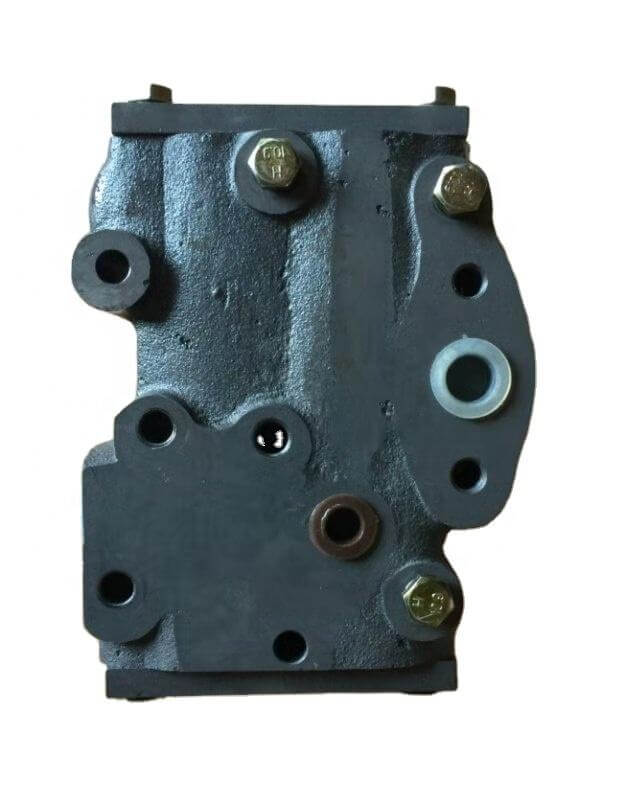
A complete differential assembly replacement is the correct repair path for machines where internal damage extends beyond the gear set and bearing positions into the differential carrier, side gear bores, or housing interfaces. Our differential assembly heavy equipment range covers complete replacement units for CAT, Komatsu, and Dana platforms across dozers, loaders, and articulated trucks, with each assembly produced or remanufactured to OEM gear geometry, bearing preload specification, and housing dimensional tolerances.
The differential assembly dozer configuration requires particular specification accuracy because dozer differential assemblies manage the combined output torque of the entire drivetrain under continuous high-resistance push loading, the operating conditions that place the highest sustained stress on the ring and pinion mesh and the carrier bearing positions. Cat differential and Komatsu differential complete assembly replacements are available with a build variant confirmed against the machine serial number before dispatch.
Dana differential heavy equipment assemblies cover the articulated truck and specialist off-highway equipment platforms where Dana's axle architecture is the OEM-specified final drive configuration. Dana differential applications are available across the range for direct-replacement assembly sourcing where the complete unit requires replacement rather than a component-level repair.
Ring Gear and Pinion Heavy Equipment
The ring gear pinion heavy equipment gear set is the most frequently replaced component pair in differential repair, and it is always replaced as a matched pair, a ring gear and pinion produced as a lapped set to the specific tooth contact pattern geometry they were manufactured to operate against together. Installing a new ring gear against a used pinion, or vice versa, introduces a contact pattern mismatch that generates noise, heat, and accelerated tooth wear from the first loaded operating cycle.
Our ring and pinion gear sets are available for CAT, Komatsu, and Dana differential applications across dozers, loaders, and articulated trucks. The differential gear heavy equipment variants in our range are produced to OEM tooth geometry, case hardening depth, and surface finish specifications, with the matched pair relationship confirmed at the manufacturing stage rather than assembled from separately sourced components.
Ring gear and pinion replacement requires a correct tooth contact pattern setting during reassembly. The pattern is established by adjusting bearing preload and gear mesh position against a marked gear face before the assembly is sealed. Our team provides technical guidance on the contact pattern setting procedure at the time of order for operators completing the repair in their own workshop.
Differential Bearing Heavy Equipment
Differential bearings cover three distinct positions within the assembly, each performing a different load management function and each requiring a specific bearing type and preload specification:
-
Differential carrier bearings: The two bearings that support the differential carrier within the axle housing and maintain ring gear position under load. These are the bearings most directly responsible for gear mesh geometry and are the primary wear item in differential bearing replacement
-
Pinion bearings: The front and rear pinion bearings that control the pinion shaft position and maintain the hypoid or bevel tooth engagement depth against the ring gear. Pinion bearing wear produces a characteristic howling noise under load that increases with vehicle speed
-
Side gear thrust washers and bearings: The components that manage the axial loads generated within the differential carrier during torque distribution between the two axle outputs
Differential bearing heavy equipment replacements in our range are produced to OEM bore diameter, dynamic load rating, and preload specification for CAT, Komatsu, and Dana differential applications. All three bearing positions are available individually for targeted replacement and as complete bearing sets for full differential overhauls.
Differential Seal Heavy Equipment
Differential seals address two distinct leak paths in a heavy equipment differential assembly: the pinion shaft seal at the input end of the differential housing and the axle shaft seals at each output where the axle shafts exit the differential carrier. Both positions operate as dynamic lip seals against rotating shaft surfaces, and both are high-frequency failure points in heavy equipment final drive maintenance.
Differential seal heavy equipment replacements in our range cover the pinion input seal and both axle shaft output seals for CAT, Komatsu, and Dana differential applications, with lip geometry, seal compound, and shaft surface finish compatibility confirmed against machine serial number before dispatch. Complete differential seal kits are available for overhaul applications where all seal positions are being renewed simultaneously, and individual seal replacements are available for targeted leak repairs where a single position has been identified as the fault source.
CAT, Komatsu, and Dana Differential Coverage by Platform
CAT Differential Applications
The cat differential range at Imara Engineering covers final drive differential applications across the CAT D-series dozers, 140-series motor graders, 700-series articulated trucks, and 900-series wheel loaders, where the differential assembly is an integrated component of the final drive axle system. CAT differential specifications vary significantly across these platform families the differential used in a CAT 777D rigid haul truck operates under a fundamentally different load profile and to a different dimensional specification than the unit used in a CAT D8 dozer, and serial number verification is the only reliable method of confirming the correct assembly or component for your specific machine.
Komatsu Differential Applications
The Komatsu differential range covers final drive applications across Komatsu D-series dozers, WA-series wheel loaders, and articulated equipment platforms where the differential assembly is part of the machine's axle and final drive system. Dozer differential applications within the Komatsu range require particular attention to the distinction between main drive differential assemblies and steering differential configurations on platforms where directional control is managed through a differential steering mechanism rather than a conventional clutch-brake system.
Dana Differential Applications
Dana differential heavy equipment coverage addresses the articulated truck, off-highway loader, and specialist construction equipment platforms where Dana axle architecture is the OEM-specified final drive system. Dana differential assemblies and parts are available across the primary Dana axle series used in heavy equipment applications, with assembly specifications and component compatibility confirmed against machine model and axle series designation at the time of order.
Diagnosing a Differential Fault Before Ordering
Accurate fault diagnosis before ordering differential parts determines whether you source a single seal, a ring and pinion set, or a complete assembly a decision that carries a significant cost difference depending on which the diagnosis actually supports. The following process isolates the fault before the order is committed:
-
Identify the noise character and the operating condition that generates it: A differential whine that is present under load and absent on the overrun points to tooth contact pattern wear in the ring and pinion mesh. A rumble or grinding noise that is speed-dependent, regardless of load direction, points to bearing wear. A noise that appears during cornering only points to the side gears or spider gears within the carrier
-
Check for external leaks at the pinion seal and axle shaft seal positions before disassembly. An identifiable external leak without noise or performance degradation is a seal replacement, not an assembly overhaul
-
Drain the differential and inspect the oil for metallic particle content and morphology. Angular particles with sharp edges indicate gear tooth wear. Fine spherical particles indicate bearing wear. A heavy metallic deposit across both particle types indicates that wear is advanced across both gear and bearing positions simultaneously
-
Check the differential backlash with a dial gauge on the ring gear face. Backlash beyond the manufacturer's specified range confirms that bearing preload has been lost and the ring gear is operating with excessive positional freedom within the housing
-
Inspect the tooth contact pattern on the ring gear face using marking compound if the assembly is accessible. A contact pattern confined to the tooth edges rather than centred on the tooth face confirms that bearing wear has allowed the gear positions to drift beyond their specified mesh geometry