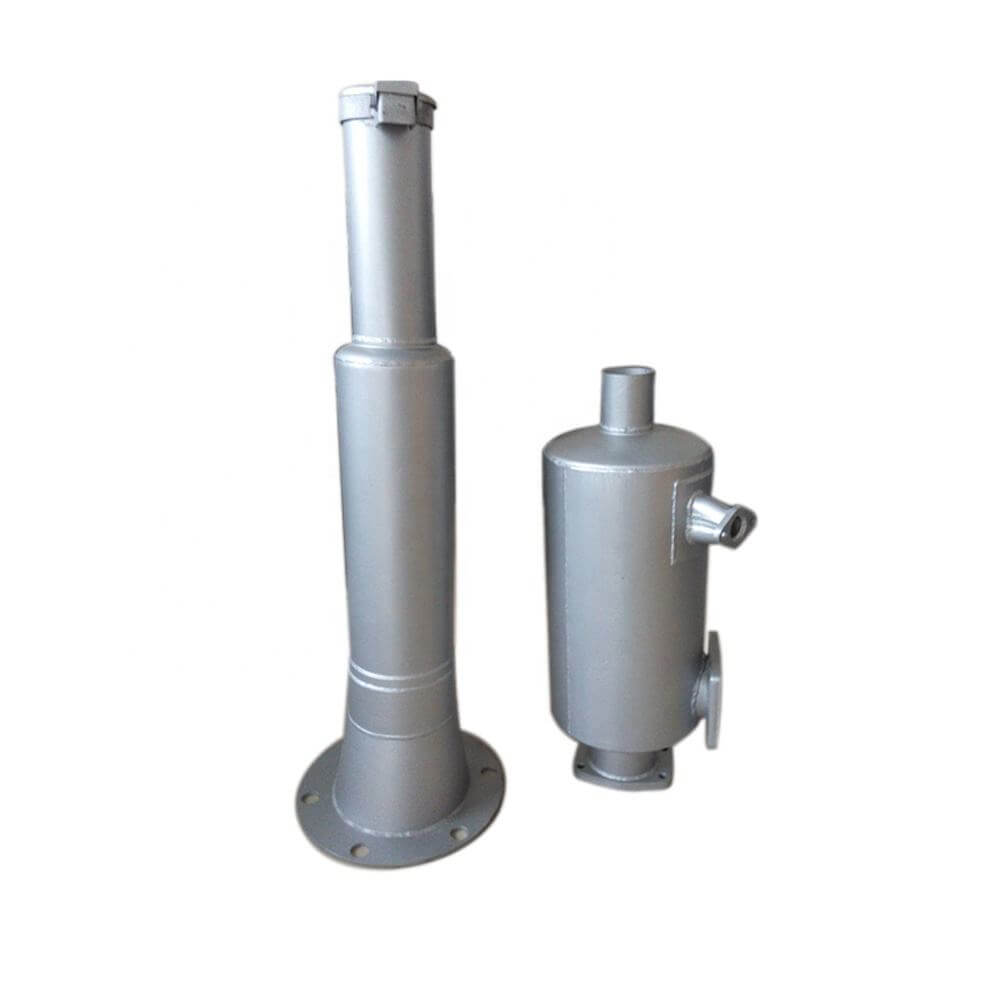
What a Diesel Muffler Actually Does: and Why Getting It Right Matters
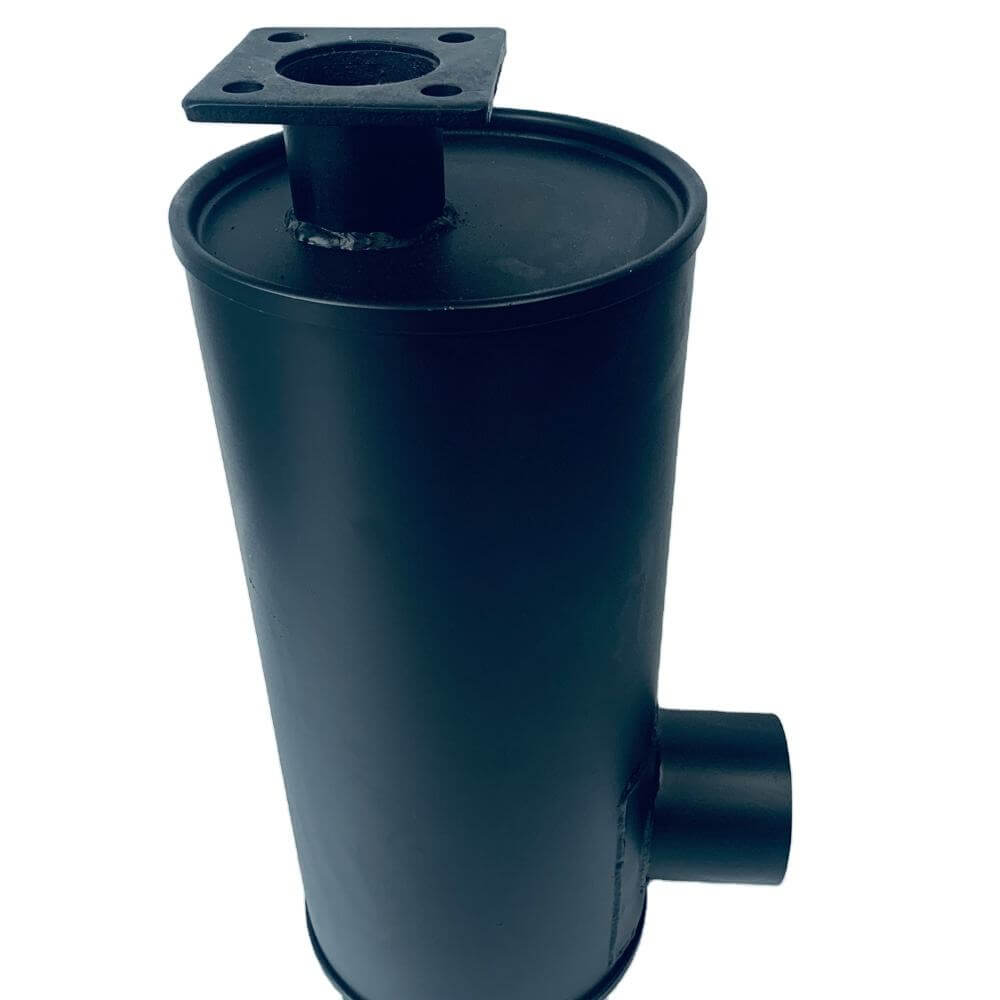
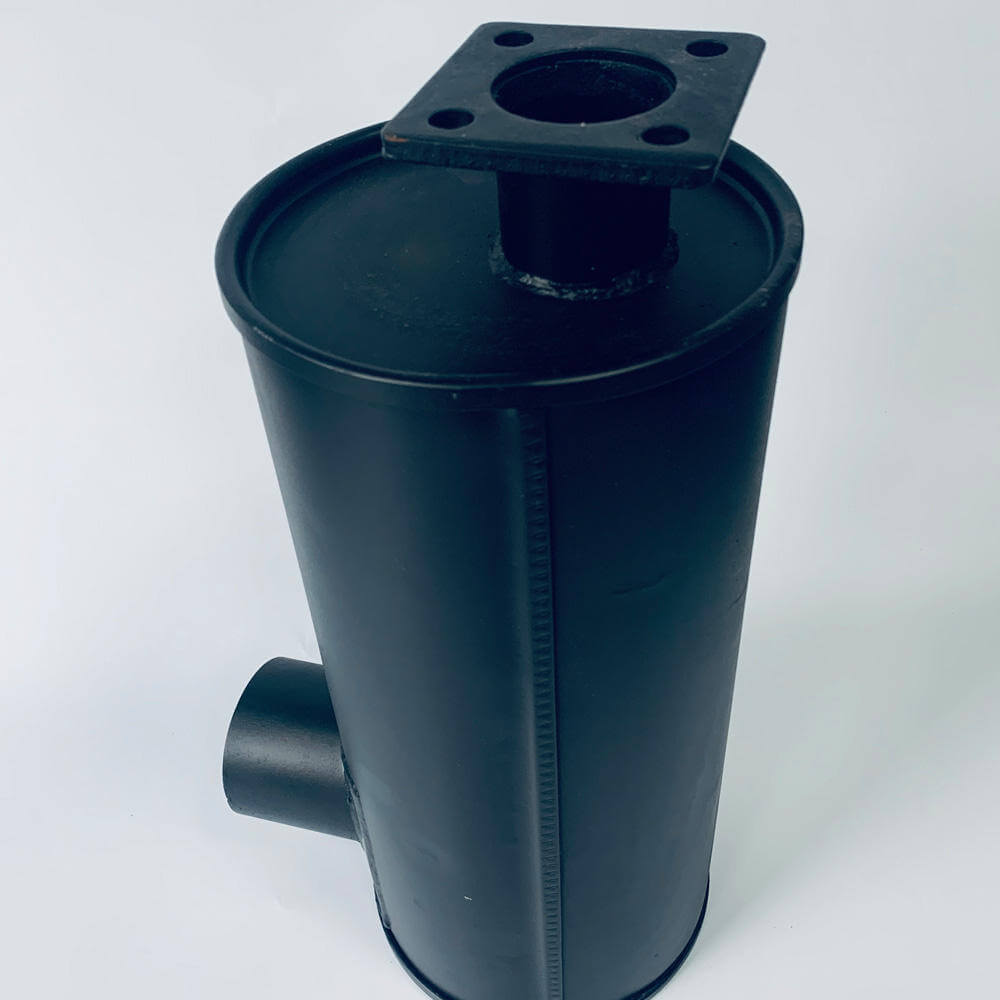
The muffler on a heavy diesel machine is responsible for two things most operators do not think about until one of them fails: exhaust backpressure regulation and noise attenuation. Both have direct consequences for the machine, the operator, and, in regulated environments, continued site access.
Backpressure regulation is a mechanical function. Your diesel engine is calibrated to exhaust gases at a specific resistance level the muffler creates that resistance. When it corrodes internally or physically collapses, two outcomes are possible:
- If restriction increases beyond specification, the turbocharger works against an elevated exhaust backpressure, raising turbine inlet temperatures and accelerating bearing wear
- If the restriction drops below the specification common with through-rust failures, the engine loses exhaust velocity and suffers measurable torque and fuel efficiency loss
Noise attenuation is the compliance function. Most regulated work sites, such as civil construction, mining, port operations, and urban infrastructure projects, impose noise level requirements on operating equipment. A diesel muffler that no longer meets attenuation requirements is a compliance event, not just a maintenance item. The machine cannot return to work until it is resolved.
Signs Your Excavator Muffler Needs Replacing
Most muffler failures develop gradually. Knowing what to look for lets you plan a controlled replacement rather than an emergency shutdown:
-
Visible corrosion or perforation — External rust through the muffler casing is a reliable indicator that internal baffling has also degraded. A perforated muffler is no longer managing backpressure or noise — it is a hollow pipe.
-
Increased exhaust noise — A noticeably louder exhaust note at idle or under light load almost always points to internal baffle failure or casing perforation.
-
Carbon deposits around muffler joints — Carbon tracking at the inlet or outlet flange indicates a pressurised exhaust leak — often a failed gasket, but sometimes a crack in the muffler body itself.
-
Rising exhaust gas temperature (EGT) readings — A sustained EGT elevation without a corresponding change in fuel or load can indicate rising backpressure from a collapsing muffler core.
-
Unexplained turbocharger symptoms — Slow spool-up, elevated oil consumption, or bearing noise without an obvious cause should prompt a backpressure check before any turbocharger work is carried out. An out-of-spec muffler is a far cheaper fix than a turbocharger replacement.
Mufflers We Stock for Heavy Equipment
Cat Mufflers: Caterpillar Excavators, Dozers & Loaders
Our caterpillar muffler range covers the platforms most commonly in service across construction, mining, and civil infrastructure fleets:
- Cat 320 muffler — one of the most frequently dispatched units in our range, held in stock for immediate availability
- Caterpillar muffler variants for the 323, 329, and 336 series excavators
- Cat D6 and D8 bulldozer muffler units — direct-fit replacements for the dozer muffler position
- Loader muffler variants for Cat 966 and 972 wheel loader platforms
- Aftermarket Caterpillar mufflers available across the full range — dimensionally verified, backpressure-matched to OEM specification
Komatsu Mufflers: PC Series Excavators & Dozers
Komatsu mufflers in our range are listed by machine model and engine family, covering the PC series platforms most widely operated in active fleets:
- Muffler PC200-8 direct-fit replacement for the Komatsu PC200-8, one of the highest-volume Komatsu units in our catalogue
- Komatsu PC300 and PC400 series muffler variants
- Komatsu D65 and D85 dozer muffler units
- Komatsu forklift muffler options for select FD and FG series platforms confirm model with our team
Hitachi Mufflers & Other Platform Variants
- Hitachi muffler units for ZX and EX series excavators, confirm fitment by machine serial with our parts team
- Mini excavator muffler units for compact machines. Confirm the model and engine specification before ordering
- Heavy equipment muffler options for Volvo and John Deere select models availability confirmed on enquiry
Excavator Silencer & Diesel Silencer Variants
The terms excavator silencer, exhaust silencer excavator, and diesel silencer are used interchangeably with muffler across the AU, UK, and parts of the Asian market; they describe the same component. Our silencer range includes:
- Excavator silencer units for Cat, Komatsu, and Hitachi machines configured to AU and UK noise specification requirements
- Exhaust silencer excavator configurations for machines operating under strict site noise regulations
- Diesel silencer variants for dozer and loader applications, where the exhaust outlet configuration differs from standard excavator fitment
OEM vs Aftermarket Mufflers: What to Know Before You Order
For mufflers, the aftermarket decision is more straightforward than it is for precision components like turbochargers or NOx sensors. The muffler's primary performance requirement is dimensional accuracy, correct inlet and outlet diameter, correct mounting configuration, and backpressure within the engine's specified tolerance. When those criteria are met, a quality aftermarket heavy equipment muffler performs comparably to OEM at a lower cost.
What to look for in a quality aftermarket muffler:
- Inlet and outlet dimensions that match your machine's exhaust pipe OD exactly, no reducers or adapters required at installation
- Mounting bracket position and bolt pattern are identical to the OEM unit
- Internal baffle construction in stainless or aluminised steel, or mild steel, fails rapidly in the thermal cycling environment of a diesel exhaust system
- Backpressure rating within the OEM specification range for your engine family
Every aftermarket muffler in the Imara Engineering range meets these criteria. We do not stock generic diesel mufflers listed against every machine model without dimensional verification; every unit is mapped to the machine it fits.
How to Confirm the Right Muffler for Your Machine
Getting the right muffler on the first order avoids a second freight cost and a second downtime event. Have the following ready before you contact our team:
-
Machine model and serial number — the serial number distinguishes between production variants of the same model that may use different exhaust outlet configurations
-
Engine model and serial — relevant where the same machine chassis has been built with more than one engine option across its production run
-
OEM part number — if accessible from the old muffler or the machine's parts manual, this is the fastest cross-reference route
-
Exhaust outlet diameter and flange type — useful as a secondary confirmation when the part number is not available
Provide any of the above to our parts team, and we will identify the correct unit, confirm stock availability, and advise on the dispatch timeline before you place the order.