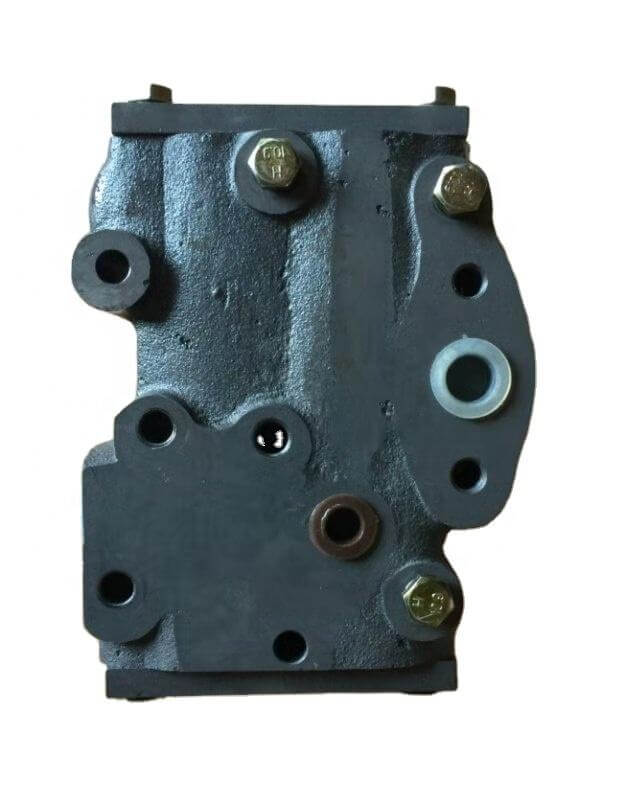
What Does a Main Control Valve Do on an Excavator?
The main control valve is a multi-spool hydraulic directional control valve, a single machined valve block containing multiple independent spool sections, each dedicated to one machine function, all sharing a common pressure supply from the main pump and a common return path to the hydraulic tank. On a standard six-function excavator, the MCV contains individual spool sections for boom, arm, bucket, swing, left travel, and right travel with additional sections for auxiliary attachment circuits on machines configured for hammer, shear, or multi-processor use.
Each spool is a precision-ground cylindrical valve element that slides axially within its bore in the valve block. In the neutral centred position, the spool blocks flow to the actuator, and the pump flow recirculates through the valve, unloaded back to the tank. When a pilot signal from the joystick shifts the spool off centre, it opens a metered flow path from the pump pressure gallery to the commanded actuator port, while simultaneously connecting the actuator's return port to the tank gallery, directing exactly as much flow as the spool displacement allows to produce the commanded movement at the speed and force the operator intends.
The precision of the clearance between each spool and its bore, typically measured in microns, is what gives modern excavators their smooth, proportional, and controllable feel. As this clearance increases through wear or contamination damage, internal bypass increases, response precision degrades, and function speeds and forces become less predictable and controllable across the working range.
Common Symptoms of Control Valve Failure
Control valve faults produce highly distinctive symptoms that allow precise identification of which spool section or valve circuit is the source of the problem. These are the key indicators to monitor:
-
Single function loss with all others normal — The most diagnostically clear symptom of a control valve fault. If boom, arm, bucket, swing, or one travel function loses response while everything else operates normally, the spool section for that specific function is the primary suspect — either stuck, worn, or damaged.
-
Single function drifting or creeping uncontrolled — A spool that cannot fully return to the neutral position — from contamination, spring fatigue, or spool damage — allows continuous metered flow to an actuator when the operator is not commanding movement, causing slow uncontrolled drift in that function.
-
Reduced speed or force in one function only — Worn spool-to-bore clearance in a single section increases internal bypass in that circuit, reducing effective flow to the actuator and producing slower, weaker function response without affecting other circuits.
-
Jerky or erratic function movement — Contamination particles lodged in spool bores or flow passages cause intermittent spool sticking, producing unpredictable stuttering movement in the affected function during operation.
-
All functions sluggish simultaneously — Where the valve block itself has suffered contamination damage across multiple spool bores, all functions degrade together — this is distinguishable from pump wear by checking system pressure independently.
-
External oil leakage from the valve block — Worn or damaged spool bore o-rings and end cap seals cause external leakage from the valve block face, indicating internal seal degradation requiring valve rebuild or replacement.
-
Boom or arm drift on a gradient when stationary — A worn or contaminated load-holding check valve within the control valve block allows the boom or arm to drift downward under gravity when the machine is stationary, a common and safety-relevant fault requiring prompt attention.
Main Control Valve Models We Supply
Imara Engineering supplies main control valve assemblies and individual spool sections for a wide range of excavator models and production series. Our most commonly supplied units include:
-
Komatsu — PC200-7, PC200-8, PC210-8, PC300-7, PC300-8, PC360-7, PC400-7, PC400-8, PC450-8
-
Caterpillar (CAT) — 320C, 320D, 320D2, 323, 325C, 325D, 330C, 330D, 336D, 336E
-
Hitachi — ZX200-3, ZX210-3, ZX300-3, ZX330-3, ZX450-3, ZX500-3, EX200-5, EX300-5
-
Volvo — EC210B, EC240B, EC290B, EC380, EC480, EC700
-
Doosan — DX225LC, DX300LC, DX380LC, DX480LC
-
Kobelco — SK200-8, SK300, SK350-8, SK480, SK850
-
Hyundai — R210LC-9, R290LC-9, R380LC, R480LC
-
Case — CX210, CX300, CX350, CX470
-
Bobcat — E35, E50, E85 compact excavator range
Cannot find your model listed? Contact our parts team with your machine serial number and OEM part number, and we will confirm the correct control valve assembly or spool section for your specific unit immediately.
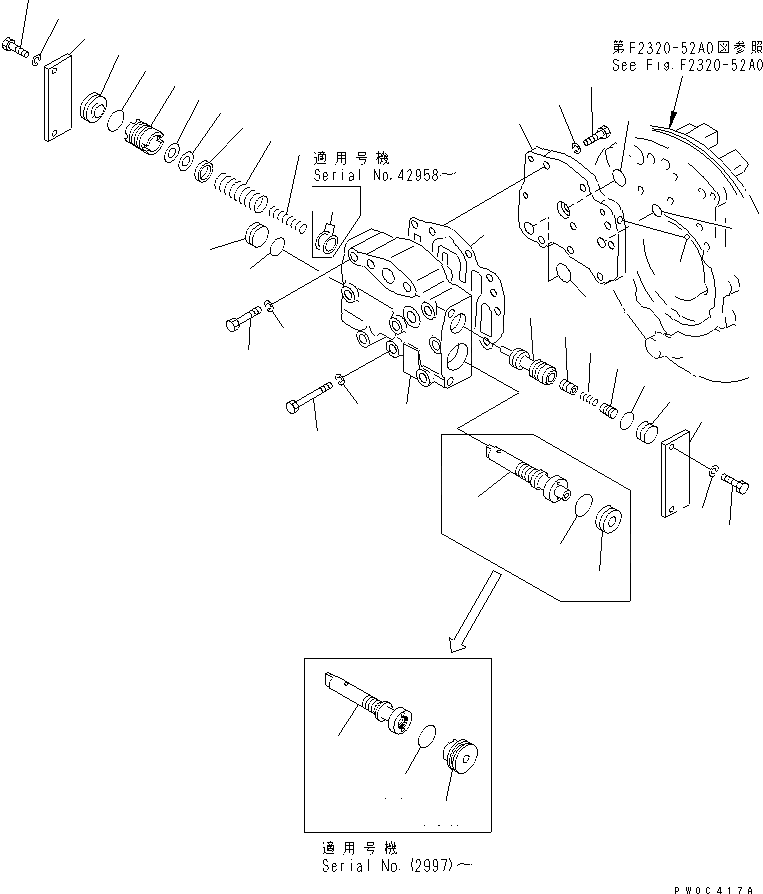
Control Valve Assembly: Key Components Explained
Understanding the sub-components within a main control valve assembly helps identify the correct replacement scope when ordering:
-
Valve Block Body — The precision-machined cast iron or steel housing containing all spool bores, flow galleries, and port connections. The valve block is the highest-cost component of the assembly and is only replaced when bore damage from contamination or mechanical failure makes spool replacement alone insufficient.
-
Directional Spool Sections — The individual precision-ground cylindrical valve elements, one per machine function, that shift axially to direct flow. The most commonly replaced components within the valve assembly are available from Imara Engineering as individual spool sections for single-circuit replacement without requiring complete assembly replacement.
-
Load-Holding Check Valves — Spring-loaded check valves within the valve block that prevent actuators from drifting when functions are not commanded. Wear or contamination damage to these valves is the most common cause of boom and arm drift when the machine is stationary.
-
Pilot Ports and Solenoid Valves — The pilot signal input ports and solenoid-operated pilot valves that shift each spool in response to operator joystick commands. Faulty solenoids produce the same symptom as a stuck spool — loss of response in a specific function — and should be tested independently before ordering spool replacement.
-
End Cap Seals and O-Ring Kits — The external sealing components at each spool end cap and valve block port face. Seal degradation causes external leakage and can be resolved with a valve seal kit without requiring spool or block replacement in many cases.
Complete Control Valve Replacement vs Individual Spool Replacement
When a control valve fault is confirmed, the decision between complete assembly replacement and individual component replacement depends on the nature and extent of the fault:
-
Complete Assembly Replacement is recommended when — Multiple spool sections are worn or damaged simultaneously; the valve block bore shows scoring or erosion damage from contaminated fluid; the machine has suffered a catastrophic contamination event, such as a pump failure releasing metallic debris into the circuit; or the total cost of individual spool and component replacement approaches the cost of a complete assembly. Complete assembly replacement delivers the most comprehensive and reliable solution when the valve block condition is uncertain.
-
Individual Spool Section Replacement is appropriate when — A single identifiable function has been lost or degraded while all other functions test within normal parameters, confirming a single spool as the source of the fault. Replacing only the affected spool section restores the faulted function at significantly lower cost than a complete assembly — provided the valve block bore and other sections are confirmed undamaged and within specification.
-
Seal Kit Only replacement is appropriate when — External leakage from spool end caps or port faces is the sole symptom, with all function performance within normal specification. A control valve seal and o-ring kit restores external sealing integrity without requiring spool or block replacement.
Imara Engineering supplies complete control valve assemblies, individual spool sections, and dedicated valve seal and o-ring kits giving you the full range of supply options to match the most cost-effective solution to your specific fault.
Control Valve Contamination: The Most Common Cause of Valve Failure
Hydraulic fluid contamination is the single most common cause of control valve failure on working excavators and the most preventable. The precision spool-to-bore clearances inside a main control valve are measured in microns, making the valve extremely sensitive to abrasive particles in the hydraulic fluid. Contamination damage to control valves originates from three primary sources:
-
Pump failure debris — When a main pump or pilot pump fails internally, metallic wear particles and debris are immediately distributed throughout the hydraulic circuit by the continuing fluid flow, reaching and lodging in spool bores within minutes of the initial failure. This is why flushing the system and replacing filters is mandatory after any pump failure before a replacement pump is started.
-
Neglected filter maintenance — Running the hydraulic system beyond filter service intervals allows particle concentration in the fluid to build beyond the valve's contamination tolerance, causing progressive spool bore wear across all sections simultaneously.
-
Ingressed contamination — Water, dust, and abrasive particles entering the hydraulic tank through damaged breathers, loose filler caps, or cylinder rod seal failure introduce contamination that circulates continuously through the valve.
Addressing the source of contamination before replacing a control valve is essential. Installing a new valve into a contaminated system will result in repeated failure within a short operating period.
Related Hydraulic Parts You May Need
Control valve replacement or fault diagnosis frequently connects to wider hydraulic circuit inspection and servicing. Consider sourcing these components alongside your control valve:
- Hydraulic Pumps — The pump is the upstream pressure source feeding the control valve. Always pressure test the pump before confirming a valve fault as the source of pressure-related symptoms
- Pilot Pumps — The pilot pump supplies the pilot signal circuit that shifts control valve spools — test pilot pressure before replacing control valve components for function loss symptoms
- Relief Valves — Main system and port relief valves are closely associated with control valve performance — inspect relief settings when diagnosing pressure-related control valve symptoms
- Regulator Valves — Pilot circuit pressure regulator valves directly affect control valve spool response — inspect alongside control valve diagnosis
- Hydraulic Hoses & Pipes — Inspect valve block port hoses and fittings when replacing or rebuilding the control valve assembly