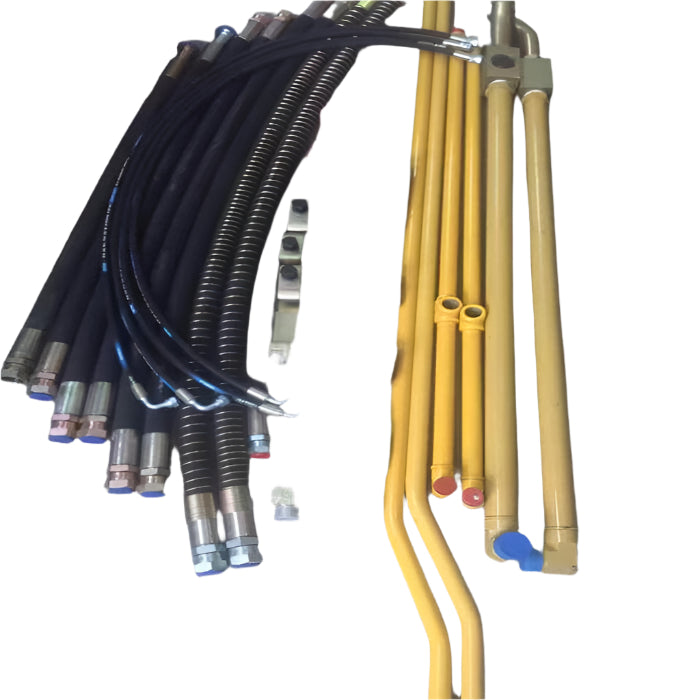
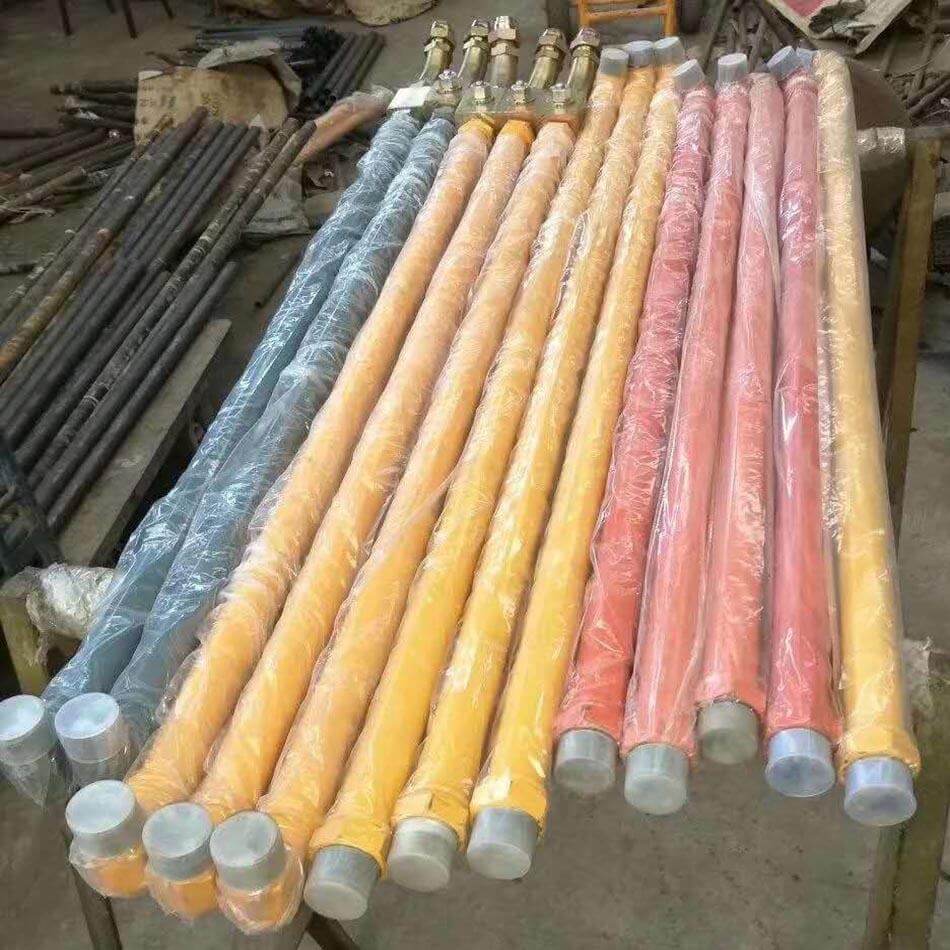
Types of Hydraulic Hoses & Pipes We Supply
Excavator hydraulic circuits use several distinct hose and pipe types, each engineered for specific pressure ratings, flexibility requirements, and circuit applications. Using the incorrect specification hose in a high-pressure circuit is one of the most dangerous maintenance errors on any hydraulic machine. Under-rated hoses fail prematurely and unpredictably under working pressure. Here is a breakdown of the main hose and pipe types available at Imara Engineering:
High-Pressure Hydraulic Hoses
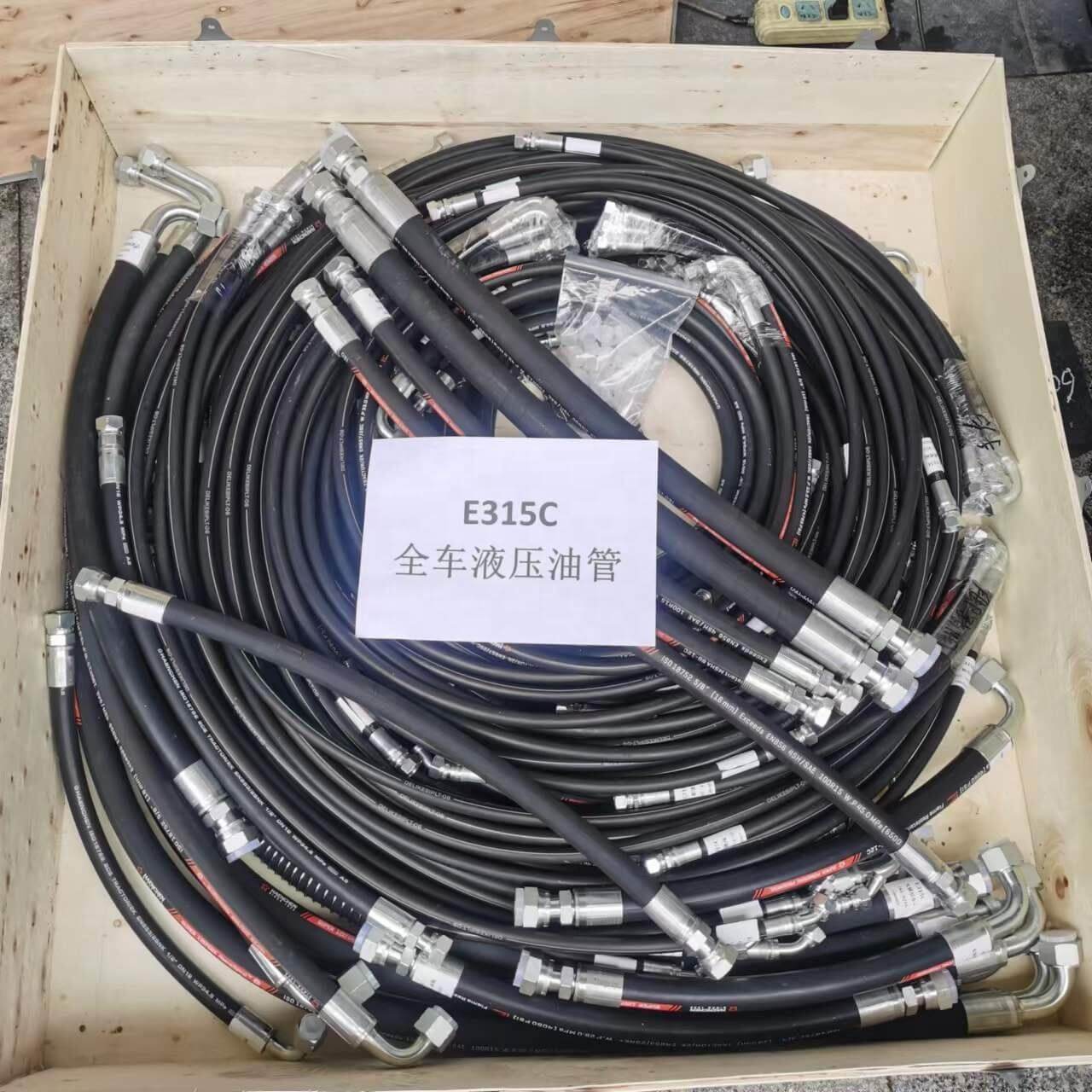
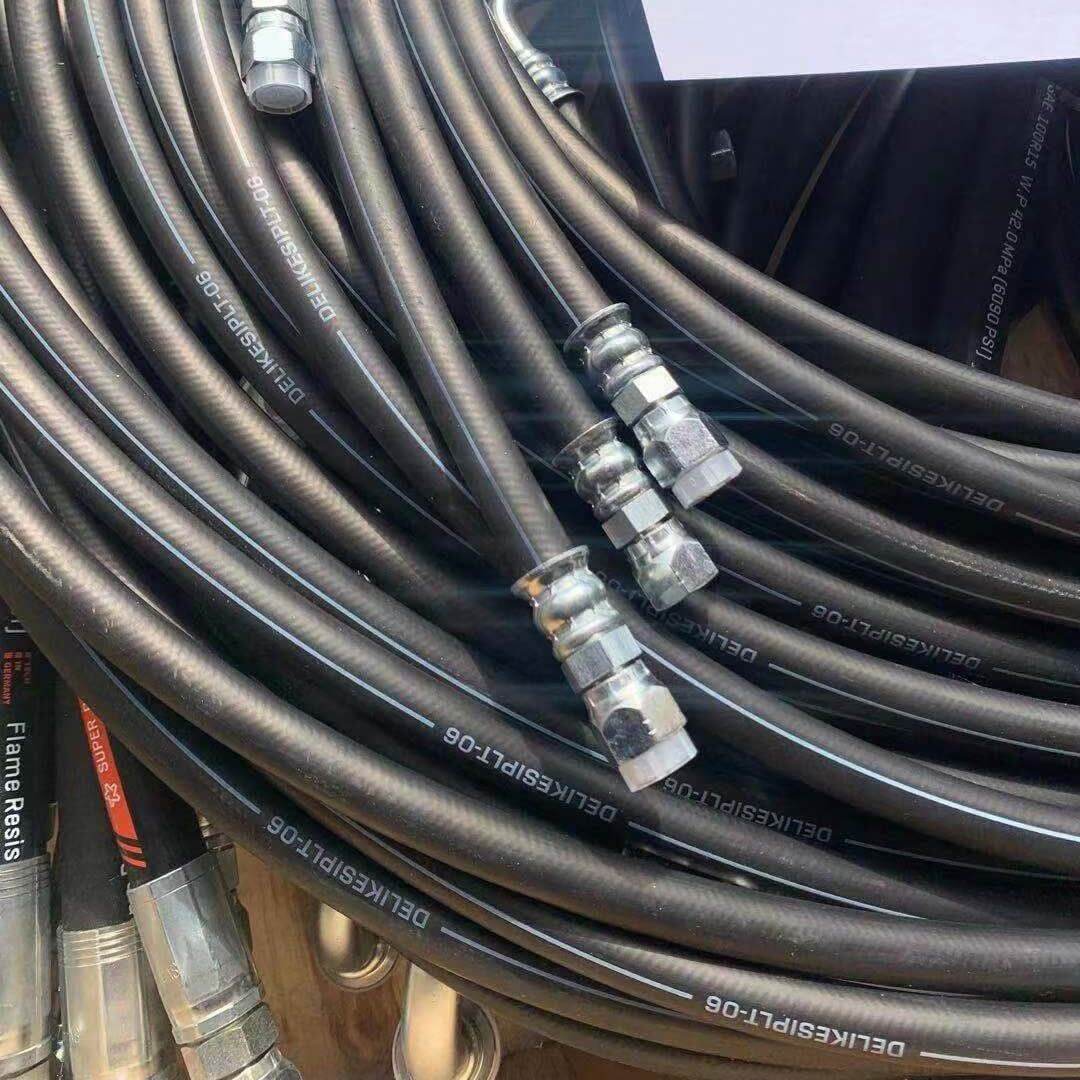
High-pressure hydraulic hoses are the most critical hose type on any excavator used on main pump outlet lines, cylinder feed and return lines, travel and swing motor circuits, and all primary working function circuits that operate at full system pressure between 250 and 350 bar on modern machines. These hoses are constructed with multiple layers of high-tensile steel wire braid or spiral-wound reinforcement bonded between an inner hydraulic fluid-compatible tube and a tough outer cover resistant to abrasion, UV exposure, and oil contamination. Imara Engineering supplies high-pressure hoses in standard SAE and metric sizes, with both crimped end fittings and field-attachable fitting options to match all major excavator circuit specifications.
Medium and Low-Pressure Hoses
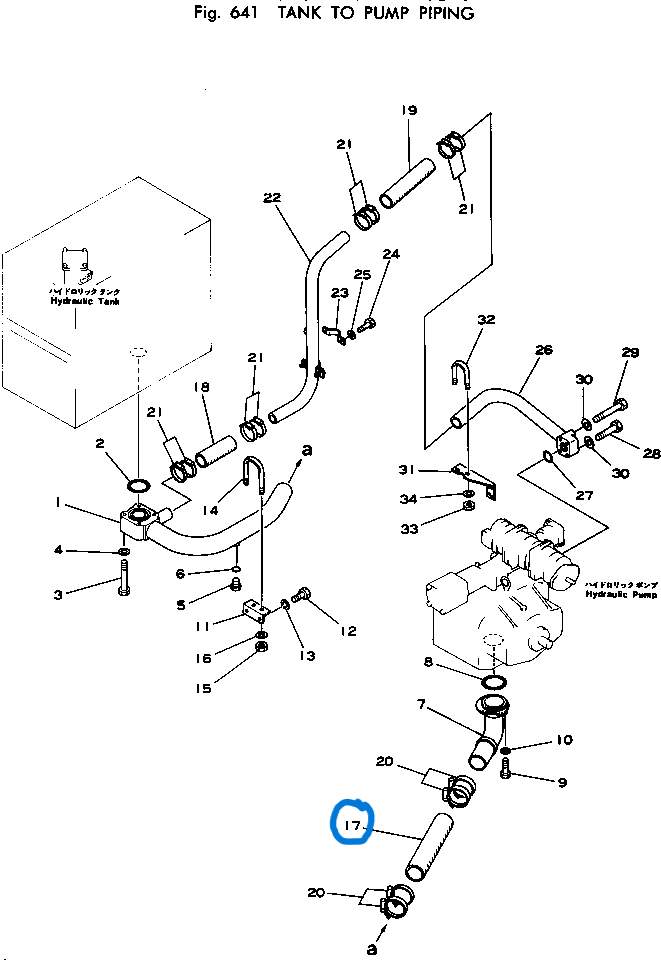
Medium and low-pressure hoses serve the pilot circuit, tank return lines, case drain circuits, and auxiliary attachment supply lines that operate at pressures below the main working circuit. While lower in pressure rating than main circuit hoses, pilot and return line hoses are equally critical to machine function. A failed pilot circuit hose eliminates machine control entirely, and a blocked or collapsed return line causes immediate system overpressure and pump damage. We supply medium and low-pressure hoses in all standard sizes and configurations compatible with all major excavator brands and circuit requirements.
Rigid Steel Hydraulic Pipes
Rigid steel hydraulic pipes, also called hard lines are used in fixed routing applications where hose flexibility is not required and where the routing passes through areas requiring protection from abrasion, heat, or mechanical damage. Common applications include pump outlet manifold connections, chassis-mounted circuit routing, and fixed boom base circuit connections. Steel hydraulic pipes are available in standard outer diameter and wall thickness specifications with pre-formed bends and threaded or flanged end connections matching all major excavator circuit configurations.
Hydraulic Fittings & Adaptors
Hydraulic fittings and adaptors connect hoses to pipes, components, and manifold ports throughout the hydraulic circuit. Incorrect or worn fittings are a primary source of hydraulic leakage and a common cause of hose failure from improper seating. We supply a comprehensive range of hydraulic fittings, including JIC, BSP, NPT, ORFS, and metric thread types in both straight and elbow configurations, along with adaptors for cross-thread compatibility between different fitting standards found across major excavator brands.
Hose Clamps, Protective Sleeves & Routing Hardware
Correct hose routing, clamping, and protection is as important as hose quality in preventing premature failure. Hoses contacting sharp edges, hot surfaces, or other hoses through chafing are one of the most common causes of preventable hose failure on working excavators. We supply hose clamps, protective spiral wrap, fire-resistant sleeving, and routing brackets compatible with all major excavator hose routing systems to complete a thorough and durable hose circuit installation.
How Hydraulic Hoses Work in an Excavator Circuit
The hydraulic hose circuit on a modern excavator is a complex multi-pressure network carrying fluid simultaneously across several distinct pressure zones from the high-pressure main pump outlet circuit at up to 350 bar, through the medium-pressure pilot circuit at 40 to 60 bar, down to the low-pressure tank return circuit at near-zero gauge pressure. Each zone uses hoses specified to its pressure, temperature, and flow requirements, meaning a single excavator requires multiple hose specifications across its complete circuit.
Flexible hoses are used wherever the circuit must accommodate movement across the boom, arm, and attachment, where hoses must flex through the full working range of the attachment on every cycle, and across the upper structure to the undercarriage connection, where the swivel joint and track frame movement requires hose flexibility. Rigid steel pipes handle the fixed sections where no movement occurs and where protection from the working environment is the priority. Together, flexible hoses and rigid pipes form the complete fluid circuit that keeps hydraulic energy flowing reliably between every component on the machine.
Common Causes of Hydraulic Hose Failure on Excavators
Understanding why hydraulic hoses fail is the most effective way to prevent unplanned downtime from hose bursts on your worksite. These are the most frequent failure causes on working excavators:
-
Abrasion from contact with adjacent components — Hoses chafing against metal edges, other hoses, or structural members wear through the outer cover and into the reinforcement layers progressively until the hose bursts without warning.
-
Incorrect pressure rating for the circuit — A hose installed in a circuit operating above its rated working pressure will fail prematurely — always confirm the correct pressure rating before installation.
-
Age and heat degradation — Hydraulic hoses have a finite service life. Heat cycling, UV exposure, and fluid temperature degrade the inner tube and outer cover over time — hoses on high-hour machines should be inspected regularly for cracking, swelling, and cover deterioration.
-
Fitting corrosion or improper crimping — A corroded or incorrectly crimped hose end fitting is the most common location for hose failure — the fitting pulls away from the hose body under pressure surge, causing sudden and complete fluid loss.
-
Kinked or over-bent routing — Installing a hose with too tight a bend radius collapses the inner reinforcement layers, creating a permanent weak point in the hose wall that fails under pressure cycling.
-
Impact damage from the working environment — Rock falls, bucket strikes, and debris contact on attachment hoses directly damage the hose cover and reinforcement, creating immediate or latent failure points.
Excavator Brands We Cover
Imara Engineering supplies hydraulic hoses, pipes, and fittings compatible with all major excavator and construction equipment brands:
-
Komatsu — PC200, PC210, PC300, PC360, PC400, PC450 and full PC series
-
Caterpillar (CAT) — 320, 320D, 323, 325, 330, 336, and full E-series
-
Hitachi — ZX200, ZX210, ZX300, ZX330, ZX450, ZX500 and full ZX/EX series
-
Volvo — EC210, EC240, EC290, EC380, EC480 and full EC series
-
Doosan — DX225, DX300, DX380, DX480 and full DX series
-
Kobelco — SK200, SK300, SK350, SK480 and full SK series
-
Hyundai — R210, R290, R380, R480 and full R series
-
Bobcat — E35, E50, E85 and compact excavator range
-
Case — CX130, CX210, CX300, CX350 and full CX series
Cannot find your machine listed? Contact our parts team with your machine serial number and circuit application details for an immediate hose specification confirmation.
Hose Specification: What to Confirm Before Ordering
Hydraulic hoses are application-specific components pressure rating, inner diameter, outer diameter, end fitting type, and hose length must all match the original circuit specification exactly for safe and reliable installation. Before ordering replacement hoses, confirm the following details with our parts team:
-
Working Pressure Rating — The maximum continuous working pressure the hose must safely sustain in the circuit. Must meet or exceed the circuit operating pressure. Never install an under-rated hose in a high-pressure circuit.
-
Inner Diameter (ID) — Determines the flow capacity of the hose. An undersized ID creates flow restriction and pressure drop; an oversized ID produces inadequate fluid velocity and potential sedimentation in low-flow circuits.
-
Hose Length — Must allow for the full range of movement in the circuit without tension at full extension or excess slack causing chafing at the minimum position.
-
End Fitting Type and Thread Specification — JIC, BSP, ORFS, NPT, and metric thread standards must match the port specifications at both connection ends, and confirm both ends independently, as they are not always identical.
-
Bend Radius Requirement — The minimum bend radius of the hose must accommodate the routing path without kinking — tighter routing requires a higher-specification hose with a smaller minimum bend radius rating.
Providing your machine model, serial number, circuit location, and, where possible, the original hose part number allows our team to confirm the complete specification before dispatch.
Related Hydraulic Parts You May Need
Hydraulic hose replacement frequently connects to wider hydraulic circuit inspection and component servicing. Consider sourcing these components alongside your hoses and fittings:
- Hydraulic Cylinders — Inspect cylinder rod seals and port condition when replacing attachment circuit hoses
- Boom Cylinders — Replace boom circuit hoses at the same service event as boom cylinder inspection or replacement
- Arm Cylinders — Arm circuit hoses experience the highest flex cycling of any attachment hose — inspect at every cylinder service
- Bucket Cylinders — Bucket circuit hoses are the most exposed to direct physical damage — inspect for abrasion and impact damage regularly
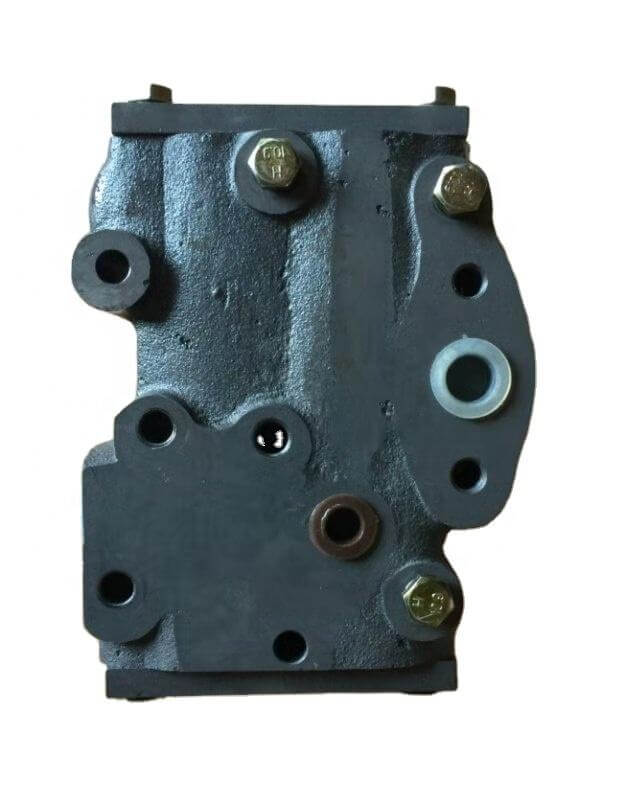
- Control Valves — Inspect control valve port faces and o-ring seals when replacing main circuit hoses connected to the valve block
- Hydraulic Seals & Kits — Replace component port seals and o-rings alongside hose fittings for a complete leak-free circuit repair