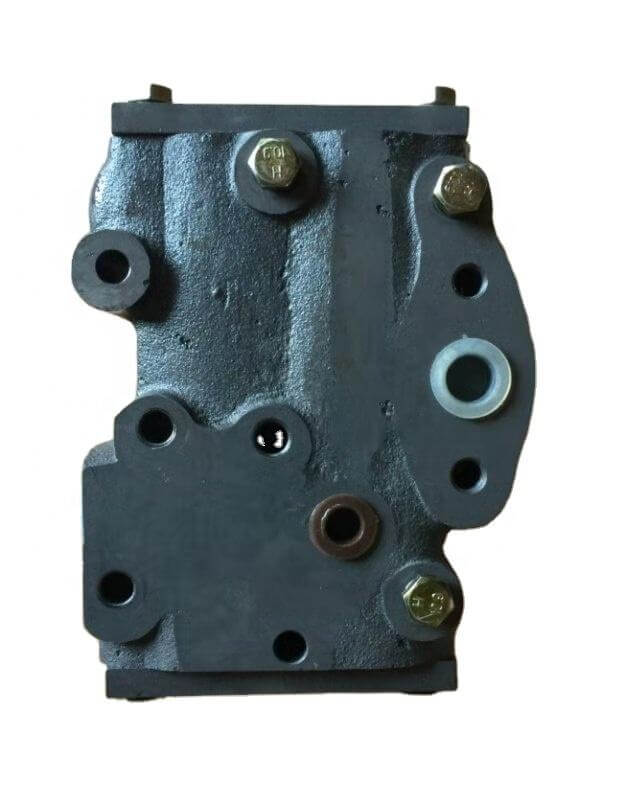
What Is a Complete Loader Engine Assembly?
A complete loader engine assembly is a fully built replacement engine designed for direct installation into compatible machinery.
Typical components include:
- Heavy-duty engine block
- Precision-machined cylinder head
- Crankshaft and camshaft
- Pistons and liners
- Fuel system components
- Cooling and lubrication fittings
This integrated structure ensures consistent engine power and torque while simplifying installation and reducing downtime.
When Should You Replace a Loader Engine?
A full replacement engine is often recommended when:
- High operating hours reduce compression and efficiency
- Severe overheating damages the engine block
- Internal wear impacts horsepower and torque output
- Ongoing oil consumption affects reliability
- Repair costs exceed a fixed cost replacement option
Replacing the full assembly restores optimal performance and reduces long-term operating costs.
Benefits of Complete Loader Engine Assemblies
Choosing a professionally engineered solution provides:
- Restored high-performance output
- Improved fuel efficiency
- Reduced downtime across business operations
- Predictable fixed cost investment
- Extended engine lifespan
For companies calculating operating budgets, replacing the entire engine can be more cost-effective than repeated internal repairs.
Engine Model Identification & Compatibility
Accurate engine model identification is essential before ordering. Matching the correct engine configuration ensures:
- Proper alignment and simplified installation
- Balanced horsepower and torque delivery
- Reliable cooling and lubrication performance
- Long-term durability in heavy-duty conditions
Engine serial numbers and equipment details are required to confirm compatibility and ensure optimal performance.
Types of Engines Used in Loaders
Loaders typically rely on high-compression diesel engines rather than petrol-based systems like a car engine. Unlike smaller engines that use a spark plug for ignition, diesel systems use compression to produce stronger torque output.
Among the various types of engines, straight engines are commonly used in heavy equipment because they provide durability and efficient horsepower and torque delivery for continuous material handling operations.
Request a Quote for Loader Engine Assemblies
Provide your equipment model and engine serial number for accurate engine model identification. Our team will match the correct replacement engine to restore optimal performance, reduce operating costs, and extend engine lifespan.
Request a quote today to secure a high-performance solution designed for demanding construction equipment environments.