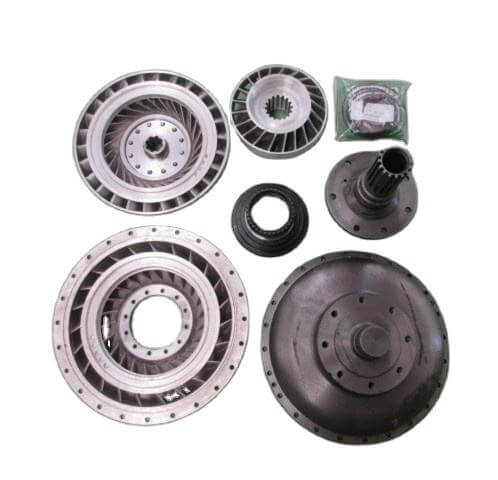
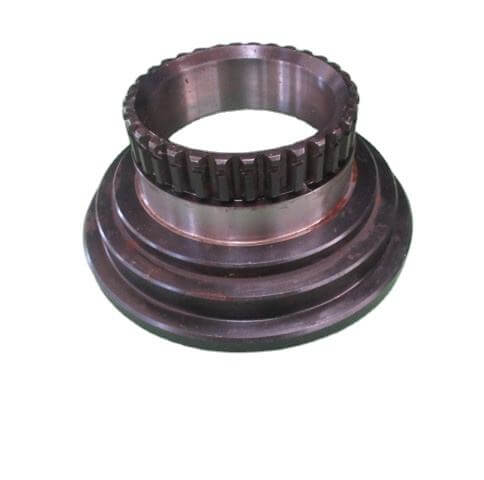
The Role of the Torque Converter in a Heavy Equipment Drivetrain
Most drivetrain faults in heavy equipment are attributed to the transmission before the torque converter receives serious diagnostic attention. This is a common and costly oversight, because a degrading torque converter produces symptoms that closely mirror transmission wear and are frequently misdiagnosed until a full transmission replacement fails to resolve the underlying problem.
To understand why the torque converter is so frequently at the centre of drivetrain performance issues, it helps to understand the three core functions it performs:
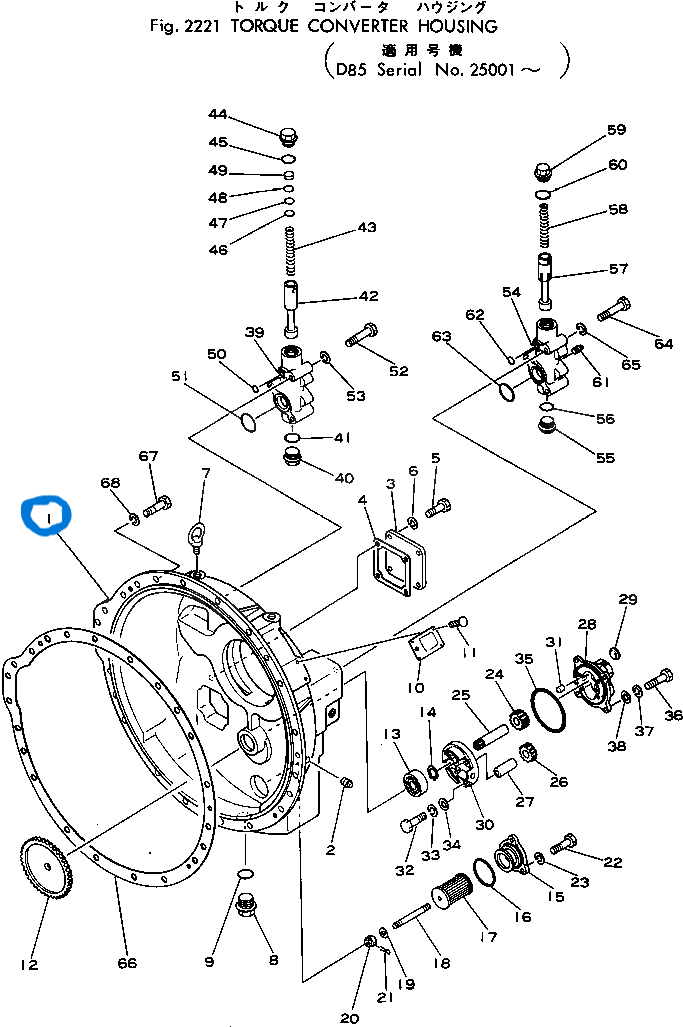
Torque Multiplication at Stall During initial ground engagement, when the machine first pushes into a load from a standing position, the torque converter multiplies engine output torque to provide the machine with greater drawbar pull than the engine alone can generate. This multiplication is achieved through the hydraulic interaction between the impeller, turbine, and stator inside the converter housing. When the stator mechanism wears or the internal fluid circuit degrades, this multiplication effect diminishes, and the machine loses pulling power at the point of initial engagement.
Fluid Coupling During Acceleration As machine speed increases and the transmission moves through its gear range, the torque converter transitions from active torque multiplication into a fluid coupling mode, transmitting engine torque hydraulically without the mechanical shock of a direct clutch engagement. This fluid coupling characteristic is what allows a powershift or automatic transmission to shift gears without interrupting drive torque to the tracks or wheels.
Lock-up at Cruise Speed. In most modern heavy equipment torque converters, a lock-up clutch engages at a defined output speed to create a direct mechanical link between the engine and transmission input shaft, eliminating the hydraulic slip losses of the fluid coupling phase. When the lock-up clutch wears or the engagement calibration drifts, the machine experiences elevated transmission temperatures and increased fuel consumption at working speeds.
CAT Torque Converter Range
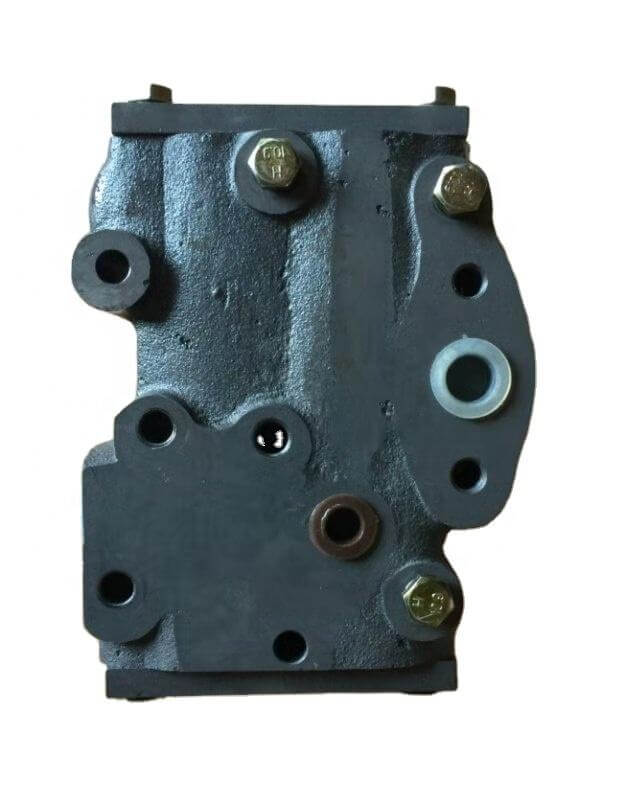
CAT D8 Torque Converter
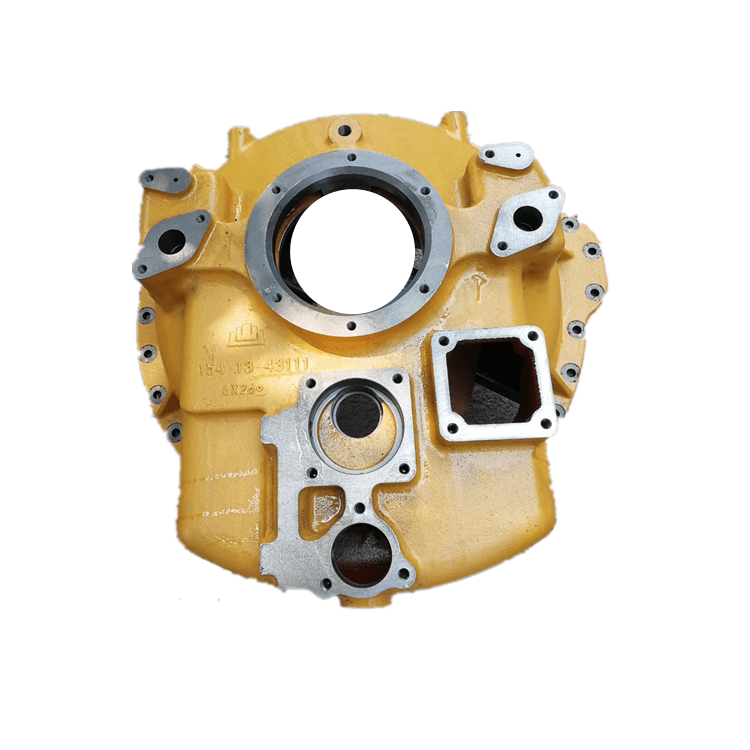
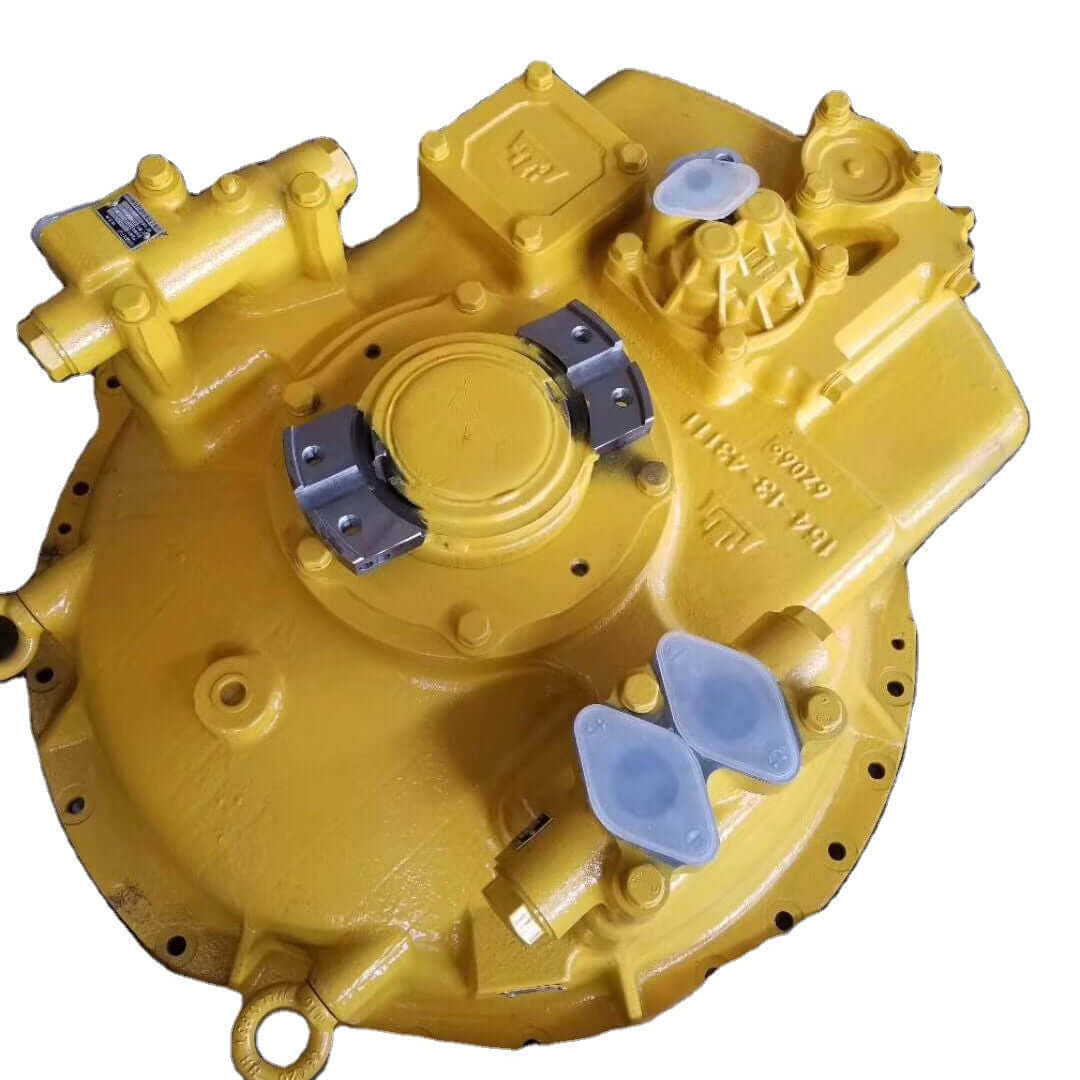
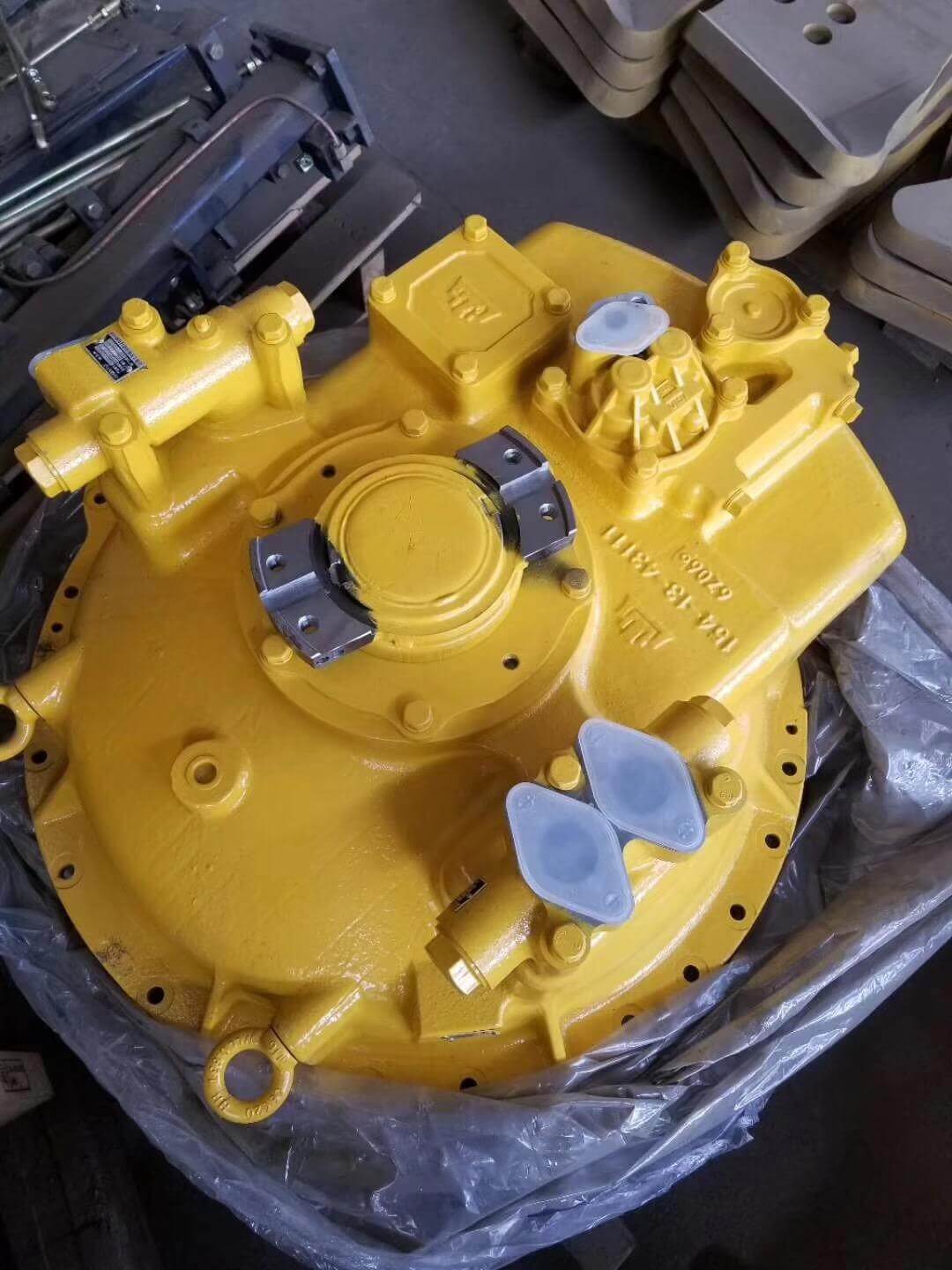
The cat d8 torque converter is the most frequently replaced unit in our Caterpillar torque converter range. The D8 platform operates under sustained high-load conditions in earthmoving, land clearing, and mining applications, placing the torque converter under continuous thermal and mechanical stress across long working shifts. The Caterpillar D8 torque converter is available in our range as a direct-replacement assembly matched to D8, D8T, and D8R build configurations, with stall speed specification confirmed against the machine serial number before the unit is dispatched.
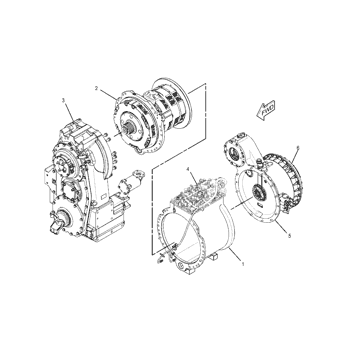
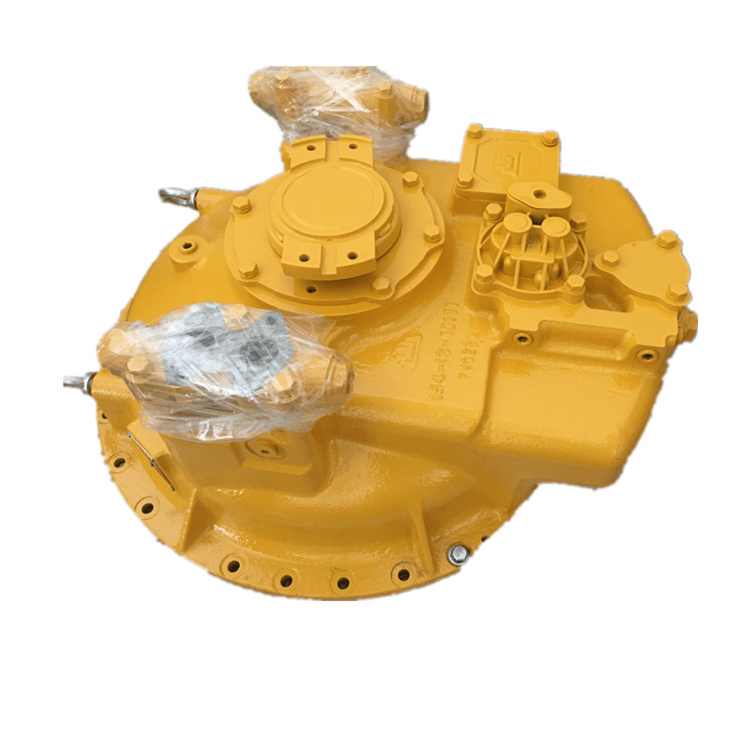
For operators replacing a CAT D8 torque converter as part of a broader drivetrain overhaul, the transmission assembly should also be assessed for wear before the new converter is installed. Fitting a new torque converter against a worn transmission accelerates wear on the new unit. Our Transmission Assemblies collection carries the complementary D8T and D8 powershift units for operators managing both components in the same overhaul window.
Broader Caterpillar Torque Converter Coverage
Beyond the D8 platform, our caterpillar torque converter range covers the following applications:
- Torque converter dozer units for the CAT D6, D9, and D10 platforms in earthmoving and site preparation
- CAT motor grader torque converters for the 140G and 140H series operating in road maintenance and grading applications
- CAT articulated truck torque converters for 725 and 745 platforms in quarry and mine haulage cycles
- CAT wheel loader torque converter units for the 966H and broader WA-equivalent applications
All Caterpillar torque converter units are available as new or remanufactured assemblies, with the appropriate option recommended based on machine age, operating hours, and availability at the time of order.
Komatsu Torque Converter Coverage
Komatsu Torque Converter for Dozers and Loaders
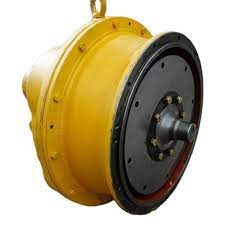
The Komatsu torque converter is a central component in the TorqFlow drivetrain system used across Komatsu D-series dozers and WA-series wheel loaders. In the TorqFlow design, the torque converter is integrated directly into the powershift transmission circuit, meaning that torque converter performance has a direct and immediate effect on shift quality, drawbar pull, and transmission operating temperature across the full working range of the machine.
Komatsu torque converter replacement units in our range are built to the original impeller, turbine, and stator geometry specifications used by Komatsu in the factory assembly of the torqflow drivetrain. Dimensional accuracy in a Komatsu torque converter replacement is critical because the torqflow circuit is calibrated to operate within a specific hydraulic pressure and flow range. A unit built outside those tolerances will degrade transmission shift quality regardless of how well the rest of the drivetrain is maintained.
Komatsu Torque Converter for Excavators
The torque converter excavator application within the Komatsu range is found primarily in older PC-series excavators, where the torqflow drivetrain design integrates the converter with the travel and swing transmission system. A Komatsu torque converter replacement for excavator applications requires the same level of specification verification as a dozer unit, with stall speed and hydraulic flow characteristics matched to the specific excavator model and serial number range.
Allison Torque Converter for Heavy Equipment
The Allison torque converter is used across the Allison 1000 series heavy-duty automatic transmission platform, which is deployed in heavy trucks, articulated construction equipment, and off-highway machinery operating in mixed on-highway and job site environments. Allison torque converters are precision-balanced assemblies with lock-up clutch systems calibrated to the specific torque and speed characteristics of the Allison 1000 transmission.
For machines running the Allison platform where the torque converter is exhibiting slip, overheating, or lock-up clutch failure, the unit should be assessed alongside the transmission condition before a replacement decision is made. A failing Allison torque converter that has been operating in a degraded condition for an extended period will have accelerated wear on the transmission clutch packs it interfaces with. Our Automatic Transmissions collection carries the Allison heavy equipment transmission assemblies for operators where both components require replacement in the same maintenance interval.
Identifying a Failing Torque Converter: What to Look For
Torque converter faults are frequently masked by their similarity to transmission symptoms. The following indicators should prompt a dedicated torque converter inspection before a transmission replacement is committed:
- Loss of pulling power at initial ground engagement despite correct engine output and transmission fluid condition
- Elevated transmission operating temperature during normal working cycles with no identifiable hydraulic or cooling system fault
- Increased fuel consumption at working speeds, indicating lock-up clutch slippage during the direct-drive phase
- Shudder or vibration during torque converter lock-up engagement at the transition between fluid coupling and mechanical drive
- Metallic contamination in the transmission fluid that cannot be attributed to a specific internal transmission component after inspection
If two or more of these symptoms are present simultaneously, a torque converter assessment should precede any transmission disassembly or component replacement decision.