

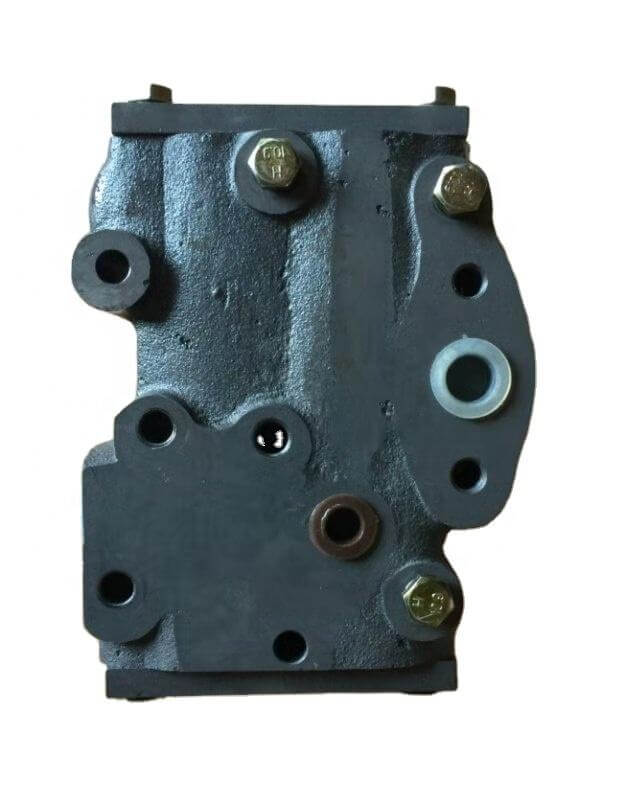
Your Engine Oil Looks Like a Latte. That's Not a Maintenance Issue: That's an Emergency.
The moment engine oil turns milky or brown, most operators already know something's gone wrong. What they don't always know is that the culprit is usually sitting right next to the engine block, invisible until the damage is done to the oil cooler. On Caterpillar engines, a failing cat oil cooler is one of the most consequential faults a fleet can face, because it contaminates both the oil and the coolant at once, attacking the engine from two directions simultaneously.
This guide covers exactly how to identify a failing cat engine oil cooler, what's different across the C15, C13, 3406, and 3306 models, and how to make the right replacement decision before the fault graduates from a parts problem to an engine rebuild.
Quick answer: Milky or discoloured oil, coolant that smells burnt or turns brown, unexplained coolant loss with no external leak, and oil pressure drop under load are the four primary signs of cat oil cooler failure across all models. If two or more are present simultaneously, the oil cooler has almost certainly failed internally. Act before the engine does.
What a Cat Oil Cooler Actually Does (and Why Failure Is So Destructive)
The engine oil cooler is a heat exchanger mounted within the engine's cooling circuit. Hot engine oil passes through one side; engine coolant passes through the other. The two fluids transfer heat through a thin metal wall and never make direct contact, as long as the cooler is intact.
When that wall fails through internal corrosion, thermal fatigue, or physical stress, the barrier between oil and coolant disappears. Coolant enters the oil circuit, diluting lubrication and causing emulsification. Oil enters the coolant circuit, contaminating the radiator and every other component downstream.
This is what makes a cat oil cooler failure uniquely expensive to ignore: it's not a single failure, it's a cascade. The oil degrades. The coolant degrades. The bearings and journals run on contaminated fluid. The radiator and hydraulic cooler downstream begin to block. What starts as a failed oil cooler can, within a relatively short operating window, produce bearing failure, journal damage, and a full engine overhaul.
Signs Your Cat Oil Cooler Is Failing
These signs apply across all Cat engine platforms, but appear at different operating thresholds depending on model and application.
- Milky or emulsified engine oil. Coolant entering the oil circuit produces a grey or brown creamy emulsion on the dipstick or oil filler cap. This is the most definitive visual sign of internal oil cooler failure.
- Unexplained coolant loss with no visible external leak. If coolant levels drop regularly but no leak is visible at hoses, fittings, or the radiator, coolant is escaping internally, most often into the oil circuit through a cracked oil cooler core.
- Oil contamination in the coolant. Brown discolouration, a greasy film, or an oily smell in the coolant reservoir indicates oil has crossed into the coolant circuit through the cooler.
- Overheating under load. A partially blocked oil cooler restricts coolant flow through the engine block, reducing overall heat rejection and causing temperature to climb during sustained heavy work.
- Oil pressure drop at operating temperature. As oil viscosity drops due to coolant contamination, the engine may show reduced oil pressure, particularly noticeable at high operating temperatures under load.
- Increased oil consumption. As oil emulsifies and loses its lubricating properties, consumption rises. The engine may also smoke at startup as degraded oil burns off internal surfaces.
Model-Specific Context: C15, C13, 3406 & 3306
Caterpillar C15
The C15 is one of the most widely deployed large Cat engines in Australian mining and heavy construction fleets, found in large excavators, rigid dump trucks, and off-highway haul vehicles. Its oil cooler sits within the front housing assembly and uses a multi-pass tube-and-shell design to handle the high heat loads associated with high-displacement turbocharged operation.
Key watch-out: the C15 oil cooler is mounted in a position that makes early external inspection difficult. By the time external signs appear, internal contamination is often already widespread. Caterpillar C15 fleets should treat any unexplained coolant loss as a potential oil cooler event, not a minor top-up issue.
Caterpillar C13
The C13 engine is commonly found in medium-to-large excavators and articulated trucks. Its oil cooler design shares the tube-and-shell configuration of the C15 but at a reduced flow capacity matched to the engine's lower displacement.
Key watch-out: the C13 oil cooler is particularly susceptible to corrosion damage when coolant maintenance intervals are extended a common occurrence in mixed fleets where service schedules are averaged across machines rather than applied per engine. Discoloured coolant in a C13 should be treated as a direct indicator of the oil cooler's internal condition, not simply a fluid maintenance task.
Caterpillar 3406 (Including 3406E)
The 3406 and its later 3406E variant remain some of the most common Cat engines in Australian fleets despite age, owing to their durability and the depth of parts availability. The 3406 oil cooler uses an external bolt-on configuration on most variants, making replacement more straightforward than on the C-series engines.
Key watch-out: age is the dominant failure driver on 3406 platforms. Machines running 3406 engines often carry significant accumulated hours, and oil cooler cores on high-hour units can develop stress cracking without any preceding external symptom. Proactive replacement at major service intervals rather than waiting for failure is a practical strategy for 3406-equipped fleets.
Caterpillar 3306
The 3306 remains in widespread use across older excavators, graders, and generator machines that are past standard replacement age but still in active operation across civil, mining, and agricultural sites. The 3306 oil cooler uses a cartridge-style core housed within the block, accessible without full engine removal on most configurations.
Key watch-out: parts availability for the 3306 oil cooler is increasingly weighted toward certified aftermarket rather than OEM supply, as the platform ages. Quality aftermarket cores built to the original specification are a practical and cost-effective solution for 3306 fleets, provided the specification is confirmed before ordering.
What Causes Cat Oil Coolers to Fail
- Coolant chemistry breakdown. The single most common root cause across all four models. When coolant loses its corrosion-inhibitor properties through age or missed change intervals, internal tube and plate surfaces begin corroding. The wall thins, then cracks, then fails.
- Thermal cycling fatigue. Repeated heating and cooling cycles stress the joints between the core's internal passages. Over thousands of operating hours, this fatigue produces micro-cracks that widen progressively.
- Silicate drop-out and scale build-up. Coolant that has been mixed incorrectly or allowed to degrade can precipitate silicate scale on internal surfaces, restricting flow through the cooler and accelerating thermal stress.
- Operating overpressure. If the cooling system is run above its designed operating pressure through a failed pressure cap or system fault, oil cooler seals and core joints face loads they were not designed to sustain.
- Contaminated oil. Extended oil change intervals allow contaminants to build up on the oil side of the cooler, accelerating internal corrosion from that direction as well.
OEM vs Aftermarket Cat Oil Cooler: What to Confirm Before You Order
The same principle that applies to Cat radiators applies here: the OEM vs aftermarket decision must be made on specification, not price alone.
Before approving any aftermarket cat engine oil cooler, confirm:
- Core dimensions and pass configuration match the original unit for your specific engine serial number, not just the model designation, as variants exist within each model family
- Material grade: aluminium or copper-brass core depending on platform; substituting one for the other affects heat transfer rates
- Pressure ratings on both the oil side and coolant side of the core
- Port positions and thread specifications: these must match the engine block exactly, as even minor variance causes installation issues
- Warranty period: six to twelve months minimum for a quality aftermarket unit
For 3306 and older 3406 platforms in particular, a reputable certified aftermarket supplier with full spec data is often the only practical procurement route.
Common Mistakes to Avoid
- Running the engine "just a bit longer" after finding milky oil. Every operating hour after contamination is confirmed increases bearing and journal exposure. Shut the machine down and investigate immediately.
- Flushing the system and hoping the source has gone. Flushing removes the contaminated fluid but does nothing for the failed cooler. The contamination will return within hours of restart.
- Ordering by model name alone. The C15, C13, 3406, and 3306 each have sub-variants with different cooler specifications. Always confirm against the engine serial number.
- Skipping a full system flush after replacement. A new oil cooler installed into a system that still carries emulsified oil or contaminated coolant will be compromised from its first operating hour.
- Ignoring the radiator after an oil cooler failure. Oil contamination in the coolant circuit travels downstream. The radiator core should be inspected and flushed as part of any oil cooler replacement job, not treated as a separate matter.
Step-by-Step: What to Do When You Suspect Oil Cooler Failure
- Check the dipstick and oil filler cap first. Milky or creamy residue confirms internal contamination. Do not restart the engine.
- Check the coolant reservoir. Brown discolouration or an oily film confirms cross-contamination from the oil side.
- Shut the machine down if either sign is present. Operating a contaminated engine, even briefly, adds to the bearing load and extends the repair scope.
- Arrange a pressure test of the cooling circuit. This confirms the leak source before parts are ordered.
- Plan the full repair scope before ordering parts. Oil cooler replacement should include a full system flush, new coolant, and an inspection of the radiator core for downstream contamination.
- Confirm the correct cooler specification against the engine serial number before placing any order; model name alone is insufficient for the C15 and 3406 families in particular.
Where Imara Engineering Supplies Fits In
Caterpillar oil cooler failures are rarely straightforward; the right replacement depends on the exact engine variant, not just the model family. Imara Engineering Supplies stocks OEM-compliant and certified aftermarket oil coolers for C15, C13, 3406, and 3306 platforms, with full specification data provided so your team can confirm fit and performance before committing to an order.
We also support fleet-level planned maintenance, confirming the correct cooler specification across your entire Cat fleet in advance, so a failure on site doesn't turn into a freight delay on top of a breakdown.
For the complete range of engine cooling components, radiators, hydraulic oil coolers, and cooling fans, visit our engine cooling and oil cooler parts collection.
Conclusion
A cat oil cooler failure is not a problem that gets smaller with time. Milky oil, coolant cross-contamination, unexplained coolant loss, and oil pressure drop under load are all signals that the barrier between two critical fluid circuits has broken down, and every operating hour after that point adds to the repair scope.
Catching it early, confirming the fault source accurately before ordering, and replacing with a correctly specified unit are what keep this repair where it belongs: in the maintenance budget, not the emergency one.
Contact Imara Engineering Supplies to confirm the right oil cooler specification for your Cat C15, C13, 3406, or 3306, or to request a quote for your fleet's planned cooling system maintenance.


