

Wheel Hubs and Bearings for Heavy Equipment, Wheel Loaders and Dump Trucks
Wheel hubs and bearings carry the entire rotational load of the machine at every wheel station, managing payload weight, directional forces, and axle thrust simultaneously through every metre of operation. Imara Engineering supplies wheel hubs and bearings for heavy equipment within our Suspension and Steering Parts range, covering Cat, Komatsu, and a wide range of construction and mining platforms worldwide.
Every wheel hub assembly, bearing kit, and hub seal kit we supply is matched to OEM equivalent specifications in load rating, bearing geometry, and seal compound for your machine. Whether you need a Cat 966 wheel hub bearing, a Komatsu WA380 wheel hub, a dump truck wheel hub bearing, or a front wheel hub loader replacement, complete assemblies and individual components are available. Aftermarket options meet full engineering standards, and we ship worldwide within 24 to 48 hours of order confirmation.


1 product
Filter

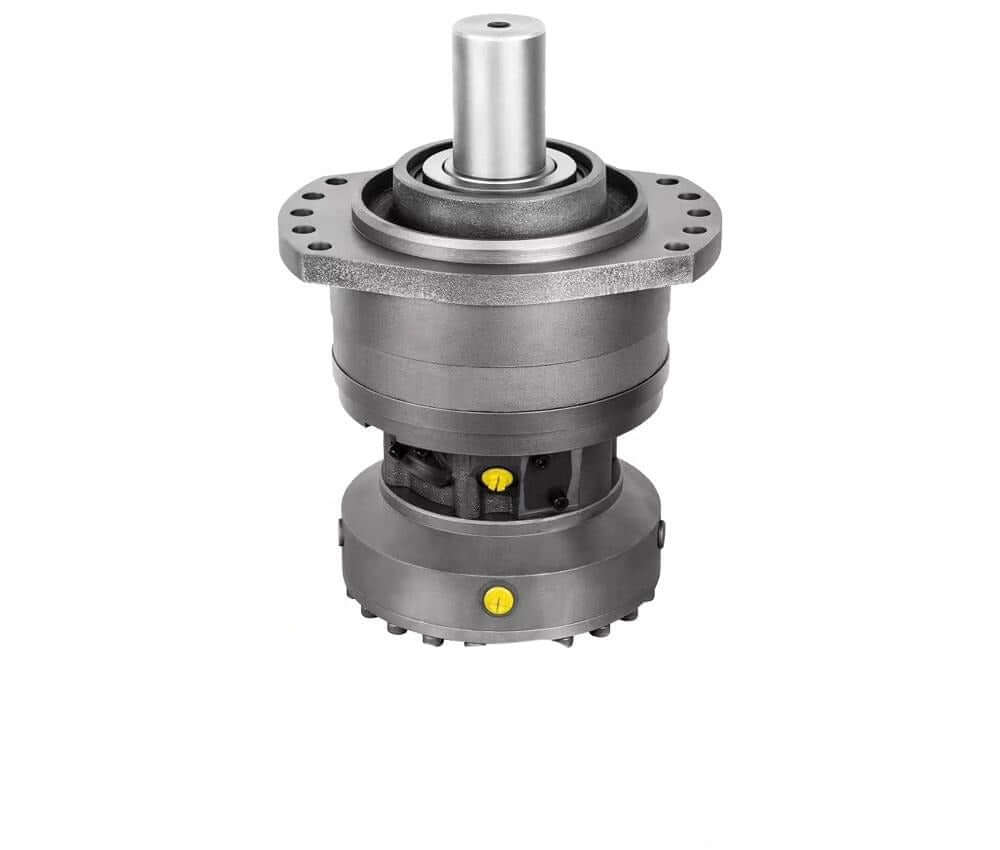
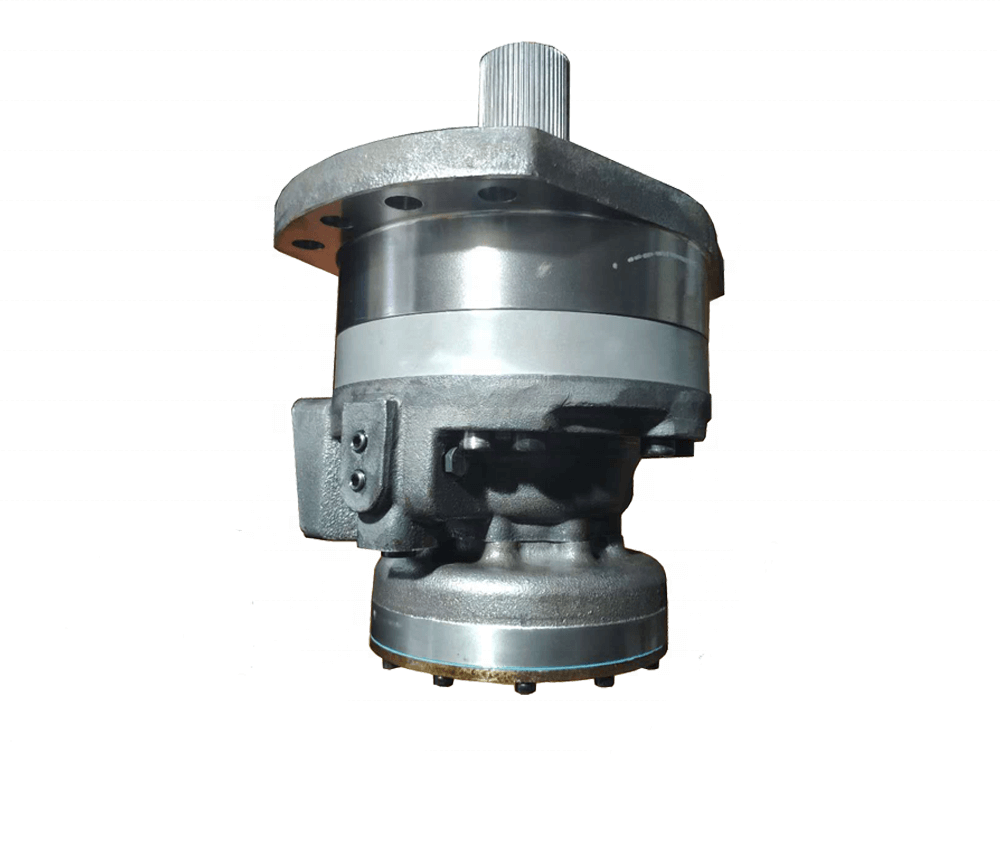
MCR05 Wheel Hub Motor for Skid Steer Loader – Final Drive
Collection:
Wheel Hubs and Bearings
The Component Where Every Upstream Deficiency in the Suspension System Eventually Registers
No other component in the heavy equipment suspension assembly carries the convergence of forces that the wheel hub bearing manages continuously through every operating hour. Radial forces from payload weight bear down through the axle into the bearing race on every loaded metre of travel. Axial forces generated during steering manoeuvres, loaded cornering, and slope traversal push laterally through the hub against the bearing face in the opposite plane simultaneously. Impact forces from ground discontinuities are transmitted through the tyre and rim into the hub assembly with every surface variation the machine crosses. All of these forces arrive at the wheel bearing at the same time, not in sequence.
What makes wheel hub and bearing condition a uniquely diagnostic indicator within the suspension system is how bearing wear accumulates under abnormal conditions. A bearing operating within its design load envelope, with a correctly functioning hub seal and clean lubrication, will reach its rated service life in a predictable, manageable way. A bearing operating with any upstream deficiency in the suspension geometry, a worn control arm allowing the hub to run outside its correct travel arc, a degraded suspension bushing permitting axial play at the pivot, a bent steering linkage introducing a persistent toe deviation, will accumulate bearing wear at a rate determined by the magnitude of that geometric error, not by its rated load capacity.
The practical consequence of this accumulator behaviour is significant. When a wheel hub bearing on a wheel loader or dump truck reaches the end of its service life in an unusually short operating period, the bearing itself is rarely the primary cause of the failure. The suspension components around it have been the cause. The bearing has simply been the most sensitive recorder of the misalignment, the overload, or the geometric deviation those components were generating, and it has registered that record in its own accelerated wear rate. Replacing the bearing without identifying and correcting the upstream source of the abnormal loading will produce an identically shortened service life on the replacement assembly.
Front and Rear Hub Bearing Applications: Different Load Profiles, Different Failure Characteristics
Wheel hub and bearing assemblies on heavy equipment are not uniform across axle positions. The load profile at the front axle of a wheel loader is structurally different from the load profile at the rear axle of a loaded dump truck, and the bearing configuration, seal specification, and failure characteristics at each position reflect that difference.
Front Wheel Hub Bearings on Wheel Loaders
The front wheel hub bearing on a wheel loader manages the highest combined radial and axial load in the machine's suspension assembly. The front axle carries the attachment side of the machine bucket, linkage, and payload, and every digging cycle, bucket fill event, and loaded travel phase directs the dominant share of machine weight through the front hub bearing stations.
The axial load component at the front wheel hub loader position is particularly demanding. Steering manoeuvres on a loaded wheel loader generate substantial lateral thrust through the front hub bearing as the machine changes direction under payload, and the geometry of the front suspension means this thrust is not evenly distributed between the inner and outer bearing races throughout the full steering arc. A hub bearing that has been operating with any deviation in front axle geometry from a worn control arm, a degraded ball joint running at an incorrect operating angle, or a steering linkage assembly holding an imprecise geometric position will show the consequence of that deviation first in the axial wear pattern of its race surfaces.
Rear Wheel Hub Bearings on Dump Trucks
The rear wheel hub bearing on a rigid or articulated dump truck manages the most extreme radial load cycling of any bearing position in the heavy equipment category. Under full payload on a loaded haul, the rear axle carries a dominant proportion of total machine weight. On large rigid platform configurations, the rear bearing stations manage a load intensity that few other industrial bearing applications approach. Under an empty return haul, that load drops dramatically. The bearing cycles between these two extremes with every load and tip event across the production shift.
This cyclic load variation from near-maximum to near-minimum and back is the defining fatigue driver for dump truck wheel hub bearings and a different challenge from the sustained high-load profile of a loader front hub. A dump truck wheel bearing that is operating with any hub seal compromise allowing contamination into the lubrication cavity will degrade at an accelerated rate under this cyclic load profile, because each load cycle works fresh abrasive material deeper into the race interface, and the cyclic stress range compounds the surface fatigue damage with every event.
Hub Seals: The Component That Determines Whether the Bearing Reaches Its Rated Life
The wheel hub bearing's rated service life is an engineering specification that assumes clean lubrication throughout its operating period. What determines whether that rated life is achievable in practice is the hub seal,l the single elastomeric barrier between the grease-lubricated bearing cavity and the operating environment the machine works in. In construction and mining equipment, the operating environment is the most challenging in any industrial bearing application. Stone dust, mineral fines, wet clay, and site chemical exposure are standard conditions at ground level on a working machine. A hub seal that is functioning correctly excludes all of it. A hub seal that has failed through abrasion contact with ground debris, thermal cycling fatigue, or mechanical damage from a rim impact converts the bearing cavity from a controlled lubrication environment into an open abrasive circuit, and the bearing's remaining service life from that point is determined by the abrasivity of what has entered, not by its rated load capacity.
The hub seal kit is therefore not a minor consumable item within the wheel hub assembly. It is the component that determines whether the bearing it protects delivers its full rated service life or a fraction of it. We supply hub seal kits for heavy equipment as individual service items alongside complete hub bearing assemblies and wheel bearing kits because maintaining seal integrity at scheduled intervals is the single most cost-effective intervention available within the wheel hub and bearing maintenance programme.
What to Inspect at the Wheel Hub Assembly During Every Scheduled Service
A structured wheel hub inspection at every major scheduled service interval will catch the conditions that lead to premature bearing failure before they have consumed a measurable share of bearing service life. The following checks should be completed at every hub position during scheduled maintenance:
- Check the hub seal face for oil weep, seal lip displacement, or external contamination tracking from the seal land position. Any oil weep at the hub seal confirms the bearing cavity is no longer sealed, and the bearing is operating in a contaminated lubrication environment.
- Check for radial or axial play at the wheel hub by loading the hub manually in both planes with the machine supported off the ground. Any detectable movement confirms the bearing has developed clearance beyond its serviceable limit.
- Check the hub temperature immediately after a normal operating shift using a calibrated contact thermometer. A bearing that is running measurably hotter than the adjacent hub on the same axle is distributing load asymmetrically, the most consistent early indicator of either contamination-driven wear or an upstream geometric deviation loading the bearing outside its design envelope.
- Check the grease condition at the hub cavity during any service that opens the hub assembly. Dark, gritty, or visibly contaminated grease confirms the seal has already allowed abrasive ingestion. A bearing that has been running in contaminated grease requires replacement at that service event, not deferral.
- Check the wheel bearing kit mounting hardware and axle stub condition for fretting, corrosion, or impact damage. Hub bearing assemblies that are seated on damaged mounting surfaces will not hold their correct preload setting regardless of how precisely the bearing itself is installed.
Machine Platforms We Cover
Our wheel hub and bearing inventory for heavy equipment is catalogued and stocked across the following OEM platforms:
Caterpillar (Cat)
- Cat 966 wheel hub bearing — front wheel loader axle position, complete hub bearing assembly, individual bearing, and hub seal kit options stocked.
- Cat wheel loader wheel hub range across the Cat 966 and Cat 972 series, covering front axle hub assemblies and complete wheel bearing kit configurations.
- Cat dump truck wheel hub bearing assemblies for the Cat 773 and Cat 775 rigid dump truck series, rear axle positions — complete hub assemblies and bearing kit options available.
Komatsu
- Komatsu WA380 wheel hub — wheel loader front axle hub assembly, individual bearing, and hub seal kit options stocked for the WA380 platform.
- Komatsu wheel loader wheel hub range for WA-series platforms covering front axle hub bearing assembly and wheel bearing kit configurations.
- Komatsu dump truck wheel hub bearing assemblies for HD-series platforms — rear axle positions, complete assemblies, and bearing kit options available.
If your platform is not listed above, contact our team with the machine serial number,r, and we will confirm the correct bearing geometry, load rating, and hub seal specification before any order is placed.
Frequently Asked Questions
If the hub body, mounting flange, and axle stub are all confirmed undamaged and within OEM dimensional tolerance, an individual bearing and hub seal kit replacement is the correct and most cost-effective intervention. Any damage to the hub body or mounting surfaces requires a complete hub assembly replacement. A new bearing seated on a damaged hub will not hold its correct preload setting.
Yes, as standard practice. Replacing both hub bearing assemblies on the same axle simultaneously restores matched load capacity and preload settings across both positions, eliminating the asymmetric load distribution that occurs when a new bearing is paired with a partially worn one on the opposing side.
Yes, and this is the most important diagnostic implication of a premature bearing failure. A bearing that has failed significantly before its rated service life should prompt an immediate inspection of the control arm geometry, suspension bushing condition, and wheel alignment on the affected axle. The upstream suspension components are the most probable source of the abnormal load that shortened the bearing's service life.
Yes, provided the aftermarket assembly is manufactured to OEM-equivalent load rating, bearing geometry, and hub seal compound specification. We confirm all three variables against the OEM parts list for each supported model before supplying any aftermarket wheel hub or bearing kit for a supported application.
Most orders are dispatched within 24 to 48 hours of confirmed payment and ship to all locations worldwide. Express freight options are available for urgent breakdown requirements. Contact us before placing your order for less common model specifications to confirm stock availability and avoid any delays.