The Most Exposed Position in the Entire Steering Circuit
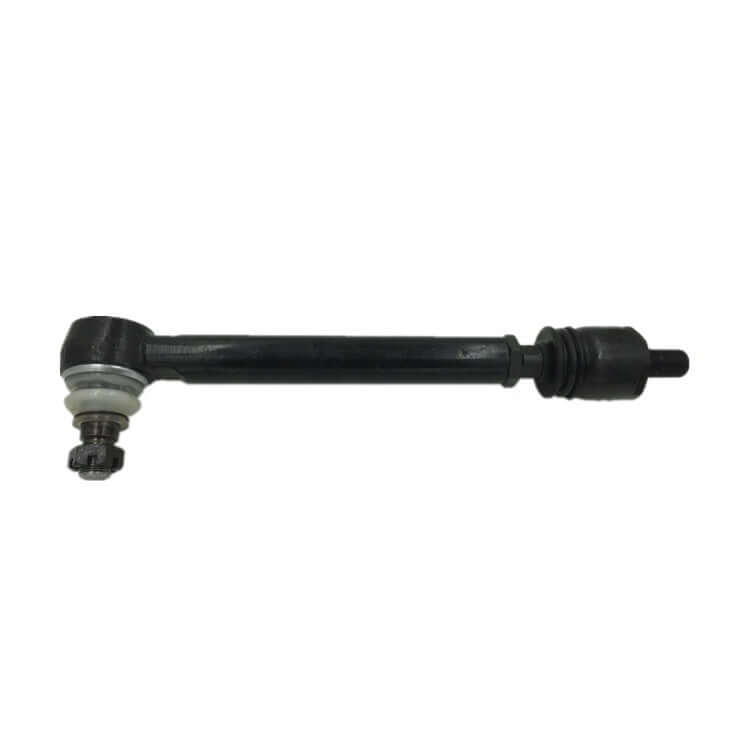
The tie rod end occupies a position in the steering circuit that no other steering component shares. While the steering cylinder operates protected within the machine structure, and the steering linkage components that transmit its force run close to the chassis, the tie rod end terminates the entire circuit at the outermost point of the assembly, directly adjacent to the wheel, fully exposed to the ground surface the machine works on.
That positional exposure carries two direct consequences. First, the tie rod end faces contamination levels that no other component in the steering circuit encounters, such as stone impact, abrasive mineral dust, wet clay, and site chemical exposure, which are standard operating conditions at that ground-level location. Second, the play that develops at this joint is experienced at maximum geometric amplification. A wear clearance that measures in fractions of a millimetre at the joint translates to a visible angular deviation at the tyre contact patch, because the geometry of the steering arm multiplies that clearance across the full effective length between the joint and the wheel hub.
This amplification effect is what makes the tie rod end condition a higher inspection priority than the component's apparent simplicity might suggest. On a wheel loader or motor grader in production, a heavy equipment tie rod end that has developed measurable play is not a marginal inconvenience; it is the reason the machine no longer steers precisely where the operator intends, and why tyre wear on the affected side is already accelerating.
Tie Rod End Function Across the Three Main Heavy Equipment Applications
The function of the tie rod end is consistent across machine types, connecting the steering circuit to the wheel hub knuckle and transmitting directional input into wheel movement. The loads, geometry, and failure characteristics it faces, however, vary significantly by application.
Tie Rod Ends on Wheel Loaders
On wheel loaders, the wheel loader tie rod end connects the steering arm to the hub knuckle, completing the terminal mechanical link that turns the front axle in direct response to operator input. The geometry of a wheel loader steering system places the tie rod end under simultaneous lateral and longitudinal loads during the combined steer-and-dig cycles that define normal loader operation. The joint must manage these combined loads while sitting directly in the path of material spillage from the bucket, a contamination exposure, and the boot seal must continuously resist across its entire service life.
Tie rod end wear on wheel loaders presents first as a vague steering feel during slow-speed loaded maneuvering, precisely the operating condition where the combined loading on the joint is highest. Because the symptom is subtle at first and the machine remains drivable, the wheel loader tie rod end is one of the most consistently deferred maintenance items across fleet operations. The cost of that deferral accumulates directly in tyre consumption from the first production shift; the worn joint is left in service.
Tie Rod Ends on Motor Graders
Motor grader steering geometry places demands on the tie rod end that are distinct from loader applications. The motor grader operates across extended steering lock angles during blade work, and the tie rod assembly must accommodate that angular range while maintaining the precision that fine-tolerance grading work requires. Any vague zone at any point in the steering arc produces inaccurate blade positioning that accumulates across every grading pass. The consequence is not just imprecise steering; it is a measurable reduction in finished grade quality.
The Cat 140H tie rod end and the broader motor grader tie rod range we carry are specified to the correct angular travel limits and end taper for each motor grader platform,m not generic tie rod end heavy machinery substitutes, but platform-specific assemblies that maintain the geometric precision the motor grader steering circuit requires from lock to lock.
Tie Rod Ends on Backhoe Loaders
On backhoe loaders, the tie rod end serves the front axle steering circuit and is subjected to the repeated load transitions between loaded material handling and on-road travel that define backhoe loader operation. The contamination challenge is particular to this machine type; backhoe loaders work on construction sites where ground surface conditions change continuously throughout the shift, exposing the joint to mud, aggregate, and site debris that accelerates boot seal degradation at a rate higher than dedicated quarry or mine site equipment. Our range covers JCB and Case backhoe loader platforms, with individual ends and full tie rod assemblies stocked for both front axle configurations.
When Tie Rod End Wear Extends Beyond the Steering System
Tie rod end degradation does not stay contained within the steering circuit. The consequences of operating with worn heavy equipment tie rod ends propagate outward into adjacent systems and increase the total cost of deferral with every production shift; the issue remains unaddressed.
Tyre wear is the most immediately measurable consequence. A wheel loader or motor grader running with tie rod end play that is allowing the wheel to toe outside its specified alignment angle will consume tread on the affected wheel at a rate that tyre rotation and inflation adjustment cannot correct. Depending on the severity of the play and the intensity of the operating cycle, the tyre cost attributable to a single deferred tie rod end kit replacement can exceed the cost of the replacement assembly several times over within a single maintenance period.
At the connection points around the worn joint, the steering linkage components transmit elevated peak impact loads with every steering input because the play at the tie rod end creates a momentary shock loading event each time the worn interface takes up clearance, rather than the smooth force transmission the system was designed around. Those impact loads accumulate in the drag links and steering arms of the steering linkage assembly, in the wheel hub bearing the joint supports, and in the steering arm mounting hardware,e all of which carry the consequences of the tie rod end's condition in their own accelerated wear rates.
Identifying tie rod end wear at the first confirmed field indicator and replacing the assembly before the surrounding components begin to reflect the damage is the commercially correct maintenance decision across every class of heavy equipment where this component operates.
Machine Platforms We Cover
Our heavy equipment tie rod end inventory is catalogued and stocked across the following OEM platforms:
Caterpillar (Cat)
- Cat 966 tie rod end — wheel loader front axle steering circuit, individual ends, and complete tie rod assemblies for the Cat 966 platform.
- Cat 972 wheel loader tie rod end — individual units and full tie rod end kit options stocked.
- Cat 140H tie rod end — motor grader front axle steering circuit, individual and complete assembly options available.
- Cat motor grader tie rod range across the Cat 140-series platform for additional configurations.
Komatsu
- Komatsu WA380 tie rod end — wheel loader front axle, individual end,s and complete tie rod end assembly options for the WA380 platform.
- Komatsu wheel loader tie rod end range across WA-series platforms for front axle steering circuit positions.
JCB
- JCB tie rod end assemblies for the JCB 3CX backhoe loader and JCB wheel loader series — individual ends and full assemblies stocked across front axle positions.
Case
- Case tie rod end units for backhoe loader and wheel loader front axle steering circuits — individual replacement ends and complete tie rod end kit configurations available.
If your platform is not listed above, contact our team with the machine serial number, and we will confirm the correct specification and stock availability before any order is placed.
Five Field Indicators That Tie Rod Ends Require Replacement
Tie rod end wear on heavy equipment rarely presents as a sudden mechanical failure. These are the five most reliable field indicators for which immediate inspection and, in most cases, replacement before the next production period is required:
- Steering wander or directional drift on a level surface without operator input, any tendency for the machine to track away from a straight line that cannot be attributed to a tyre pressure differential,l is a reliable indicator of tie rod end play, with the heavy equipment tie rod end on the affected axleside being the first component to inspect.
- An audible knocking during slow-speed full-lock steering, a metallic knock or clunk at the steering circuit extremity during slow-speed turning, confirms that play has developed at the tie rod end joint and the bearing surfaces are no longer in continuous grease contact across the full range of angular movement.
- Accelerated tyre wear on one side of the front axle that inflation correction does not resolve — asymmetric tread consumption that persists after inflation correction is a direct consequence of toe deviation produced by tie rod end play on the affected side, and the wear rate will continue to increase with each loaded cycle until the joint is replaced.
- Visible boot seal damage, tearing, or displacement from its retention groove. A compromised boot seal means the bearing cavity has already had unprotected exposure to the operating environment. The joint may continue to articulate, but its remaining service life is materially shortened from the moment of seal breach, regardless of how the steering feels.
- Detectable axial play when the stud is manually loaded during a stationary inspection, any measurable movement of the stud within the housing under manual axial load confirms the joint has exceeded its serviceable clearance tolerance and must be replaced before the machine returns to production.