

An active emissions fault on a Cummins ISX derates the engine or counts down to a shutdown. Either way, the machine stops working.
The difficulty is that the ISX aftertreatment system has four fault-generating circuits: the EGR valve, NOx sensor, DPF, and DEF injection, and their fault codes overlap in ways that consistently produce misdiagnosis. Replacing an expensive NOx sensor when the actual fault is an EGR pressure differential issue is common and avoidable.
This guide explains what each circuit does, what each component looks like when it fails, and the diagnostic order that identifies the correct fault before anything is replaced.
For EGR valve replacements compatible with Cummins ISX engines, visit our EGR valve replacement for your machine page.
Why These Faults Are So Hard to Separate
The ISX aftertreatment system is an integrated circuit where every component monitors the others. The downstream NOx sensor's reading is affected by DPF loading, EGR valve position, turbocharger boost, and exhaust temperature simultaneously.
When any variable falls outside its expected range, the ECM logs a fault code at the point where it detects the anomaly, not necessarily at the component that caused it. A single active fault code is rarely sufficient to identify what needs replacing.
What Each Component Does and How It Fails
The EGR Valve and EGR Cooler
The EGR valve recirculates a controlled portion of exhaust gas back into the intake, reducing peak combustion temperature and limiting NOx formation at source. The EGR cooler reduces the temperature of that recirculated gas before it enters the intake stream.
The ISX EGR circuit is monitored by a differential pressure sensor. A reading outside the expected range generates EGR fault code,s but the fault may be in the valve, the cooler, the sensor itself, or in the exhaust manifold upstream. An exhaust manifold leak affecting EGR pressure readings is a frequently overlooked variable it changes the differential pressure reading without any fault in the EGR components themselves.
The Diesel Particulate Filter
The DPF captures particulate matter from the exhaust stream and requires periodic regeneration. When the filter loads beyond its regeneration capacity through short-cycle operation or a regeneration inhibitor fault, backpressure rises, and the entire aftertreatment system downstream is affected.
An exhaust backpressure from a failing muffler on the outlet side of the DPF accelerates filter loading and interferes with regeneration temperature profiles. Elevated exhaust backpressure from DPF loading also raises turbine inlet temperature. For how this connects to turbocharger damage from elevated turbine inlet temperature, see our turbocharger diagnosis guide.
The SCR System and DEF Injection
The SCR system injects DEF into the exhaust stream ahead of the catalyst, converting NOx into nitrogen and water. The DEF system has multiple fault-generating components: the header, tank filter, dosing injector, and aftertreatment controller. A fault in any one of these produces SCR efficiency codes indistinguishable from NOx sensor faults until the system is tested in the correct sequence.
The NOx Sensor Circuit
The ISX runs two NOx sensors upstream and downstream of the SCR catalyst. The ECM calculates conversion efficiency from the difference between the two readings. If the downstream reading is too high relative to upstream, the ECM concludes SCR is underperforming, but this can mean a failed sensor, insufficient DEF delivery, a degraded catalyst, or an EGR valve not reducing NOx at source.
Fault Code Patterns: What Each Failure Looks Like
EGR valve faults present as SPN 27 or SPN 412 codes. A stuck-open valve causes excessive recirculation, rough idle,e and black smoke. A stuck-closed valve raises NOx formation and triggers downstream NOx sensor codes. Confirm whether the valve responds to the commanded position before concluding it needs replacement.
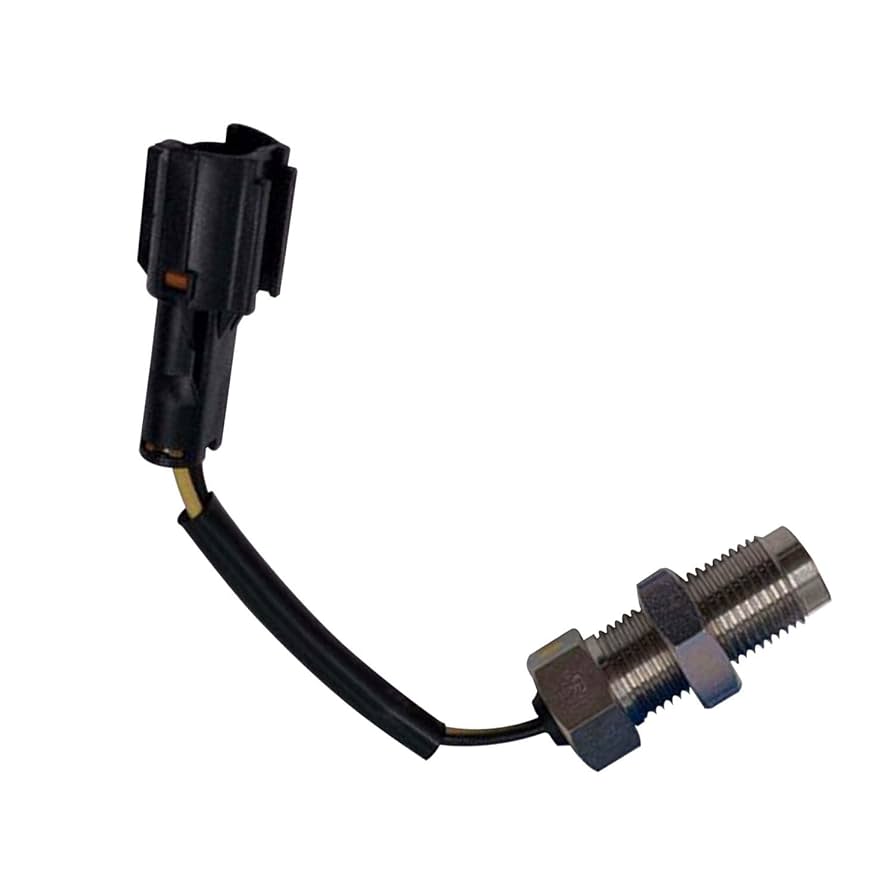
NOx sensor faults present as SPN 3216 (upstream) or SPN 3226 (downstream). Before replacing the sensor, confirm the connector is clean and corrosion-free, the exhaust system is sealed, and DEF delivery is correct. A NOx sensor replaced without resolving these upstream conditions produces the same fault code within operating hours. For diesel NOx sensors for Cummins ISX, confirm the engine serial number and CPL before ordering.
DPF faults present as SPN 3251 or regeneration inhibit codes. A loaded DPF responds to a forced active regeneration. If the pressure differential returns to normal after regeneration, the filter is serviceable. If it does not, the substrate is damaged or the differential pressure sensor has failed.
DEF system faults are present across multiple SPNs. The most misdiagnosed is the DEF tank filter; a blocked filter restricts DEF supply and produces SCR efficiency codes that look identical to NOx sensor or catalyst faults.
The Diagnostic Order: Check This Sequence Before Replacing Anything
Pull the full fault code history first — not just active codes. A NOx sensor code consistently preceded by an EGR differential pressure code tells you the EGR system is the upstream cause.
Check the DEF system before the NOx sensors. DEF quality, level, filter condition, and dosing function are faster and cheaper to verify than sensor replacement.
Verify the exhaust system is sealed. A manifold crack or upstream restriction changes every sensor reading in the aftertreatment circuit.
Test the EGR valve response, confirm commanded versus actual position,n, and differential pressure before concluding the valve needs replacement.
Replace NOx sensors last after EGR function, DEF delivery, and exhaust system integrity have all been confirmed. For Cummins ISX EGR valves and coolers, our team confirms the correct specification against your engine serial number.
When CAT and Komatsu Show the Same Patterns
These fault patterns are not exclusive to Cummins. CAT C15 ACERT engines use equivalent EGR differential pressure sensor configurations the diagnostic sequence mirrors the ISX process closely. Komatsu Tier 4 machines show the same DPF loading and NOx sensor fault patterns. The sequence applies across platforms.
For NOx sensor replacement across Cummins ISX, CAT, and Komatsu platforms, our team confirms compatibility using your engine serial number before the order is placed.
Conclusion
Cummins ISX emissions faults are diagnosable, but only in the correct order. The fault code identifies where the ECM detected an anomaly. The diagnosis identifies why.
Follow the DEF system, exhaust integrity, and EGR valve sequence before replacing NOx sensors. Confirm upstream conditions are resolved before fitting replacement components.
At Imara Engineering Supplies, we stock OEM-compliant EGR valves, NOx sensors, and aftertreatment components for Cummins ISX, ISX15, X15, CAT, and Komatsu platforms. Our team cross-references fault codes with your engine serial number and CPL to confirm the correct replacement before any order is placed.
Contact our team with your engine serial number and fault codes, or visit our exhaust parts range to find the right components for your after-treatment system.


