

If your Cummins-powered equipment has thrown a speed sensor fault code, the machine is telling you something precise, and the diagnosis is more straightforward than it might first appear.
Speed sensor faults on Cummins engines are among the most common electrical fault codes in the heavy equipment fleet. The ISX, ISX15, X15, and N14 engines are all susceptible, and the symptoms range from minor performance issues to complete engine shutdown, depending on which sensor is affected and how far the fault has progressed.
The challenge is that Cummins engines use multiple speed sensors simultaneously, they crankshaft, camshaft, and turbocharger, and each one monitors a different part of the engine's operation. Knowing which sensor is failing, what it does, and what the replacement specification requires is what gets the machine back into service correctly.
This guide covers all of it.
For Cummins-compatible speed sensor replacements, visit our engine speed sensors and electrical parts
page.
What Does a Speed Sensor Do on a Cummins Engine?
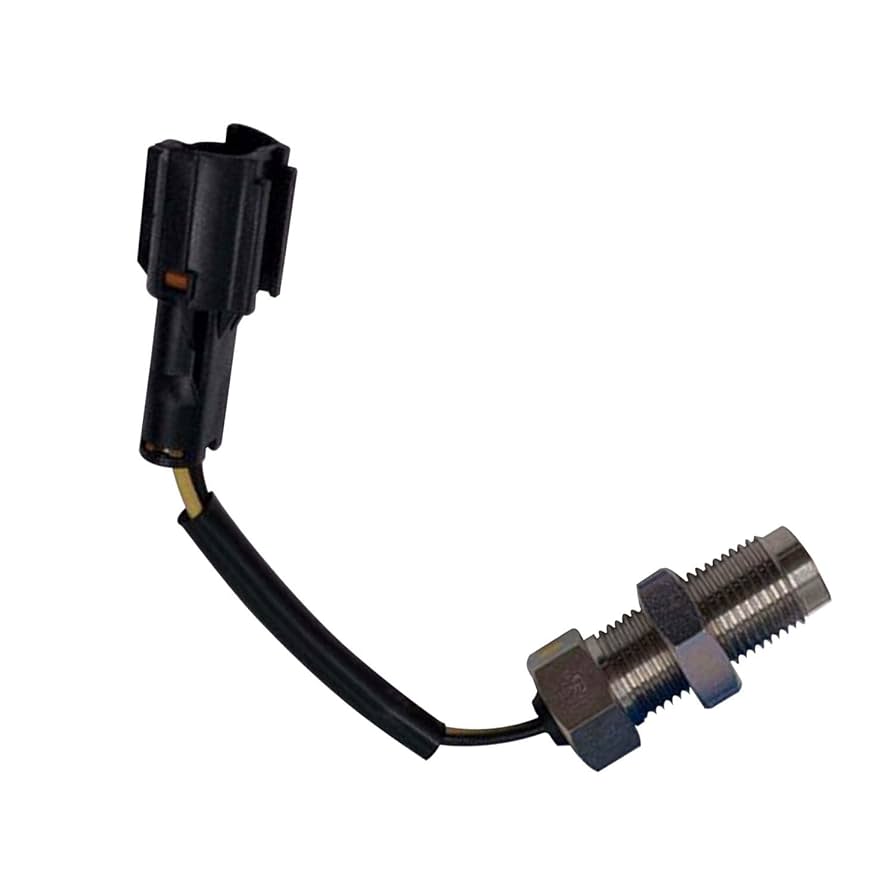
A speed sensor monitors rotational speed at a specific point in the engine and reports that data to the engine control module (ECM). The ECM uses this data to manage fuel delivery, injection timing, turbocharger control, and engine protection systems in real time.
On Cummins engines, three speed sensors are typically in play:
The crankshaft speed sensor monitors the speed and position of the crankshaft. It is the primary speed reference signal for the ECM; fuel injection timing is calculated directly from this sensor's output. A failed crankshaft speed sensor will typically prevent the engine from starting or cause immediate shutdown.
The camshaft speed sensor monitors camshaft position and provides the ECM with cylinder identification data which cylinder is on compression stroke at any given moment. On Cummins engines, the camshaft sensor works alongside the crankshaft sensor to enable precise injection timing. Loss of the camshaft signal alone usually allows the engine to continue running in a reduced performance mode, though fault codes will be active.
The turbocharger speed sensor, particularly relevant on the ISX, ISX15, X15, and N14 with Holset turbochargers, monitors turbo shaft speed directly. The Holset turbo speed sensor is an additional protection layer that prevents over-speed conditions, which would destroy the turbocharger. A failing turbo speed sensor is a common fault on high-hour Cummins ISX and X15 engines and should be confirmed before assuming a turbocharger problem.
Cummins ISX, ISX15, X15 and N14: Platform-Specific Notes
Cummins ISX and ISX15
The ISX and ISX15 use three-wire crankshaft and camshaft sensors:s a signal wire, a ground wire, and a supply voltage wire. This is different from simpler two-wire sensors on older engines and means resistance testing alone is not sufficient for diagnosis. A scope or electronic fault tester is needed to confirm signal output under cranking conditions.
The ISX15 turbo speed sensor mounted on the Holset turbocharger is a particularly high-frequency replacement item on machines with over 10,000 hours. The sensor sits in a high-heat, high-vibration environment, and the connector is exposed to oil contamination that accelerates lead and connector failure.
Cummins X15
The X15 uses the same sensor family as the ISX15 but with updated connector specifications. Confirm the connector type matches the replacement sensor before ordering ISX15 and X15 sensors are dimensionally similar, but the connector configuration differs between early and late production variants.
Cummins N14
The N14 is an older platform, but significant numbers remain in productive service across mining, civil, and industrial applications. OEM Cummins N14 speed sensor availability is increasingly limited. Quality aftermarket sensors are dimensionally accurate, with correct resistance specifications and correct connectors, and are the practical sourcing route for N14-powered equipment.
The N14 crankshaft sensor mounts at the flywheel housing. Connector corrosion is a common cause of intermittent fault codes on older N14 machines. Always inspect and clean the connector before replacing the sensor itself on high-age equipment.
Symptoms of a Failing Cummins Speed Sensor
These are the signs to act on. The pattern of symptoms tells you which sensor is most likely affected.
Engine cranks but will not start: points to crankshaft sensor failure. The ECM has no speed reference and will not enable fuel injection.
Engine starts but runs rough at idle, surges under load, or misfires: points to crankshaft or camshaft sensor signal degradation. The ECM is receiving an intermittent or corrupted signal and compensating incorrectly.
The engine enters derate mode without an obvious cause: check the turbo speed sensor first on ISX, ISX15, and X15 engines. The ECM is protecting the turbocharger from an over-speed condition that it cannot verify.
Intermittent fault codes that clear but return: typically caused by connector corrosion, damaged leads, or a sensor that is failing under heat and vibration but recovering when cool.
Hard fault code that does not clear: the sensor has failed completely, and the ECM is receiving no signal from that circuit.
Common Fault Codes Associated with Cummins Speed Sensor Failure
Cummins ECM fault codes for speed sensor faults follow a consistent pattern across platforms:
- SPN 723 / FMI 8 — Camshaft speed sensor signal abnormal
- SPN 636 / FMI 8 — Crankshaft speed sensor signal abnormal
- SPN 100486 — Turbocharger speed sensor fault (ISX/X15 platforms)
- SPN 190 / FMI 8 — Engine speed signal erratic or missing
Always pull the full fault code log from the ECM, not just the active codes. Inactive codes that have cleared themselves provide a history of the fault pattern and help distinguish a one-time event from a developing failure.
How to Confirm the Correct Replacement Sensor
Speed sensors are not universal across Cummins platforms. Confirm the following before ordering:
Engine serial number and CPL (Control Parts List) number: printed on the engine dataplate. The CPL identifies the exact engine build specification and is the most reliable reference for confirming sensor compatibility.
Sensor mounting location: crankshaft, camshaft, or turbocharger. The same engine platform uses different sensors at each location, and they are not interchangeable.
Connector configuration: two-wire or three-wire, and the specific connector body type. On ISX15 and X15 engines, the connector type varies by production year.
Resistance specification: for passive sensors, the resistance value must match the original specification. Most Cummins crankshaft and camshaft sensors fall within a specific resistance range at room temperature. Confirm this matches the replacement before fitting.
A supplier who confirms compatibility against your engine serial number and CPL, just engine name, is the right supplier for Cummins electrical components.
Conclusion
Cummins speed sensor faults are precise, diagnosable, and resolvable provided the correct sensor is identified, the fault is confirmed with the right diagnostic approach, and the replacement specification is verified before the order is placed.
Crankshaft sensor failure stops the engine. Camshaft sensor failure degrades performance. Turbo speed sensor failure on ISX, ISX15, and X15 engines triggers derate and protection modes. Each failure mode has a distinct presentation, and each one has a defined replacement path.
At Imara Engineering Supplies, we stock OEM-compliant Cummins speed sensors for the ISX, ISX15, X15, and N14 engine platforms, crankshaft, camshaft, and Holset turbocharger speed sensors confirmed against engine serial numbers and CPL codes before dispatch.
Contact our team with your engine serial number and active fault codes, or visit our Cummins engine sensors and electrical components page to find the right sensor for your platform.


