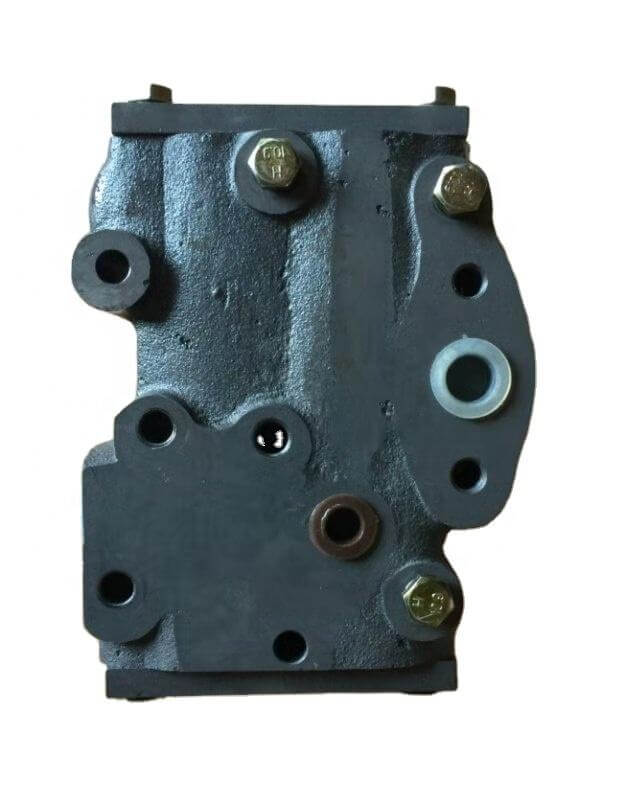
Types of Excavator Hydraulic Motors We Supply
Excavators use two primary hydraulic motor types, each engineered for a specific and distinct function within the machine's operating system. Understanding which motor type you need ensures you source the correct assembly and avoid costly fitment errors:
Travel Motors
The travel motor, also called a final drive motor, is the hydraulic motor mounted inside each track drive assembly at the rear of the undercarriage. It receives high-pressure flow from the main hydraulic pump via the travel control valve and converts that flow into the rotational force that drives the sprocket, which in turn moves the track chain and propels the machine across the ground. Travel motors on modern excavators are typically high-torque, two-speed axial piston motors incorporating an integrated planetary reduction gearbox, the combination of hydraulic motor and gearbox together forming what is commonly referred to as the final drive assembly.
Travel motor failure manifests as one-sided track drive loss, reduced travel speed, inability to climb gradients, or complete propulsion failure on one or both tracks. Because excavators operate two independent travel motors, one per track, a fault in a single motor causes the machine to pull consistently toward the affected side, making straight-line travel difficult and dangerous on site. Imara Engineering supplies complete travel motor assemblies and internal motor components for all major excavator brands and models.
Swing Motors
The swing motor, also referred to as a slew motor, is the hydraulic motor that drives the rotation of the excavator's upper structure, or house, around the undercarriage through the slew ring gear. It is mounted on the upper structure directly above the slew ring and drives a pinion gear that meshes with the ring gear to produce the continuous 360-degree rotational capability that defines excavator operation. Like travel motors, swing motors on modern machines are typically integrated units combining a hydraulic motor with a planetary reduction gearbox and a hydraulic swing brake mechanism.
Swing motor failure presents as slow or jerky upper structure rotation, inability to hold the machine in position on a gradient, abnormal noise during slewing, or complete loss of swing function. Given that the swing circuit operates under frequent acceleration and deceleration cycles throughout the working day, swing motors are among the highest-wear hydraulic components on any excavator. Imara Engineering supplies complete swing motor assemblies for all major excavator brands, covering both motor and gearbox components for full assembly replacement or internal rebuild.
How Hydraulic Motors Work on an Excavator
Hydraulic motors operate on the reverse principle of a hydraulic pump, where a pump uses mechanical rotation to generate fluid flow, a motor uses pressurised fluid flow to generate mechanical rotation. On an excavator, the main hydraulic pump generates high-pressure flow that is directed by the main control valve to the travel or swing motor circuits based on operator input. As pressurised fluid enters the motor, it acts against the internal pistons or gear faces, creating a pressure differential that produces rotational torque on the motor output shaft.
Most excavator travel and swing motors use axial piston designs similar to the main pump with rotating cylinder barrels, reciprocating pistons, and valve plate porting, allowing them to deliver high torque output at variable speed in both forward and reverse directions. The integrated planetary gearbox then multiplies this motor torque through a series of gear reduction stages before it reaches the output sprocket or slew pinion, providing the enormous torque needed to move a fully loaded machine across rough terrain or rotate a heavy upper structure and attachment combination at controllable working speed.
Common Symptoms of Hydraulic Motor Failure
Hydraulic motor degradation follows a recognisable pattern across both travel and swing applications. Monitor your machine for these warning signs:
-
One-sided travel pull — The machine consistently drifts toward one side during straight travel, indicating reduced output from one travel motor relative to the other.
-
Loss of travel speed or gradient climbing ability — A worn travel motor cannot maintain sufficient torque output to drive the machine effectively under load.
-
Slow or jerky swing rotation — Reduced swing motor output produces sluggish upper structure response and inconsistent rotation speed through the swing arc.
-
Abnormal noise during travel or swing operation — Grinding, knocking, or whining from the motor or gearbox assembly indicates internal component wear or bearing failure.
-
Oil leakage from motor seals — External leakage at the motor shaft seal or housing face indicates seal failure and the onset of internal pressure loss.
-
Machine creeping or drifting when stationary — A worn or damaged motor brake valve allows the motor to creep under load pressure when the operator is not commanding movement.
Excavator Brands We Cover
Imara Engineering supplies hydraulic travel and swing motors compatible with all major excavator brands and model series:
-
Komatsu — PC200, PC210, PC300, PC360, PC400, PC450 and full PC series
-
Caterpillar (CAT) — 320, 320D, 323, 325, 330, 336, and full E-series
-
Hitachi — ZX200, ZX210, ZX300, ZX330, ZX450, ZX500 and full ZX/EX series
-
Volvo — EC210, EC240, EC290, EC380, EC480 and full EC series
-
Doosan — DX225, DX300, DX380, DX480 and full DX series
-
Kobelco — SK200, SK300, SK350, SK480 and full SK series
-
Hyundai — R210, R290, R380, R480 and full R series
-
Bobcat — E35, E50, E85 and compact excavator range
-
Case — CX130, CX210, CX300, CX350 and full CX series
Cannot find your model listed? Contact our parts team with your machine serial number and OEM part number for an immediate cross-reference and confirmation.
Complete Motor Assemblies vs Internal Repair Components
When a hydraulic motor fails, you have two primary supply options depending on the nature and extent of the failure:
-
Complete Motor Assembly — The entire motor unit, including internal hydraulic components, integrated gearbox, and brake valve, is replaced as one assembly. This is the fastest return-to-work solution and is recommended when internal damage is extensive, when the gearbox shows wear, or when the total cost of internal parts approaches the price of a complete unit.
-
Internal Motor Components and Seal Kits — Where the motor housing and major structural components are serviceable, internal wear parts, including pistons, cylinder barrel, valve plate, shaft seal, and o-ring kits, can be replaced individually. Imara Engineering supplies dedicated motor seal kits for travel and swing motor rebuilds across all major brands.
Our parts specialists will advise which supply option is most appropriate and cost-effective for your specific failure situation when you contact our team.
Related Hydraulic Parts You May Need
Hydraulic motor replacement or rebuild frequently connects to wider hydraulic system servicing. Consider sourcing these components alongside your motor:
- Hydraulic Pumps — The pump is the upstream pressure source feeding your travel and swing motors — inspect simultaneously when diagnosing motor circuit faults
- Control Valves — The main control valve directs flow to the motor circuits — inspect for spool wear when motor performance issues are present
- Motor Seal Kits — Complete seal kits for travel and swing motor rebuilds
- Transmission Seal Kits — For final drive gearbox seal replacement alongside travel motor servicing
- Hydraulic Hoses & Pipes — Inspect motor feed and drain hoses when replacing any motor assembly