

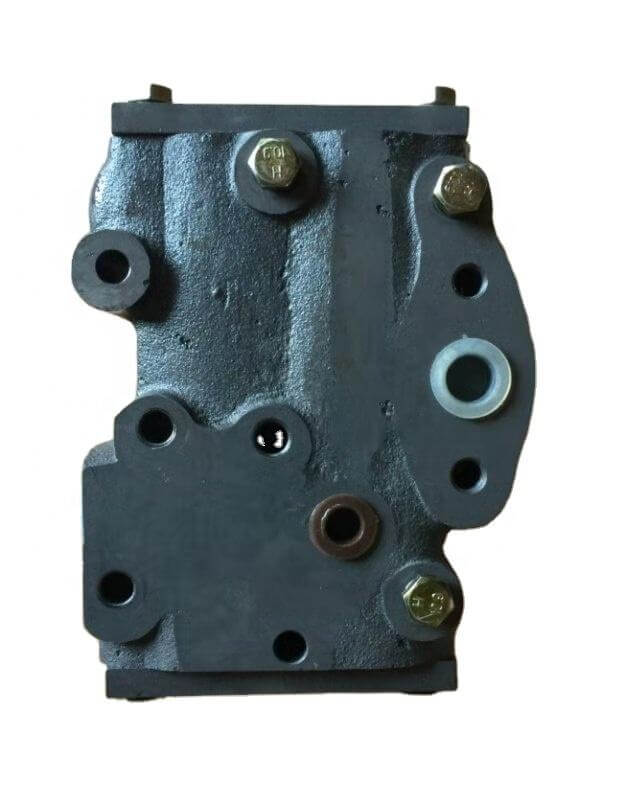
Hydraulic Suction Filters for Excavators & Heavy Equipment: Pump Inlet Protection, Verified to Spec
The hydraulic pump is the highest-value component in your excavator's hydraulic circuit — and the hydraulic suction filter is its first and only line of defence. Positioned at the pump inlet, it determines what enters the pressure side of your system on every single stroke. A wrong specification here does not just fail to protect it actively causes the pump damage it was installed to prevent. Imara Engineering stocks hydraulic suction filters for heavy equipment as part of the Hydraulic Oil Filters range within the broader Filters & Service Parts collection.
CAT hydraulic suction filters and Komatsu suction filters are cross-referenced to your machine model and OEM part number. Hydraulic return filters and hydraulic breather filters complete the three-point circuit protection. Imara Engineering also carries Transmissions & Gearboxes for complete drivetrain servicing.


Collection:
Hydraulic Suction Filters
Why the Pump Inlet Is the Most Consequential Filter Position in Your Hydraulic System
There is a reason hydraulic system designers place a filter at the pump inlet despite the engineering challenge it creates. Everything downstream of the pump, the directional control valves, the cylinders, the hydraulic motors, the accumulator circuits, depends entirely on the fluid quality delivered from the pressure side. The suction filter is the checkpoint that determines whether clean or contaminated fluid enters the pressure circuit.
The challenge is that the suction filter operates under conditions that demand a precise balance. Restrict the flow too aggressively with a fine-micron element, and you starve the pump, creating cavitation damage more severe than the contamination you were trying to prevent. Fit an element too coarse and particles reach the pump's internal clearances, abrading precision-machined surfaces that cannot be serviced in the field.
That balance is not achieved by guesswork. It is achieved by correct specification matched to your pump's flow demand, your system's operating temperature range, and the contamination environment your machine works in.
The Technical Reality of Pump Cavitation and How Suction Filtration Prevents It
Pump cavitation is one of the most destructive failure modes in a hydraulic system, and suction filter specification is directly implicated in whether it occurs. Understanding the mechanism makes the specification requirements considerably less abstract.
When a hydraulic pump draws fluid from the reservoir through the suction line, it creates a low-pressure zone at the inlet port. If the suction filter element creates sufficient flow restriction through a clogged element, an undersized rating, or an incorrect installation that inlet pressure drops below the fluid's vapour pressure at operating temperature. Vapour bubbles form in the fluid.
Those bubbles travel with the fluid into the pump's compression zone, where pressure rises sharply. The bubbles collapse implode against internal pump surfaces. Each implosion event is a micro-pressure pulse that removes material from the pump housing, pistons, valves, and barrel faces. The damage is cumulative, progressive, and entirely silent until the pump loses efficiency or fails outright.
The consequences in practice:
- Elevated noise from the pump — a cavitation signature that is frequently misdiagnosed as a mechanical bearing issue
- Progressive loss of hydraulic system pressure and flow output as internal pump clearances open
- Metallic contamination introduced into the hydraulic circuit by the pump itself, accelerating damage to downstream valves and cylinders
- Eventual pump seizure or catastrophic failure at operating load
A correctly specified hydraulic suction filter eliminates the flow restriction that initiates this sequence. Imara Engineering's cross-reference process confirms that the element supplied for your machine does not create the restriction condition that leads to cavitation.
Hydraulic Suction Strainer vs Suction Filter: Understanding the Distinction
The terms hydraulic suction strainer and hydraulic suction filter are used interchangeably in the field, but they describe components with meaningfully different filtration characteristics and the distinction matters for specification purposes.
Hydraulic suction strainers are coarse-mesh elements typically rated between 74 and 150 microns designed primarily to prevent large particles and debris from entering the pump. They create very low flow restriction and are commonly used as the primary inlet protection on systems where fine filtration is handled downstream by pressure or return line filters. The suction strainer excavator application is the most common configuration on standard construction machinery.
Hydraulic suction filters in the strict sense refer to finer-rated elements typically between 10 and 25 microns that provide more complete particulate control at the pump inlet. These are used on systems with more sensitive pump clearances or in contamination-intensive environments where coarse strainer protection is insufficient.
The correct choice between these configurations depends on your machine's hydraulic system design and your operating environment. Imara Engineering cross-references both configurations against your machine model to confirm which specification applies before any order is dispatched.
CAT and Komatsu Hydraulic Suction Filter Cross-Reference
CAT Hydraulic Suction Filter
CAT excavators and construction equipment deploy hydraulic systems with pump inlet specifications that vary across machine series, operating pressure ratings, and hydraulic circuit design. The CAT hydraulic suction filter for a compact excavator configuration is not interchangeable with the inlet filter for a mid-size or large excavator, as pump flow demands and inlet port geometry differ across the range.
Imara Engineering cross-references CAT hydraulic suction filters by machine series and serial number range. Compact CAT platforms through to full-scale CAT excavators and construction machinery are covered, with OEM part number verification before dispatch. Both genuine OEM and certified aftermarket options are available across CAT suction filter configurations.
Komatsu Suction Filter
Komatsu suction filters for the PC-series excavator range are stocked and cross-referenced at Imara Engineering. Komatsu hydraulic systems across the PC138 through to the PC300 and larger platforms carry distinct inlet filter specifications by model, each confirmed against Komatsu OEM part numbers before any order is processed.
For Komatsu compact excavator platforms and less common machine configurations, contact Imara Engineering with your machine model and OEM part number. Cross-referencing extends to older and discontinued Komatsu series where standard distributor catalogues often cannot provide confirmed availability.
Multi-Brand and Specialist Platform Coverage
Beyond CAT and Komatsu, hydraulic inlet filter coverage at Imara Engineering extends to:
- Hitachi ZX and EX series excavators — suction filter cross-referenced by machine model
- Doosan and Volvo heavy equipment platforms — available on enquiry with machine model confirmation
- Compact excavator platforms from Yanmar, Kubota, and Bobcat — where suction strainer and fine suction filter configurations vary by machine specification
For any platform not listed, Imara Engineering cross-references against the OEM part number provided. Availability is confirmed before the order is accepted, not assumed.
Specifying a Hydraulic Suction Filter: The Four Factors That Determine Performance
Getting the suction filter specification right requires four confirmed inputs. Each one is non-negotiable from a system protection standpoint.
- 1. Flow rate capacity The element must pass your pump's maximum inlet flow demand at the lowest anticipated operating temperature because cold, high-viscosity fluid at startup creates the highest restriction condition the filter will ever experience. An element undersized for cold-start flow will cavitate your pump every morning.
- 2. Micron rating: The filtration grade must be matched to your pump's internal clearance sensitivity and your system's contamination environment. Confirm the OEM-specified micron rating for your pump inlet before substituting an alternative element grade.
- 3. Element collapse pressure The suction filter element must structurally withstand the differential pressure generated across it at maximum flow and minimum fluid temperature without deforming. An element that collapses under peak inlet restriction releases all captured contamination into the pump, simultaneously, the worst possible failure mode for an inlet filter.
- 4. Physical dimensions and installation configuration. Port thread, bypass valve type, housing engagement mechanism, and overall element dimensions must all match your machine's inlet housing configuration. A dimensional mismatch creates a bypass leak path regardless of the element's filtration specification.
Imara Engineering's cross-reference process confirms all four against your machine's OEM specification before any hydraulic inlet filter for heavy equipment leaves the warehouse.
OEM and Certified Aftermarket: What the Standard Requires at the Pump Inlet
The pump inlet is not the place in the hydraulic circuit to compromise on specification compliance. The consequences of an undersized, incorrectly rated, or structurally inadequate suction filter are direct and severe, and they manifest as pump damage, not as a filter service item.
Genuine OEM hydraulic suction filters are the specification-guaranteed choice for machines under active warranty, or where the maintenance contract requires OEM-specified parts throughout. OEM specification at the pump inlet eliminates all technical risk from filter selection.
Certified aftermarket hydraulic pump suction filters at Imara Engineering are sourced from manufacturers whose products carry independently verified performance data, flow restriction tested across the full operating temperature range, element collapse pressure confirmed, and micron rating documented against OEM criteria. Where that data confirms equivalence, the certified aftermarket option delivers identical pump protection at a more competitive price.
The aftermarket products Imara Engineering does not stock are the uncertified alternatives no test data, no specification basis, and no traceability. At the pump inlet, that is not a cost saving. It is a liability.
Both genuine and certified aftermarket hydraulic suction filters and hydraulic return filter are clearly identified in the Imara Engineering range. Both meet the standard your pump demands.
Frequently Asked Questions
It sits at the pump inlet and removes particles before they enter the pressure circuit. A wrong specification starves the pump of flow and causes cavitation, which is more destructive than the contamination the filter prevents.
A suction strainer is a coarse-mesh element rated between 74 and 150 microns, designed for low restriction and large particle removal. A suction filter is a finer-rated element for more sensitive pump clearances or high-contamination environments.
Yes. CAT hydraulic suction filters and Komatsu suction filters are cross-referenced by machine series and OEM part number across compact through full-scale excavator platforms.
Elevated pump noise, reduced system pressure, and declining hydraulic performance are common indicators. Regular oil sampling to monitor ISO cleanliness levels and contamination particle counts is the most reliable diagnostic method.
Yes. Imara Engineering consolidates hydraulic suction filters, hydraulic return filters, and hydraulic breather filters into a single order aligned to your hydraulic maintenance schedule.