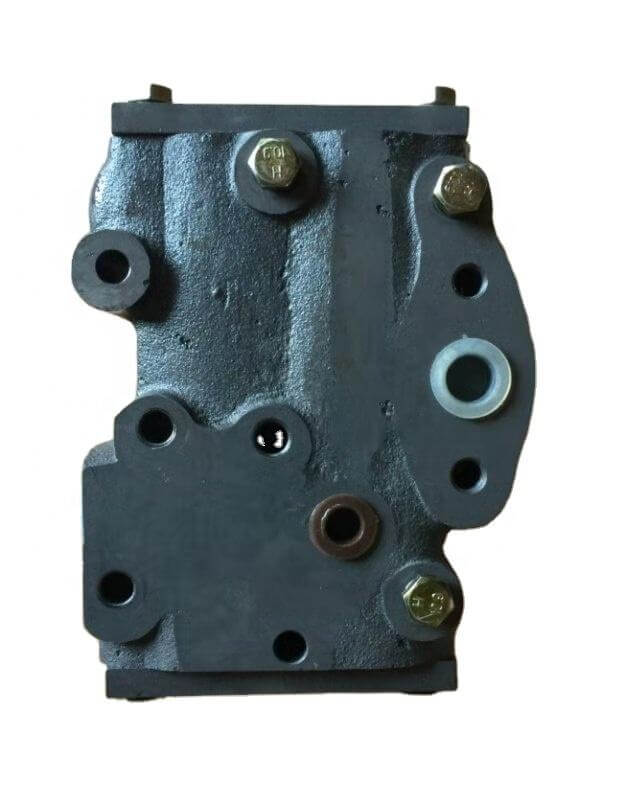
What Does the Main Hydraulic Pump Do?
The main hydraulic pump is driven directly off the excavator's engine via a drive coupling at the rear of the engine or through a power take-off (PTO) arrangement. As the engine runs, the pump converts that rotational mechanical energy into pressurised hydraulic fluid flow, which is then directed by the main control valve to whichever functions the operator is commanding. On modern excavators, the main pump is typically a variable-displacement axial piston pump, meaning it can modulate its output flow based on the load demand of the machine at any given moment, optimising both performance and fuel consumption across different working conditions.
Most excavators use a tandem pump arrangement, combining two main pump sections often alongside a pilot pump into a single compact assembly mounted directly at the engine. This tandem configuration allows the machine to supply independent hydraulic circuits simultaneously, enabling combined movements such as boom-up and swing at the same time without sacrificing pressure in either circuit.
Common Symptoms of Main Hydraulic Pump Failure
Identifying main pump degradation early prevents costly secondary damage to the rest of your hydraulic system. Look out for these warning signs:
-
Loss of digging force or breakout power — The most common early symptom; the pump can no longer maintain full system pressure under load.
-
Slow boom, arm, or bucket movement — Reduced flow from a worn pump results in sluggish attachment response even at full throttle.
-
All functions are affected simultaneously — Because the main pump supplies the entire system, degradation impacts every function at once, unlike a valve or cylinder fault, which typically affects one circuit.
-
Overheating hydraulic oil — A worn pump works harder to maintain pressure, generating excess heat across the entire circuit.
-
Whining or knocking noise from the pump bay — Internal wear or cavitation produces audible noise during operation.
-
Milky or contaminated hydraulic fluid — Water ingress or internal seal failure contaminates fluid, accelerating wear across the whole system.
If you are experiencing any combination of these symptoms, the main pump should be inspected and pressure-tested immediately before further operation causes damage to motors, cylinders, and valves downstream.
Main Hydraulic Pump Models We Supply
Imara Engineering supplies main hydraulic pump assemblies for a wide range of excavator models and production series. Our most commonly supplied models include:
-
Komatsu — PC200-7, PC200-8, PC210, PC300-7, PC300-8, PC360, PC400-7, PC400-8
-
Caterpillar (CAT) — 320C, 320D, 320D2, 323, 325, 330C, 330D, 336
-
Hitachi — ZX200-3, ZX210-3, ZX300-3, ZX330-3, ZX450-3, EX200, EX300
-
Volvo — EC210B, EC240B, EC290B, EC380, EC480
-
Doosan — DX225LC, DX300LC, DX380LC
-
Kobelco — SK200-8, SK300, SK350-8, SK480
-
Hyundai — R210LC, R290LC, R380LC
-
Case — CX210, CX300, CX350
Don't see your model listed? Contact our parts team with your machine serial number and OEM part number. We will source and confirm the correct main pump assembly for your specific unit.
OEM vs Aftermarket Main Hydraulic Pumps: Understanding the Difference
Choosing between a genuine OEM pump and an aftermarket replacement is one of the most important decisions when rebuilding your excavator's hydraulic system. Here is what you need to know:
-
Genuine OEM pumps are manufactured by the original equipment maker or their authorised supplier. They carry the brand warranty and are guaranteed to fit, but they come at a significant price premium that is often difficult to justify for older machines or high-turnover fleet operations.
-
OEM-quality aftermarket pumps, like those supplied by Imara Engineering, are manufactured by third-party precision engineering facilities to the same specifications, same displacement ratings, port dimensions, shaft tolerances, and pressure limits as the original part. The difference is in branding and price, not in performance or durability.
For fleet managers and operators running machines beyond the OEM warranty period, an OEM-quality aftermarket main pump delivers equivalent service life at a fraction of the genuine part cost, making it the practical, commercially sound choice for the majority of excavator owners.
Related Hydraulic Parts You May Need
A main pump replacement or rebuild often requires additional components from the wider hydraulic parts system. Consider sourcing these alongside your main pump:
- Pilot Pumps — Frequently replaced alongside the main pump in tandem assemblies
- Pump Seal Kits — For main pump rebuilds and overhauls
- Hydraulic Filters — Essential after any pump replacement to protect the new unit from contaminated fluid
- Main Control Valves — Inspect alongside the main pump when experiencing full-system pressure loss
- Hydraulic Hoses & Pipes — Check connecting hoses for wear when replacing the pump assembly