

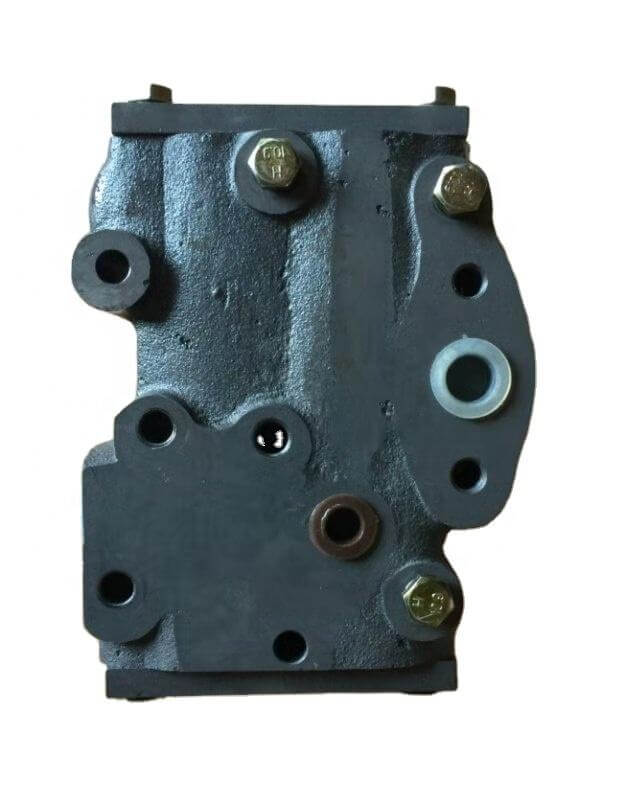
Every heavy equipment operator knows the cooling system depends on the radiator, the oil coolers, and the intercooler. Fewer recognise that none of those components can do their job without one critical component driving airflow across all of them simultaneously, the cooling fan.
Think of the excavator cooling fan as the lungs of the entire thermal management system. The radiator, hydraulic oil cooler, and intercooler are like the airways, well-designed and capable but completely dependent on the lungs to move air through them. When the lungs fail, it does not matter how good the airways are. Everything heats up at once.
Excavator cooling fan failure is uniquely damaging precisely because it affects the entire cooling system simultaneously, not just one circuit. A failed radiator raises engine temperature. A failed cooling fan raises engine temperature, hydraulic oil temperature, transmission oil temperature, and intake air temperature all at the same time, compressing the machine's thermal failure timeline significantly.
This guide covers how to identify a failing fan, what causes it, and how to replace it correctly before the damage spreads.
For OEM-quality cooling fans and fan motors for CAT, Komatsu, and Hitachi excavators, visit our fans and fan motors collection.
Why the Cooling Fan Is the Shared Dependency of the Entire System
Imagine a server room with five heat-generating computer racks and one air conditioning unit pushing cool air across all five. If the air conditioning unit fails, it does not matter that all five servers are individually well-built; every single one begins overheating within minutes because the shared cooling resource is gone.
An excavator's cooling stack works identically. The radiator, hydraulic oil cooler, transmission oil cooler, and intercooler all sit in a row, and the cooling fan drives airflow across every one of them in a single pass. When the fan motor fails or the fan blade loses efficiency, every heat-generating system on the machine loses its primary means of thermal rejection simultaneously.
This is why cooling fan failure is one of the fastest-onset overheating events in heavy equipment and why it is critical to identify it early rather than wait for a temperature gauge to confirm what has already become a serious problem.
Signs Your Excavator Cooling Fan Is Failing
1. Temperature Rising Across Multiple Circuits Simultaneously
A radiator fault or an oil cooler fault typically affects one circuit; engine temperature rises while hydraulic oil temperature remains normal, or vice versa. When both engine temperature and hydraulic oil temperature climb together, the shared component between them, the cooling fan, is the most logical starting point for investigation.
As the Society of Automotive Engineers (SAE) notes in its technical standards on heavy equipment thermal management: "Cooling fan performance degradation produces a distinctive multi-system thermal response that is diagnostically distinct from single-component cooler failures. The simultaneous nature of the temperature rise across independent circuits is the key diagnostic indicator."
2. Audible Change in Fan Operation
A healthy hydraulic fan drive produces a consistent, even airflow sound that rises and falls predictably with engine load and ambient temperature. Warning sounds to act on immediately include:
- A grinding or rattling sound from the fan housing indicates a damaged fan blade or bearing failure in the fan motor
- A high-pitched whine that was not previously present indicates excessive shaft speed or a failing hydraulic motor bearing
- Intermittent fan sound: the fan is cycling on and off when it should be running continuously
3. Visible Fan Blade Damage
Physically inspect the fan blade at every major service interval. A single bent, cracked, or missing blade does not just reduce airflow it creates an imbalance that generates vibration transmitted directly into the fan motor shaft bearings, accelerating motor failure.
4. Reduced Airflow at the Cooling Stack
Stand clear of the machine safely and hold your hand near the cooling stack outlet. A healthy fan produces strong, consistent airflow. Noticeably weak airflow with the fan visibly spinning indicates either blade damage reducing efficiency or a fan motor running below rated speed.
5. Hydraulic Fan Motor Leaking or Running Hot
On hydraulic fan drive systems, which are the dominant configuration on modern excavators, the fan motor itself can be diagnosed independently. Oil leaking from the fan motor housing, or a motor housing that is hot to the touch during normal operation, indicates internal motor wear or a failing shaft seal.
What Causes Excavator Cooling Fan Failure
1. Fan blade impact damage.
Construction and earthmoving environments throw debris, stones, gravel, and broken ground material that can reach the fan at speed. A single significant impact bends a blade and creates the imbalance cascade described above. On sites with high debris throw risk, inspect fan blades at every service.
2. Hydraulic fan motor internal wear.
On hydraulic fan drive systems, the motor's internal rotating group wears over thousands of operating hours in the same way any hydraulic motor does. Contaminated hydraulic oil, the most common cause of premature motor wear, carries particles that score the internal surfaces. Maintaining hydraulic oil and filter change intervals is the most effective protection for the fan motor.
3. Fan drive belt wear (belt-driven systems).
On older or smaller machines using a mechanical belt-driven fan rather than a hydraulic motor, belt wear and tension loss reduce fan speed without any visible component failure. A belt that looks intact but has lost its correct tension reduces airflow significantly, similar to a ceiling fan running at its lowest speed setting rather than maximum.
Hypothetical example: consider a Komatsu PC200-8 operating on a Western Australian civil project on a 38°C summer day. The hydraulic fan motor has 9,000 hours, and the hydraulic oil was last changed at 7,500 hours. The motor's internal surfaces have been exposed to slightly degraded oil for 1,500 hours. The motor is producing only 85% of its rated shaft speed. The fan is moving 15% less air across the cooling stack. In those ambient conditions, that 15% deficit pushes hydraulic oil temperature from 85°C to over 100°C within two operating hours, triggering a system derate and a machine shutdown at exactly the worst possible moment of the work cycle.
4. Thermostat or control valve faults (hydraulic systems).
On variable-speed hydraulic fan drives, a thermostatic control valve varies fan speed based on cooling demand. A stuck or failed control valve can lock the fan at low speed regardless of thermal load, producing the same symptom as a failing motor but requiring a different repair response.
Repair or Replace: The Decision Framework
Replace the fan blade when:
- Any blade shows cracking, bending, or missing material
- Vibration is present that was not there previously
- More than one blade shows impact marks
Replace the fan motor when:
- Oil is leaking from the motor housing
- The motor runs hot to the touch during normal operation
- Shaft play is detectable by hand at the fan mounting hub
- Fan speed is confirmed below rated despite correct hydraulic pressure supply
Replace the control valve when:
- Fan speed does not respond to thermal demand
- The motor tests correctly at rated pressure and flow
- The fan runs at a constant low speed regardless of the machine temperature
Replacement: What to Confirm Before You Order
Before ordering any fan system component, confirm these specifications:
- Machine serial number: fan motor flow rate and displacement vary within the same model series across production years
- Fan blade diameter and pitch: both must match the original; an incorrect pitch moves less air at the same RPM
- Motor displacement and port configuration: hydraulic fan motors are not universally interchangeable, even between similar-size machines
For the complete range of OEM-quality fan blades, hydraulic fan motors, and fan drive components for CAT, Komatsu, and Hitachi excavators, visit our fans and fan motors collection.
To understand the difference between hydraulic and electric fan drive systems and which one your machine uses, read our companion guide to excavator fan motor systems.
Conclusion
The excavator cooling fan is the one component whose failure immediately compromises every other element of the cooling system at once. Temperature rising across multiple circuits simultaneously, audible changes in fan operation, visible blade damage, and hydraulic fan motor leaks are the four signs that demand immediate investigation before the damage becomes an engine or hydraulic system repair rather than a fan motor replacement.
At Imara Engineering Supplies, we stock OEM-quality cooling fan blades, hydraulic fan motors, and fan drive components for CAT, Komatsu, and Hitachi excavators, confirmed against machine serial numbers before every order and shipped to Australia and worldwide.
Contact our team with your machine serial number and symptoms, or visit our fans and fan motors collection to find the correct replacement for your machine.


