

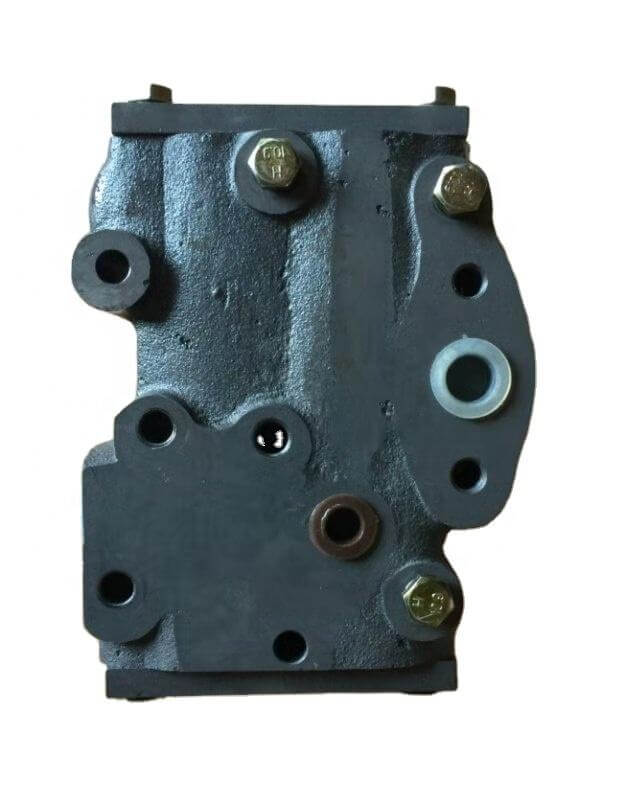
Ordering a replacement CAT transmission without confirming the exact model first is one of the most avoidable and most costly mistakes in heavy equipment maintenance.
The CX31 and CX38 are not interchangeable. The D8T transmission is not the same as the D8R. The 140G and 140H motor grader transmissions differ in ways that are not obvious until the wrong unit arrives on site.
Caterpillar has produced distinct transmission families across its dozer, grader, truck, and loader ranges, and the identification details that confirm the correct unit are on the machine, on the identification plate, and in the arrangement number stamped on the transmission housing itself.
This guide walks through every major CAT transmission family so you can confirm your unit before any order is placed.
For the full range of CAT transmission and drivetrain components, visit our heavy equipment transmission and drivetrain section.
Why Getting Identification Right Matters Before You Order
A CAT transmission replacement is a significant investment. The consequence of ordering the incorrect unit is not just a return and reorder delay, but it is the cost of crane time, workshop hours, and machine downtime spent fitting a unit that cannot be installed.
The arrangement number on the transmission housing is the definitive identification reference. It is not the same as the machine model number. Two machines of the same model designation can carry different transmission specifications depending on build date, regional configuration, and optional equipment.
Always record the arrangement number from the transmission housing before sourcing a replacement and provide it to your supplier alongside the machine serial number.
For the full range of CAT gearbox options across dozer, grader, truck, and loader applications, visit our CAT transmissions and gearbox assemblies page.
How to Read Your CAT Machine Identification Plate
The machine identification plate is typically located on the right-hand side of the cab, visible from the operator's seat on most models. It carries the machine serial number, the Product Identification Number (PIN), and the arrangement number for major assemblies, including the transmission.
The transmission arrangement number is the most important reference for parts identification. It defines the exact specification of the unit fitted, including the torque converter configuration, the gear ratios, and the control system type.
If the identification plate is missing or illegible, the transmission housing itself carries a stamped or cast arrangement number,r typically on the left-hand face of the housing on powershift units and on the top rear of the case on torque-converter transmissions.
CAT Powershift Transmission Models: CX31, CX38, and TA22
CAT CX31 Transmission
The CX31 is a six-speed powershift transmission used primarily across the CAT D6, 966H wheel loader, and several medium-duty motor grader applications. It is an electronically controlled unit with integrated clutch packs and a modular valve body, confirming that the control system version is essential because the CX31 ran across multiple electronic specification variants during its production life.
CX31 identification: the arrangement number prefix varies by application,n dozer-spec and wheel loader-spec. CX31 units share the model designation but differ in gear ratios and output flange configuration.
CAT CX38 Transmission
The CX38 is a larger powershift unit used across the D7, D8, and some 980-series wheel loader applications. Like the CX31, it is electronically controlled, but the CX38's torque converter and clutch pack specifications are distinct from the CX3,1 and the two share no serviceable internal components.
Confirming CX31 versus CX38 from the housing: the CX38 housing carries a larger overall dimension at the torque converter interface and a distinct port arrangement on the hydraulic control circuit face. For replacement CX31 and CX38 units, visit our CAT powershift transmission assemblies page.
When replacing a CX31 or CX38, always inspect the torque converter simultaneously with the torque converter and powershift transmission wear together, and a failed transmission frequently indicates torque converter degradation. For compatible units, visit our torque converters for CAT powershift applications page.
CAT TA22 Transmission
The TA22 is a power-shift transmission used in CAT wheel tractor-scrapers and some heavy-duty motor grader applications. It is less commonly encountered than the CX series but carries significant search volume from operators of older scraper fleets. Identification is from the housing arrangement number. The TA22 is physically distinct from the CX series and is not interchangeable with either CX31 or CX38 components.
CAT Dozer Transmission Identification
D6 and D6H Transmission
The D6 series has carried several transmission variants across its production history. The D6H uses a powershift unit specific to that model; it is not directly interchangeable with the D6T transmission fitted to current production machines. Confirm the arrangement number from the housing rather than assuming compatibility from the model series designation.
D8, D8T and D8R Transmission
The D8R and D8T are distinct transmission specifications despite sharing the D8 model designation. The D8R was produced through the 1990s and 2000s; the D8T is in current production. The transmission arrangement numbers differ significantly; the internal gear ratios, clutch pack specifications, and the electronic control architecture are different between variants.
For D8T and D8R replacement transmission assemblies confirmed against arrangement numbers, visit our CAT dozer transmission assemblies page.
D9 and D10 Transmission
The D9 and D10 carry the highest-torque CAT dozer transmissions in the range. The D9T uses a powershift unit with a large-diameter torque converter optimised for continuous high-load applications. The D10 uses a distinct and heavier specification unit; the two are not interchangeable. Both are identified exclusively by arrangement number.
CAT Grader, Truck and Loader Transmission Identification
140G and 140H motor graders use different transmission specifications despite the similar designation. The 140H introduced electronic transmission control, which the 140G does not use. Confirming which generation of the 140-series is present is the first identification step.
725, 745, and 777D haul trucks use transmissions specific to their payload class. The 725 and 745 articulated truck transmissions share some architecture,e but are not interchangeable. The 777D uses a dedicated unit for its payload class.
963 and 966H track and wheel loaders use powershift transmissions specific to each model. The 963 track loader uses a hydrostatic drive system on current builds rather than a conventional powershift. Confirming whether the machine is powershift or hydrostatic is the first identification step before sourcing.
For the full range of CAT automatic transmission options across loader and grader applications, visit our CAT automatic transmissions page.
3208 CAT Transmission: Legacy Platform
The 3208 engine was used across older CAT equipment, where the transmission was frequently the same unit across multiple model applications. Significant numbers of 3208-powered machines remain in productive service. OEM transmission availability for this era is limited; quality aftermarket and remanufactured units are the primary sourcing route. Confirm the arrangement number from the housing and provide it alongside the engine serial number when sourcing.
New, Remanufactured, or Rebuilt: Which to Choose Once You Have Identified Your Unit
New OEM units are appropriate for machines under warranty and current production models where the transmission has failed prematurely.
Remanufactured units are the most common and cost-effective choice for out-of-warranty machines rebuilt to OEM specification, test-certified, and typically carrying a six- to twelve-month warranty. For most CAT transmission replacement scenarios, a remanufactured unit from a reputable supplier is the right decision.
Rebuilt units sourced from specialist rebuilders are appropriate where a remanufactured exchange unit is not available, particularly for older or less common CAT transmission models.
Conclusion
CAT transmission identification is a precise process; the arrangement number, not the model name, is the reference that confirms the correct unit. Every CAT transmission family has variants within it that are not interchangeable. Taking the time to confirm the arrangement number before ordering is what prevents a costly misfit.
At Imara Engineering Supplies, we confirm CAT transmission specifications against arrangement numbers and machine serial numbers before every order. Our range covers CX31, CX38, D8T, D9, D10, and legacy platform units across new, remanufactured, and rebuilt options.
Contact our team with your arrangement number and machine serial number, or visit our CAT transmission assemblies and drivetrain components page to start your search.


