

Think of your machine like a patient under the care of two completely different medical specialists. A cardiologist manages the heart and bloodstream, keeping the core system that powers everything else running cleanly. An orthopaedic surgeon manages the joints and limbs, keeping movement smooth, controlled, and free of damage under load.
The engine oil cooler is the cardiologist of your machine: it protects the engine's inner workings bearings, crankshaft, pistons the core system that powers everything else. The hydraulic oil cooler is the orthopaedic surgeon: it protects the boom, bucket, swing, and travel functions the parts of the machine that actually move and do the work. Both are essential. Neither can substitute for the other, and a specialist trained for one system won't do the other's job properly.
What the Engine Oil Cooler Does
The engine oil cooler manages the oil that lubricates the engine's internal moving parts. As the engine runs, oil absorbs heat from friction and combustion byproducts, and the cooler brings it back down to a safe working temperature before it recirculates. If this oil runs too hot for too long, bearing wear accelerates, oil breaks down faster, and in severe cases, engine damage follows.
What the Hydraulic Oil Cooler Does
The hydraulic oil cooler manages the fluid that powers every hydraulic function on the machine boom lift, bucket curl, swing, and travel. Hydraulic systems run at far higher pressures than engine lubrication systems, and the fluid works harder under sustained load, particularly during repetitive cycles like continuous digging or lifting. Overheated hydraulic oil thins out, hydraulic response becomes noticeably softer and slower, and internal pump and valve wear accelerates.
Key Differences at a Glance
- What they protect: Engine oil coolers protect the engine's internals. Hydraulic oil coolers protect the machine's moving hydraulic functions.
- Operating pressure: Hydraulic systems typically run at significantly higher pressures than engine lubrication systems, which affects the design and rating of the cooler itself.
- Failure symptoms: Engine oil cooler faults tend to show up as an oil pressure warning or engine temperature concern. Hydraulic oil cooler faults tend to show up as sluggish, delayed, or weaker hydraulic movements, often worsening as the shift goes on.
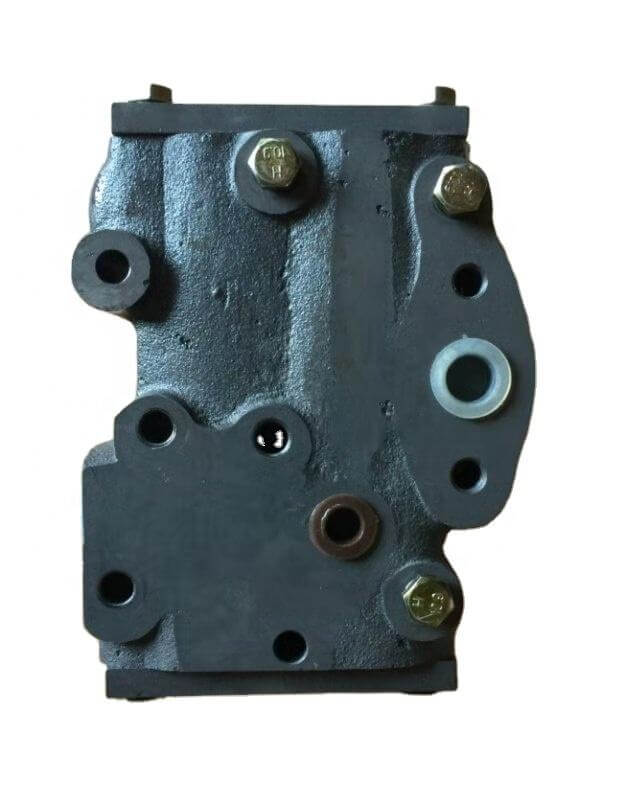
- Fittings and fluid type: The two use different connectors, seal ratings, and are built for different fluid specifications, which is exactly why they are not physically or functionally interchangeable, even when a listing photo makes them look alike.
Borrowed Authority: What Lubricant Science Says About Oil Under Heat
Oil viscosity grades, standardised by bodies like SAE (the Society of Automotive Engineers), exist because oil thins predictably as it heats up, and staying inside a specific viscosity range is what keeps moving parts properly lubricated. This applies to both engine oil and hydraulic oil, but because hydraulic systems operate at much higher pressure and rely on precise fluid response to control movement, hydraulic oil running outside its safe range tends to show up in machine performance faster and more noticeably than engine oil drifting slightly out of range. That's a large part of why the two systems are engineered, monitored, and cooled separately rather than sharing one cooler.
A Hypothetical Example: The Mix-Up That Cost a Week
Picture a workshop ordering a replacement cooler for an excavator after a technician flags "the oil cooler" as faulty, without specifying which one. Two units on the machine look near-identical from the outside, and the wrong one an engine oil cooler gets ordered based on a part number pulled from a quick search rather than a serial-number cross-check.
When it arrives, the fittings don't match the hydraulic lines that actually needed replacing, and the real fault sluggish boom response caused by an overheating hydraulic oil cooler is still sitting there unresolved. A full freight cycle later, the correct part finally arrives, and the machine is back to full performance the same afternoon it's fitted.
The lesson: "the oil cooler" isn't specific enough on a machine with two of them. Naming which system is affected engine lubrication or hydraulic function is the difference between a same-day fix and a week-long delay.
How to Diagnose Which One Has Failed
-
Engine oil pressure warning, coolant temperature normal: Suspect the engine oil cooler. See our Engine Oil Coolers collection
-
Sluggish or delayed hydraulic movement, no engine warnings: Suspect the hydraulic oil cooler. Check our Hydraulic Oil Coolers collection
-
Both systems showing symptoms at once: Check for a shared cause, like a blocked fan or debris across the whole cooling pack, before assuming both individual coolers have failed
-
Not sure which cooler is which on your specific machine? Contact our team with your model and serial number for a fitment check before ordering
If you're not yet sure whether your issue is an oil cooler at all rather than the radiator, start with our guide, Oil Cooler vs Radiator: What's the Difference and Why It Matters, which covers that broader distinction first.
If you're running Komatsu equipment specifically, our guide, Komatsu Oil Cooler Guide: PC200, PC300 & D65 Models, covers model-specific part numbers for both cooler types.


