

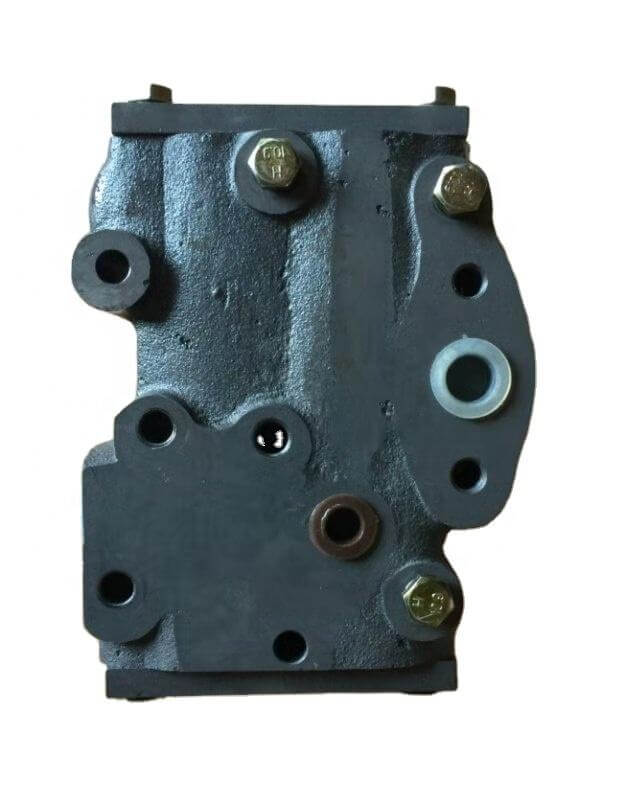
Transmission oil cooler failure rarely happens without warning. It builds gradually: a harsher shift here, a slightly hotter fluid reading there, long before a machine actually loses drive. The problem is that those early signs are easy to write off as normal wear, right up until the day the transmission itself is damaged, and the repair bill is ten times bigger than a cooler replacement would have been.
This guide covers how to recognise transmission oil cooler failure early, what typically causes it, and how to replace one before it takes the transmission down with it.
Think about how the human body handles infection. A mild fever isn't the illness itself; it's the body's early warning system, flagging that something is wrong before the underlying problem becomes serious. Ignore a low fever for long enough, and what could have been managed early turns into something far more serious.
A struggling transmission oil cooler works the same way. Slightly elevated fluid temperature, a bit more shift harshness than usual, a touch of hesitation under load none of these are catastrophic on their own. But they're the machine's early warning system, and ignoring them is how a manageable, inexpensive cooler replacement turns into an expensive transmission rebuild.
Common Signs of Transmission Oil Cooler Failure
- Harsh or delayed gear shifts: overheated transmission fluid loses its ability to engage clutches and bands smoothly
- Elevated transmission temperature readings: if your machine has a gauge or monitoring system, a climbing baseline is one of the earliest, most reliable signals
- Slipping under load: the transmission struggles to hold power delivery consistently, particularly on inclines or during heavy digging cycles
- Burnt smell from transmission fluid: a strong sign fluid has been running well above its safe operating temperature
- Discoloured or gritty transmission fluid: dark, burnt-smelling, or metallic-flecked fluid indicates prolonged overheating and internal wear
- Reduced fluid level with no visible external leak: can point to internal cooler seepage into the coolant circuit, or vice versa, depending on cooler design
What Actually Causes Transmission Oil Cooler Failure
- Debris and airflow blockage: dirt, mud, and vegetation building up across the fin pack restrict airflow and reduce cooling capacity over time
- Internal core corrosion or scaling: mineral buildup inside the core narrows fluid passages and reduces heat transfer efficiency
- Cracked or fatigued core seams: vibration and thermal cycling over years of service can crack solder joints or brazed seams, leading to fluid loss
- Contaminated transmission fluid: old, degraded fluid loses its own thermal properties, putting more strain on the cooler to compensate
- Undersized cooler for the application: a cooler that was marginal for the machine's duty cycle from day one will show problems earlier and more often, especially under sustained heavy loads
What Automotive and Heavy Equipment Engineers Say About Heat and Fluid Life
It's a widely cited rule of thumb in automotive and heavy equipment engineering circles that transmission fluid life drops sharply for every sustained increase in operating temperature above the transmission's designed range the kind of relationship documented across fleet maintenance and transmission manufacturer service literature. The takeaway is consistent across that literature: transmission fluid, and the components it protects, are far more sensitive to sustained heat than most operators assume, which is exactly why a struggling oil cooler does disproportionate damage if it's left unaddressed.
Step-by-Step: Replacing a Transmission Oil Cooler
- Confirm the correct part number against your machine's model and serial number
- Relieve system pressure and drain transmission fluid into proper containment
- Disconnect fluid lines and fittings, inspecting seals and O-rings for hardening or cracking
- Remove any shrouding or guarding needed to access the cooler
- Unbolt and remove the old cooler, checking mounting brackets for corrosion or fatigue cracking
- Fit the new cooler, reconnect lines with fresh seals, and torque fittings to spec
- Refill with the correct transmission fluid specification and bleed the system as required
- Run the machine under load and monitor shift quality and fluid temperature through a full duty cycle before signing off
Worn caps and hoses are often replaced at the same time as a cooler, since they're already exposed during the job. See our Caps & Hoses collection for compatible options.
Transmission oil coolers share a lot in common with hydraulic and engine oil coolers, since all three exist to protect fluid from overheating rather than cooling the engine block itself. Our guide, Oil Cooler vs Radiator:
If you run Komatsu equipment and it's the hydraulic side giving you trouble rather than the transmission, our Komatsu Hydraulic Oil Cooler Guide: PC Series Compatibility & Replacement covers model-specific part numbers.


