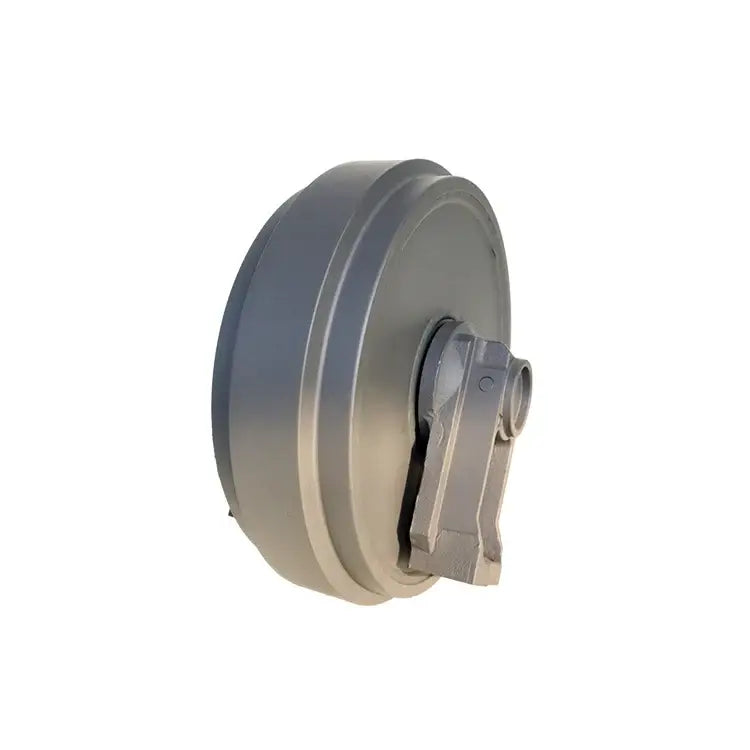
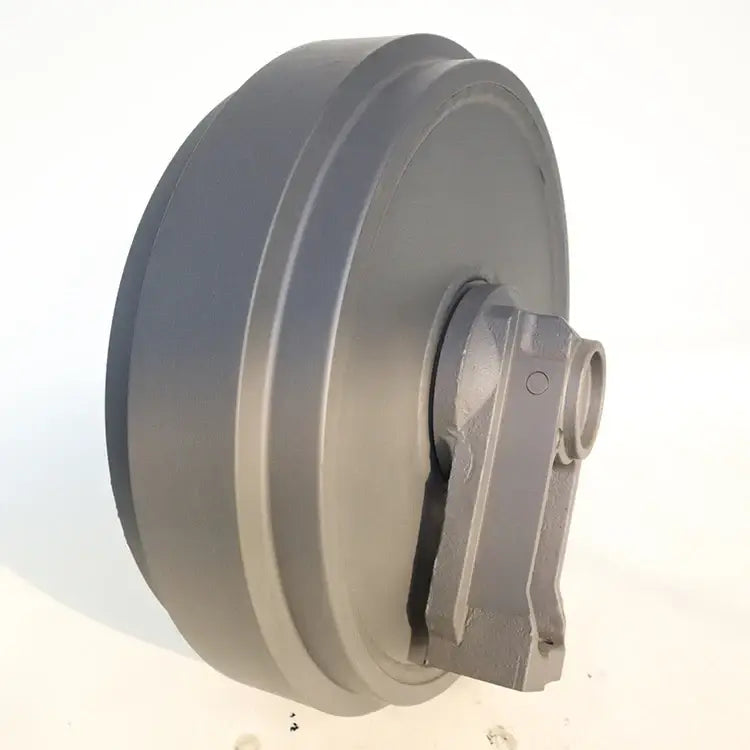
What Idler Wheels Do And Why Their Condition Defines Your Track Running Geometry
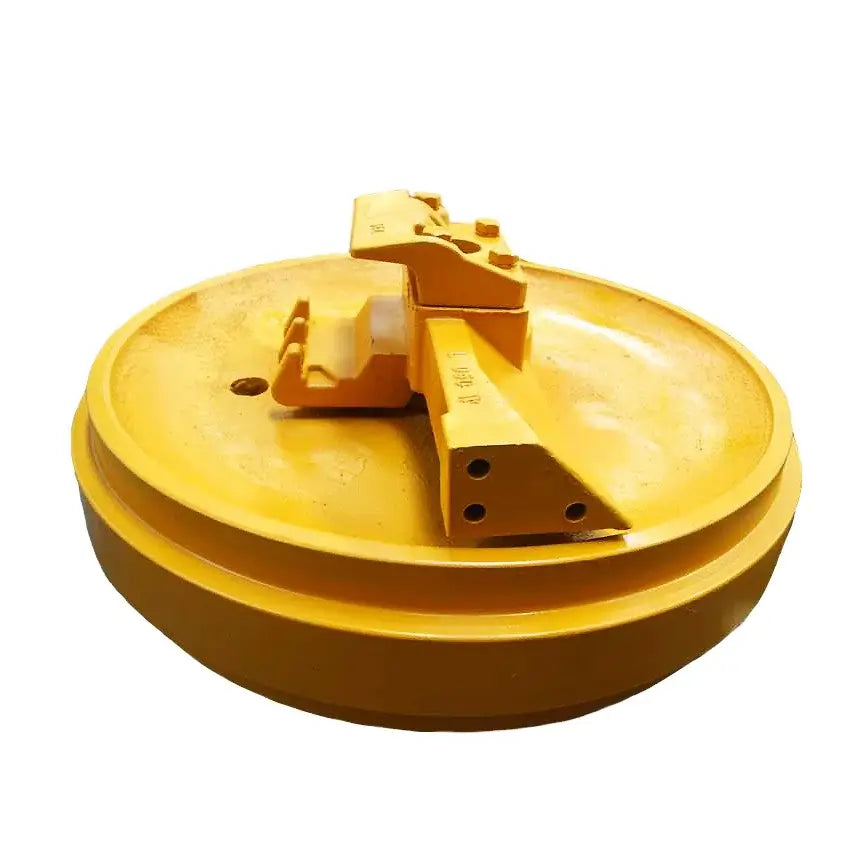
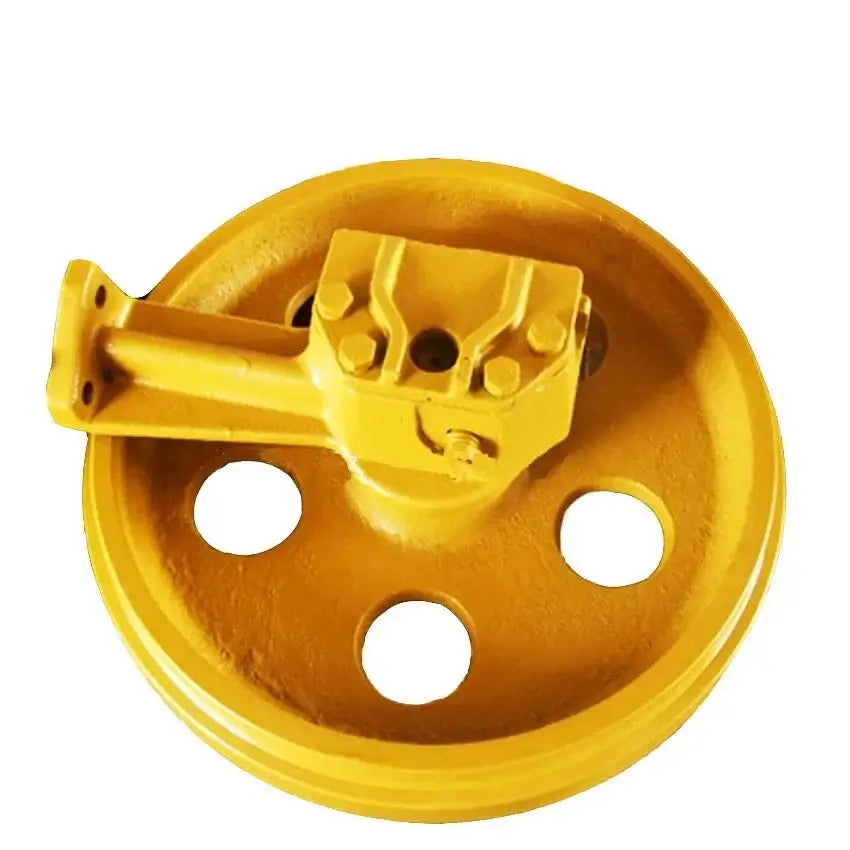
The idler wheel, also called the front idler, digger idler wheel, or idler track is mounted at the front of the track frame on each side of the machine. It sits at the opposite end of the undercarriage to the drive sprocket, forming the front anchor point of the track loop. The track adjuster, mounted behind it, pushes the idler forward under hydraulic or grease pressure to maintain the correct track tension across the full undercarriage system.
The idler wheel performs three functions simultaneously. It guides the track onto its correct running path as it passes from the lower run back to the upper return run. It maintains the track tension set by the adjuster by resisting the backward force the track exerts on the idler under operating loads. And it absorbs the impact loads generated when the track engages the idler at the front of its travel particularly on machines operating on uneven ground where the track tension fluctuates with every terrain change.
The idler wheel is an oil-lubricated unit sealed by floating metal face seals, like the track roller and carrier roller. The shaft runs in bronze bushings immersed in an internal oil charge. Face seal failure depletes the oil charge, the bushings run dry, and the idler shaft wear begins. But the damage from an idler failure extends beyond the idler itself a worn idler flange allows the track to run off-centre across every track roller and carrier roller in the undercarriage system, producing the asymmetric wear pattern that tells an experienced engineer the idler was the original source of a much wider undercarriage problem.
Warning Signs, When Your Idler Wheel Needs Replacing
Idler wheel wear communicates itself through a combination of visual inspection and machine behaviour. These are the signals across your excavator or bulldozer undercarriage parts that demand immediate attention:
-
Track running consistently off-centre across the roller flanges — the most telling idler wear symptom and the one most frequently attributed to everything except the idler. Uneven lug wear across the rubber track width or asymmetric track link wear are almost always an idler alignment or flange wear problem before they are a track quality problem.
-
Oil weeping from the idler wheel area at the front of the track frame — face seal failure. The internal oil charge is escaping and the idler shaft and bushings are running progressively drier with every operating hour from this point.
-
Visible flange wear — the raised guide flanges on the idler tread surface have worn flat or thin — the idler is no longer guiding the track on its correct running path. The track is allowed to drift laterally across the roller shells and carrier rollers with every revolution.
-
Track derailing on turns or uneven terrain — advanced idler flange wear combined with incorrect tension. The track has lost its guided path and the idler is no longer able to recover it under dynamic operating conditions.
-
Grinding or knocking noise from the front idler area during travel — bearing failure or shaft wear inside the idler assembly. The idler is no longer rotating smoothly on its shaft, the noise will worsen progressively with every operating hour.
-
Track adjuster unable to maintain correct tension — the idler is carrying a worn shaft bore or damaged mounting that prevents the adjuster from holding the idler in its correct position under operating load. This symptom presents as a track that requires re-tensioning more frequently than normal.
Idler Wheel Specifications, Getting the Right Front Idler for Your Machine
The correct idler wheel specification for your machine is defined by five parameters — and a mismatch on any one produces either an idler that does not fit the track frame or one that sets the track running at an incorrect geometry from the first operating hour:
-
Tread diameter — the outer diameter of the idler tread surface must match the track frame mounting geometry. The correct tread diameter determines the height at which the idler guides the track and the tension geometry the adjuster is designed around.
-
Tread width — must accommodate the full track width without the track overhanging the idler tread surface. On rubber track machines the tread width must also accommodate the rubber track's guide profile without allowing lateral movement.
-
Flange profile and height — the guide flanges on each side of the idler tread must match the track chain guide groove or rubber track inner guide profile exactly. Incorrect flange height allows track drift. Incorrect flange profile creates abnormal contact stress on the track inner guide with every revolution.
-
Shaft diameter and bore dimensions — must match the idler mounting bracket on your track frame. The shaft bore dimensions also determine the bushing clearance and oil charge volume — both critical to idler service life.
-
Face seal grade — confirmed for each machine family and operating environment. A front idler excavator operating on a construction site in abrasive sandy conditions requires a different seal specification from a mini excavator idler in a wet landscaping application.
At Imara Engineering, every idler wheel order is confirmed against all five parameters using your machine serial number. Provide your machine make, model, and serial number and we confirm the exact front idler specification before your order is placed.
Idler Wheels by Machine Brand
Our idler wheel inventory covers the most widely operated excavator and bulldozer brands all cross-referenced against OEM part numbers, all forming part of our broader undercarriage parts range.
Caterpillar Idler Wheels
Covering the Cat mini excavator range including the 301, 302, 303, 305, and 308 series and the Cat bulldozer range from D4 through D9. Cat idler wheels are manufactured to the precise undercarriage geometry of each Cat model tread diameter, flange profile, and shaft specification confirmed against Cat OEM part numbers. The Cat 303 and 305 front idler specifications are priority stock items.
Komatsu Idler Wheels
Compatible with the PC series mini and compact excavator range from PC15 through PC78 and larger models. The idler Komatsu PC200 is one of our most consistently demanded specifications. The PC200 is one of the most widely operated mid-size excavators globally and its front idler replacement frequency reflects that operating intensity. Komatsu D series bulldozer idler wheels are stocked across the D39 through D85 range. All Komatsu idler specifications are confirmed against Komatsu OEM part numbers using machine serial numbers.
Hitachi Idler Wheels
Stocked for the Hitachi ZX series including ZX17, ZX26, ZX35, ZX50, ZX75, and the ZX200. Hitachi idler wheel assemblies are confirmed against Hitachi OEM part numbers for tread diameter, flange profile, and shaft specification across the ZX range. Always specify the ZX model designation when ordering Hitachi undercarriage parts idler Hitachi ZX200, not PC200. The ZX200 carries distinct idler specifications from other machines in the same weight class.
Other Brands
We also stock front idlers for Kubota, Bobcat, Yanmar, JCB, Takeuchi, Doosan, and Volvo excavators, as well as skid steer idlers for compact track loader applications. Contact the Imara Engineering team with your machine make, model, and serial number and we will confirm availability.
OEM Quality What Every Idler Wheel Is Built To
Every idler wheel in our undercarriage parts range is held to four quality standards each addressing a specific failure mode that under-specification idlers consistently exhibit:
-
Tread and flange hardness matched to OEM specification — the tread surface must resist the continuous abrasive contact of the track chain or rubber track inner guide without wearing to the point where the flange can no longer guide the track. Tread hardness is confirmed against the OEM specification for each machine weight class.
-
Face seal grade confirmed for operating environment — the face seal specification is critical on an idler wheel because the idler carries higher impact loads than a track roller, placing greater stress on the seal faces with every terrain change. Seal grade is confirmed for each machine family and application.
-
Internal oil volume and lubricant grade matched to operating conditions — correct oil charge volume and viscosity ensures adequate bushing lubrication across the full service interval, including periods of minor seal weeping that the oil reserve must absorb before becoming critical.
-
Shaft bore dimensions and bushing clearance confirmed against OEM specification — the shaft bore and bushing clearance determine the idler's ability to maintain correct track alignment under the dynamic loads of machine travel. An oversized bore allows the idler to rock on its shaft producing the track alignment instability that presents as a chronic tensioning problem.
OEM idler wheels carry a brand premium above equivalent quality aftermarket specification. At Imara Engineering, the specification standard, seal grade confirmation, and fitment guarantee are the same. The premium is not.
Idler Wheels in the Context of the Full Undercarriage System
The idler wheel sits at the intersection of three undercarriage system relationships and its condition affects all three simultaneously:
-
Track tension system — the idler and track adjuster work as a pair. A worn idler shaft bore or damaged mounting prevents the adjuster from holding the idler in its correct position under operating load, causing the tension to dissipate faster than normal. Replace the idler and inspect the track adjuster condition simultaneously.
-
Track running geometry — every track roller and carrier roller in the system runs the track that the idler has guided onto its path. A worn idler flange that allows the track to drift laterally produces off-centre contact on every roller in the undercarriage system simultaneously. The idler is the first component to inspect when asymmetric roller wear is diagnosed.
-
Sprocket engagement — the track that leaves the idler travels the full length of the lower run before engaging the drive sprocket. A track running off-centre from the idler engages the sprocket teeth asymmetrically accelerating sprocket tooth wear on one side and producing the irregular chain wear that shortens track chain service life.
Industries We Supply Idler Wheels To
-
Construction & Civil Engineering — front idler excavator specifications for machines on active construction programmes. Idler flange wear that allows the track to run off-centre produces accelerated rubber track wear that turns an idler replacement into a track and idler replacement if not caught early.
-
Mining & Quarrying — dozer idler wheel specifications for machines operating in the most abrasive conditions in the tracked machine category. Face seal specification for abrasive dust environments and tread hardness for high-load continuous running define the quality requirement for mining dozer idler wheels.
-
Agriculture & Land Management — compact excavator and bulldozer idler wheels for machines operating in wet, muddy conditions where face seal specification for high-moisture environments and shaft corrosion resistance are the critical parameters.
-
Landscaping & Garden Construction — mini excavator idlers for U series, KX series, and E series machines. Idler condition on a landscaping mini excavator directly affects rubber track running geometry and surface protection performance on finished ground.
-
Pipeline & Utility Trenching — front idlers for excavators working on stony easement corridors where impact loads on the idler tread from rock and debris contact are a regular maintenance consideration.
-
Plant Hire & Rental Fleets — idler wheel assemblies across mixed-brand hire fleets. Imara Engineering supplies hire operators with trade pricing and serial number verified specifications as standard on every idler order.