What Your Engine Air Filter Is Dealing With on Every Working Shift
Combustion engineers design diesel engines around clean, consistent airflow. The compression ratios, injection timing, and turbocharger specifications that produce rated power output are all calibrated for air entering the engine within a controlled range of pressure, temperature, and cleanliness. The moment your engine air filter stops delivering that, the engine stops performing to specification and starts accumulating damage.
On active construction and mining sites across Nigeria, the air entering your engine's intake is anything but clean. Harmattan conditions, open-cut earthworks, demolition operations, and stone-crushing sites generate airborne particle concentrations that the OEM service manual does not list as a standard operating assumption. The engine air filter on those sites is working harder than the service schedule was written for, and the consequences of underestimating that are real and progressive.
Primary and Secondary Air Filters: Two Stages, Two Distinct Functions
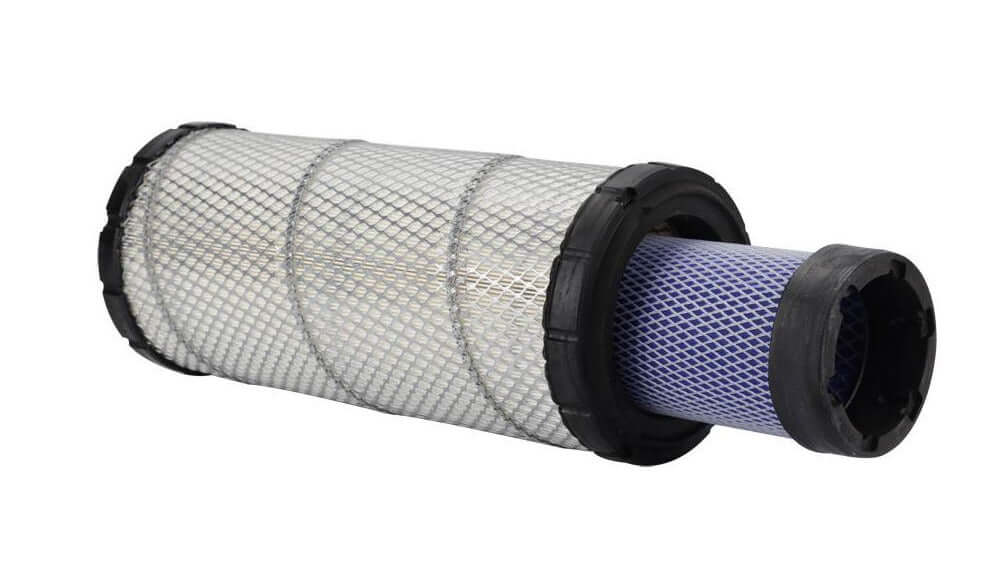
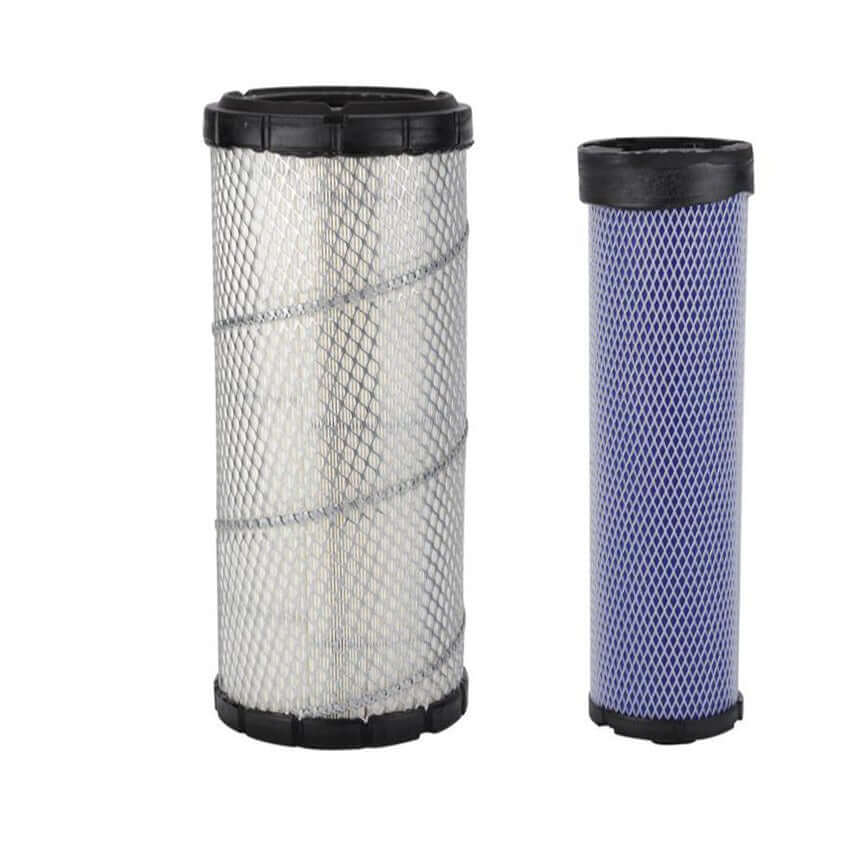
The engine air filtration system on most heavy excavators and construction machinery operates as a two-stage arrangement. Understanding what each stage does and why both matter clarifies why replacing only one element while neglecting the other undermines the protection the system was designed to provide.
Primary Air Filter Heavy Equipment: First-Stage Filtration and the Bulk Contamination Load
The primary air filter heavy equipment element handles the majority of the contamination load entering the air intake. It captures coarse and medium-range particles, the bulk of the silica, mineral dust, and carbonaceous material your intake ingests over a working shift, and in doing so, it protects both the intake passage and the secondary element downstream.
On machines operating in high-dust environments, the primary element is the component that saturates first and requires the most frequent attention. A clogged primary element does not just restrict airflow; it increases the differential pressure across the entire intake system, reducing turbocharger efficiency and progressively starving the combustion chamber of the air volume the injection system was calibrated to work with.
The CAT radial seal air filter design is the primary filter configuration across most modern CAT excavator and heavy machinery platforms. The radial seal arrangement provides a compression seal at the element end rather than a flat face gasket, eliminating the most common bypass leak path found in older axial seal configurations. Imara Engineering stocks CAT radial seal air filter elements across applicable machine series, confirmed by OEM part number before dispatch.
Secondary Air Filter Heavy Equipment: The Safety Element That Should Never Be Ignored
The secondary air filter heavy equipment element, also referred to as the safety element, sits inside the primary element housing, downstream of the primary filter. Its function is not routine filtration. It is catastrophic failure protection.
Under normal operating conditions, the secondary element sees very little contamination load. Its role is to protect the engine if the primary element fails, is incorrectly seated, or is removed during a service interval without the engine being secured against operation. In that scenario, the secondary element is the last barrier between an unfiltered intake flow and your combustion chambers.
The secondary element should be replaced on a schedule, not only when it appears visually contaminated. An element that has aged beyond its rated service life has degraded structurally, and a structurally compromised secondary element provides no protection at the moment it is most needed.
Imara Engineering stocks secondary air filter heavy equipment elements for major CAT, Komatsu, and compatible machine platforms, confirmed against OEM part numbers alongside the primary element for consolidated service ordering.
CAT Air Filters: Engine Series and Machine Platform Cross-Reference
CAT air filter specifications vary considerably across the engine and machine range. The caterpillar air filter for a C7-powered machine is not interchangeable with a C15 configuration intake housing dimensions, element geometry, and seal type all differ by engine series. Imara Engineering carries cross-referenced CAT air filter coverage across the following:
CAT C-Series Engine Air Filters:
- CAT C7 air filter — primary and secondary elements, cross-referenced by machine serial range
- CAT C15 air filter — the highest-demand air filter in the CAT range, stocked in depth across standard and ACERT configurations
- Additional C-series coverage across C9, C12, and C13 platforms on enquiry with machine model confirmation
CAT 3000-Series Engine Air Filters:
- CAT 3126 air filter and Caterpillar 3126 air filter — stocked across applicable machine platforms
- CAT 3208 air filter and Caterpillar 3208 air filter — including legacy machine cross-references for older equipment still operating in the region
- CAT 3406 air filter — one of the most consistently requested engine air filter references across the Nigerian heavy equipment fleet
CAT 336 Air Filter:
The CAT 336 is among the most widely deployed full-size excavators across Nigerian construction and infrastructure projects. The CAT 336 air filter is stocked at Imara Engineering in both primary and secondary element configurations, cross-referenced for the specific intake housing arrangement used across CAT 336 machine generations.
CAT Air Cleaner Assemblies:
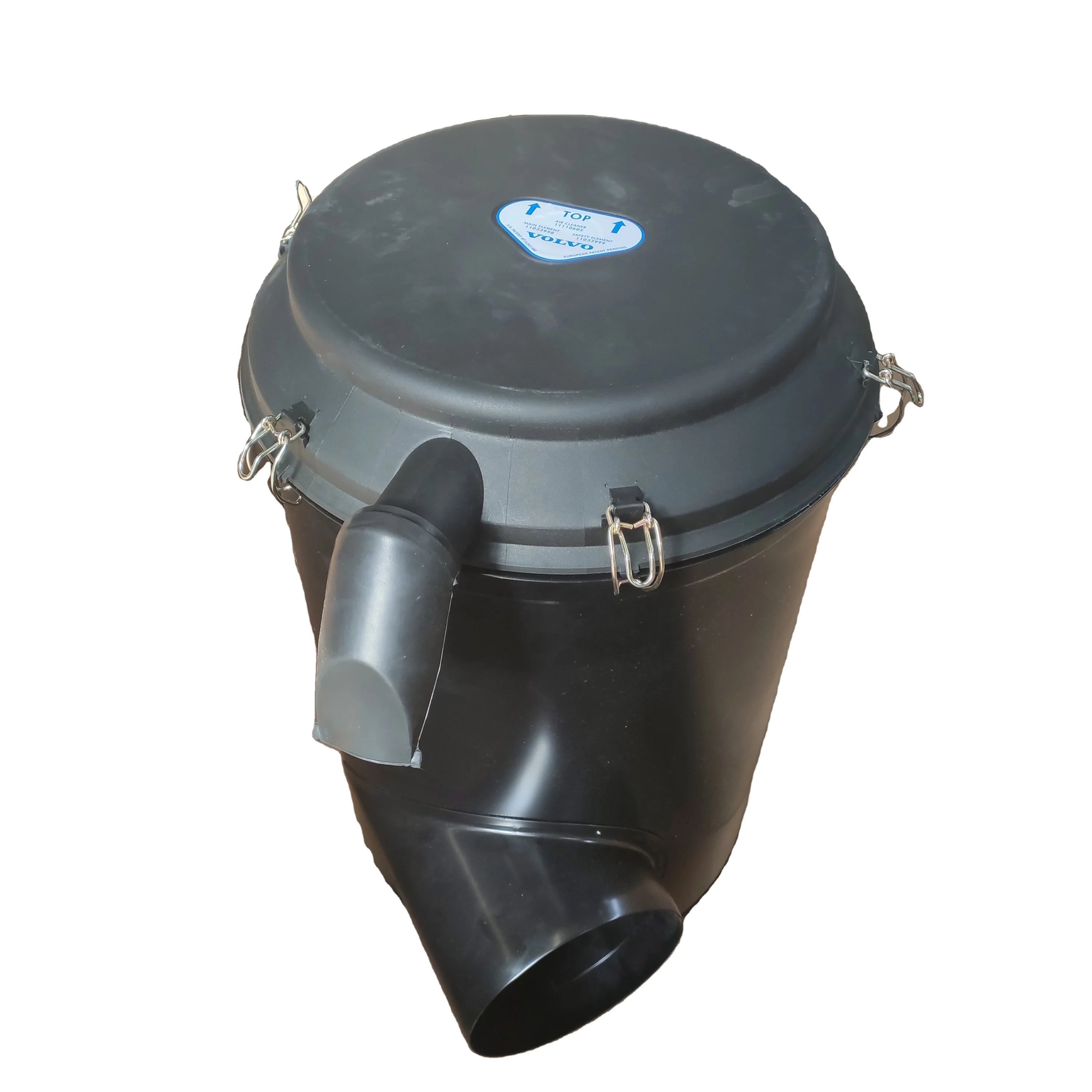
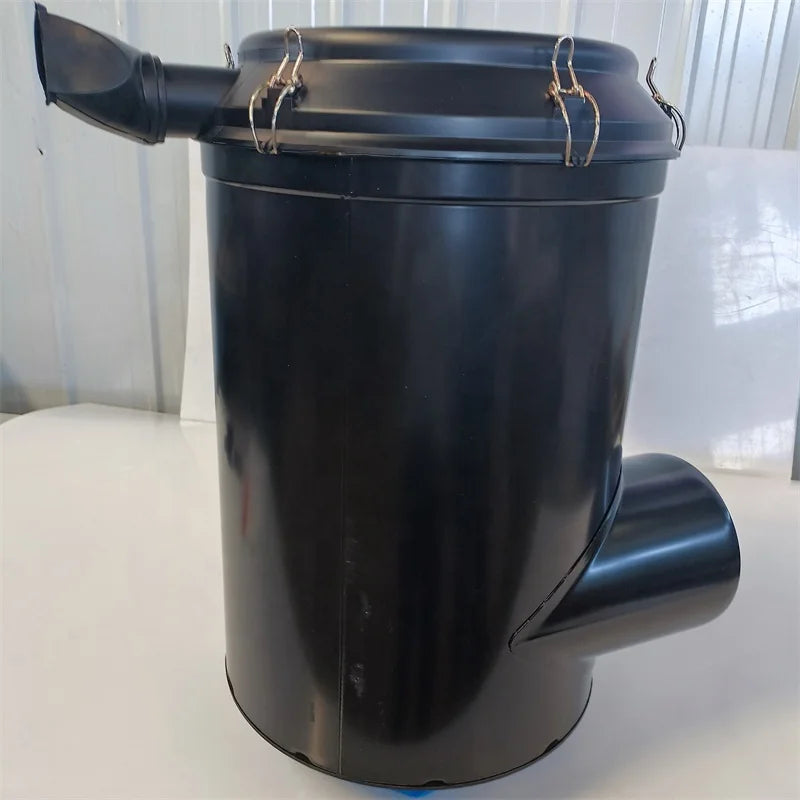
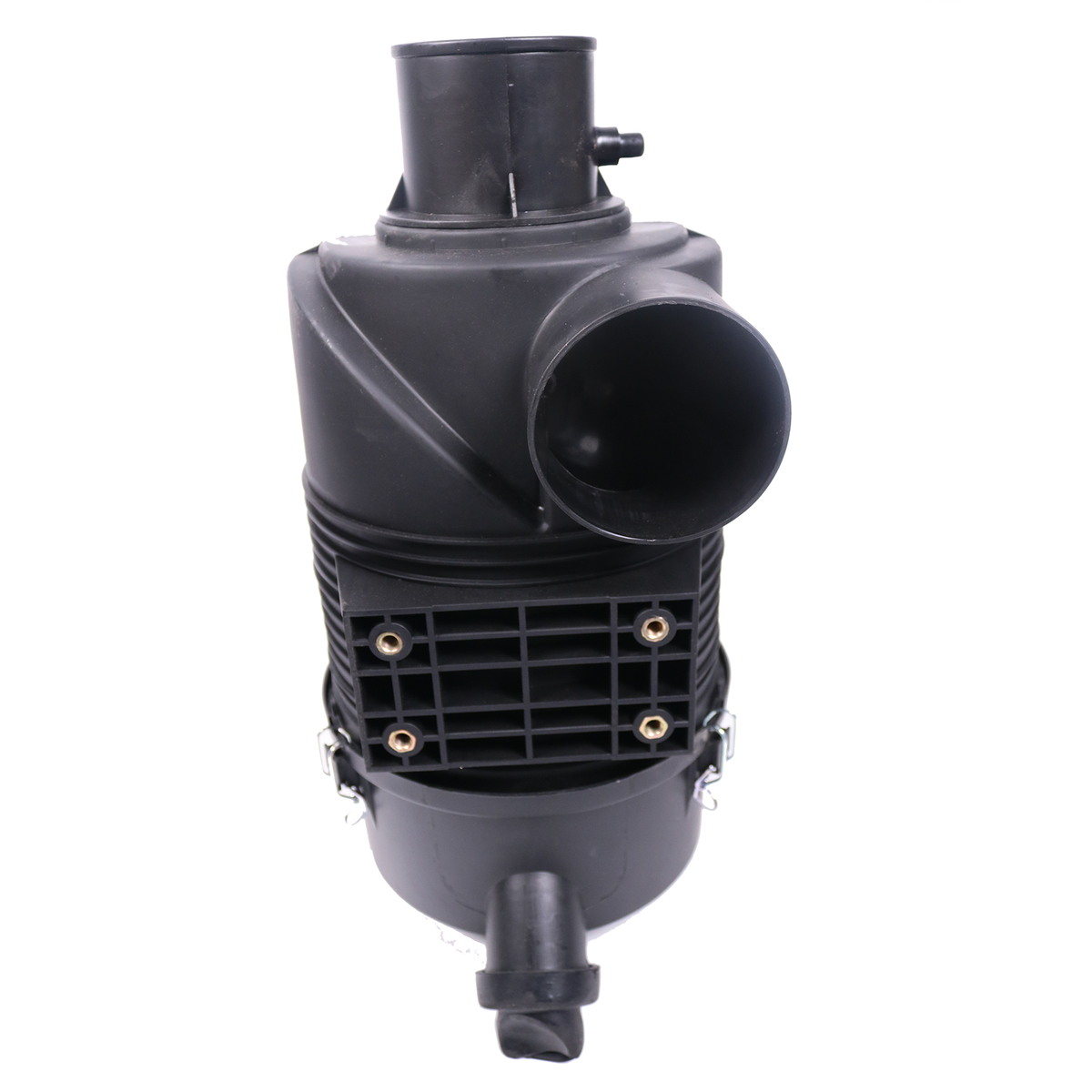
Beyond individual filter elements, Imara Engineering also supplies cat air cleaner and caterpillar air cleaner housing components where full assembly replacement is required — covering situations where housing damage, seal deterioration, or inlet duct failure necessitates more than an element change.
Komatsu Air Filters and Compact Equipment Platform Coverage
Komatsu air filters for the PC-series excavator range are stocked and cross-referenced at Imara Engineering. Komatsu excavators from the PC138 through to the PC300 and larger platforms carry distinct air intake specifications, and Imara Engineering confirms the correct primary and secondary element cross-reference by machine model before any order is dispatched.
For compact excavator platforms that generate consistent air filter demand across the region:
Yanmar VIO35 air filter: The Yanmar VIO35 is one of the most active compact excavator platforms in urban and light construction applications. The Yanmar VIO35 air filter is stocked at Imara Engineering in configurations confirmed for this platform's specific intake system, in both OEM and certified aftermarket grades.
Kubota KX040-4 air filter: The Kubota KX040-4 is a widely operated compact excavator across Nigerian site environments. The Kubota KX040-4 air filter is cross-referenced and stocked at Imara Engineering, covering both primary filtration and safety element positions on this platform's engine intake system.
Compact machine engines face the same intake contamination pressures as full-scale equipment, often in more confined environments that concentrate dust and debris around the intake. The specification rigour applied to compact platform air filters at Imara Engineering is the same as for full-size machines.
Donaldson Air Filters for Excavators: Precision Filtration for Demanding Site Conditions
Donaldson is among the most technically recognised independent filtration brands in the heavy equipment sector, with a documented performance history across construction, mining, and agricultural machinery applications worldwide. Donaldson air filter excavator variants are specified on certain machines as OEM-fit components and are also available as high-performance aftermarket alternatives on a wide range of heavy equipment platforms.
Imara Engineering carries Donaldson air filter excavator elements for compatible machine applications, cross-referenced against machine model and intake specification before dispatch. For operators who specify Donaldson filtration by brand preference or site contract requirement, availability is confirmed through Imara Engineering without the need to source through a specialist importer.
The Real Cost of an Overdue Engine Air Filter
The most common mistake made with engine air filters is extending the service interval beyond what the operating environment warrants. The OEM service schedule is written for average conditions. Sites with heavy dust loading, Harmattan-season operation, or demolition and crushing activity are not average conditions; they are the conditions that define how most machines in this region actually operate.
What happens when the engine air filter interval is stretched past its real-world limit:
-
Restricted airflow and fuel enrichment — a partially blocked air intake forces the engine management system to compensate with a richer fuel mixture, increasing fuel consumption without producing additional power output. The machine costs more to operate and delivers less.
-
Turbocharger overspeed, and heat damage — reduced intake air volume causes the turbocharger to operate at higher shaft speeds in an attempt to maintain boost pressure. This accelerates bearing wear in the turbocharger, a component whose replacement cost significantly exceeds the engine air filter it was protecting.
-
Incomplete combustion and carbon accumulation — restricted air supply degrades combustion efficiency, producing elevated exhaust temperatures and carbon deposits on injector tips, exhaust valves, and EGR components. These deposits compound progressively and are not resolved by a subsequent filter change.
-
Abrasive ingestion through a failed element — an element that has operated beyond its structural service life can tear, collapse, or unseat under intake vacuum pressure, admitting an unfiltered airflow loaded with the particulate it had previously captured. The resulting abrasive ingestion damages cylinder bores, piston rings, and turbocharger compressor blades in a single extended event.
Correct air filter service intervals adjusted for actual site conditions, not OEM averages, are among the most cost-effective maintenance decisions available to an equipment operator or fleet manager.