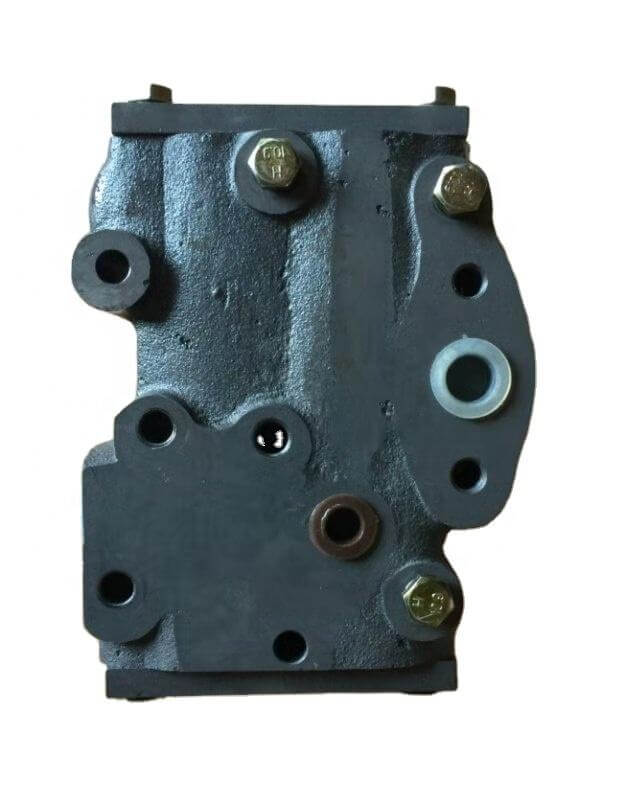
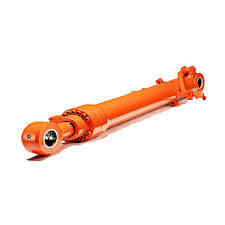
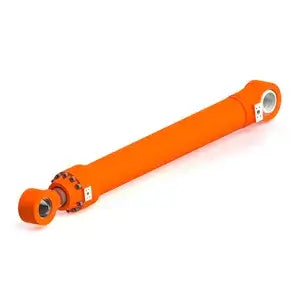
Types of Excavator Hydraulic Cylinders We Supply
Every working attachment on your excavator is driven by a dedicated hydraulic cylinder, each engineered to the specific stroke length, bore diameter, and pressure rating required for its function. Sourcing the correct cylinder type and specification for your exact machine model is critical; dimensional mismatches result in incorrect stroke, mounting incompatibility, and unsafe operating conditions. Here is a complete breakdown of the hydraulic cylinder categories available at Imara Engineering:
Boom Cylinders
The boom cylinder is the largest hydraulic cylinder on your excavator, mounted between the upper structure and the boom arm and responsible for raising and lowering the entire boom assembly under full working load. Operating at the highest force levels of any cylinder on the machine, the boom cylinder must sustain the combined weight of the boom, arm, bucket, and material load through every lift cycle, making it the most structurally demanding cylinder position on the attachment. A leaking or worn boom cylinder causes the boom to drift downward under load, reduces maximum lift height, and creates dangerous instability when the machine is working at full reach or on a gradient. Imara Engineering supplies boom cylinder assemblies for all major excavator brands and models, available as complete assemblies and as seal kit rebuilds.
Arm Cylinders
The arm cylinder, also called the stick cylinder or dipper cylinder, is mounted along the top face of the boom and controls the extension and retraction of the dipper arm through its full working arc. The arm cylinder governs your machine's reach, crowd force, and the speed of the digging stroke, making it one of the most frequently cycled cylinders on the entire machine across a working shift. Arm cylinder wear or seal failure, reduces crowd force, causes drift under load, and directly slows your digging cycle times. We supply arm cylinder assemblies for all major excavator brands and models, with direct bolt-on fitment cross-referenced to your machine serial number.
Bucket Cylinders
The bucket cylinder is mounted between the arm and bucket linkage and controls the curl and dump movement of the bucket at the working end of the attachment. Despite being the smallest of the three primary working cylinders, the bucket cylinder operates under high-frequency cycling and significant impact loading from bucket tooth penetration resistance, making it highly susceptible to rod seal wear, bent rod damage from obstacle strikes, and bore scoring from contaminated fluid. A faulty bucket cylinder reduces curling force, causes bucket drift under load, and limits material retention during the swing phase. Imara Engineering supplies bucket cylinder assemblies cross-referenced to your machine model for guaranteed direct fitment.
Hydraulic Hoses & Pipes
Hydraulic hoses and pipes form the fluid circuit connecting every hydraulic component on your excavator from the pump to the control valve, the control valve to the cylinders, and motor feed and return lines throughout the machine. A failed hydraulic hose is one of the most common causes of unplanned downtime on any excavator, causing immediate fluid loss, function failure, and environmental contamination on site. High-pressure hose failure in the working attachment circuit, particularly on boom and arm lines, also presents a serious operator safety risk. Imara Engineering supplies high-pressure hydraulic hoses, rigid pipes, and fittings in standard sizes and configurations for all major excavator brands and circuit applications.
How Hydraulic Cylinders Work on an Excavator
A hydraulic cylinder is a double-acting linear actuator, meaning it generates force in both the extend and retract directions using hydraulic pressure applied alternately to each side of an internal piston. The cylinder assembly consists of a precision-honed steel barrel, a piston attached to the rod that divides the barrel into two hydraulic chambers, a hardened chrome-plated rod that extends from one end of the barrel, and a rod seal assembly at the rod end that maintains pressure while allowing the rod to stroke in and out.
When the operator commands a function boom up, for example, the main control valve directs high-pressure flow from the main pump into the cap end chamber of the boom cylinder, pushing the piston and extending the rod. Simultaneously, return oil from the rod end chamber flows back through the control valve to the tank. Reversing the valve directs pressure to the rod end, retracting the cylinder and lowering the boom. This simple, robust principle operates under pressures typically between 250 and 350 bar on modern excavators, placing enormous stress on the sealing components and surface finish of every cylinder with every single stroke.
Common Symptoms of Hydraulic Cylinder Failure
Hydraulic cylinder degradation follows a recognisable progression from early seal wear through to structural failure. Monitor your machine for these indicators across all three working cylinders:
-
External rod seal leakage — Oil weeping or streaming from the rod seal area is the most visible and common early symptom of cylinder wear, indicating seal degradation or rod surface damage.
-
Cylinder drift under load — The boom, arm, or bucket slowly moving in an unintended direction when the operator is not commanding movement indicates internal bypass past the piston seals or a faulty holding valve.
-
Reduced breakout force or digging speed — Internal bypass reducing effective pressure in the working chamber reduces the force the cylinder can generate and slows function speed under load.
-
Bent or scored cylinder rod — Physical damage to the chrome rod surface from obstacle impact or abrasive contact destroys the rod seal on every stroke, causing immediate and accelerating fluid loss.
-
Jerky or uneven cylinder movement — Contamination, air ingestion, or internal seal damage causes irregular piston movement, producing visible stuttering in attachment motion.
-
Collapsed or leaking hydraulic hose at cylinder ports — Hose failure at the cylinder connection point causes immediate loss of function and fluid spillage on site.
Excavator Brands We Cover
Imara Engineering supplies hydraulic cylinders and hoses compatible with all major excavator brands and model series:
-
Komatsu — PC200, PC210, PC300, PC360, PC400, PC450 and full PC series
-
Caterpillar (CAT) — 320, 320D, 323, 325, 330, 336, and full E-series
-
Hitachi — ZX200, ZX210, ZX300, ZX330, ZX450, ZX500 and full ZX/EX series
-
Volvo — EC210, EC240, EC290, EC380, EC480 and full EC series
-
Doosan — DX225, DX300, DX380, DX480 and full DX series
-
Kobelco — SK200, SK300, SK350, SK480 and full SK series
-
Hyundai — R210, R290, R380, R480 and full R series
-
Bobcat — E35, E50, E85 and compact excavator range
-
Case — CX130, CX210, CX300, CX350 and full CX series
Cannot find your model listed? Contact our parts team with your machine serial number and OEM part number for an immediate cross-reference and confirmation.
Complete Cylinder Assembly vs Seal Kit Rebuild
When a hydraulic cylinder fails, your two primary options are full assembly replacement or an internal seal kit rebuild. Here is how to determine the correct approach:
-
Complete Assembly Replacement is recommended when the cylinder rod is bent, heavily scored, or pitted beyond the threshold where a seal replacement would simply fail again immediately; the barrel bore is scored or worn beyond honing tolerance; or the cylinder has suffered structural damage from an impact or overload event. A complete assembly replacement eliminates uncertainty about rod and barrel condition and delivers the fastest, most reliable return to full performance.
-
Seal Kit Rebuild is appropriate when — The rod surface is within serviceable condition, smooth, undamaged chrome with no scoring or pitting, and failure is limited to seal degradation from age, heat cycling, or normal wear. A quality hydraulic cylinder seal kit, replacing all rod seals, piston seals, wiper rings, and o-rings, restores full cylinder performance at a fraction of the complete assembly cost.
Imara Engineering supplies both complete cylinder assemblies and dedicated hydraulic cylinder seal kits for boom, arm, and bucket cylinders across all major excavator brands, giving you the correct solution for every failure scenario.
Why Source Your Hydraulic Cylinders from Imara Engineering?
-
OEM-Grade Quality — All cylinders are manufactured to original bore dimensions, rod diameter, stroke length, and pressure ratings — direct replacement fit with no modifications required.
-
Guaranteed Model Fitment — Every cylinder is cross-referenced to your specific machine model, serial number, and OEM part number before dispatch.
-
Ready Stock, Fast Dispatch — High-demand cylinder assemblies and seal kits held in inventory for prompt order processing and fast delivery across Africa and internationally.
-
Full Range Coverage — Boom, arm, and bucket cylinders plus hoses and fittings — everything for your excavator's working attachment circuit under one roof.
-
Parts Specialist Support — Our team will confirm the correct cylinder specification for your machine before you order — no guesswork, no costly fitment errors.